

Director: David Lowery
Stars: Michaela Coel, Anne Hathaway, Hunter Schafer
David Lowery protagonists are prone to quests. In his fantasy films, ranging from The Green Knight to Peter Pan & Wendy this is presented quite literally, within recognisable – even iconic – frameworks. But think of Casey Affleck’s unnamed spectre from A Ghost Story, yearning across time for his lost love, or Affleck again in Lowery’s undervalued ode to Robert Redford The Old Man & the Gun, as a dogged detective named John Hunt. Lowery’s beguiling, idiosyncratic latest feels like something of a career wildcard; a hard swerve into new tonal and stylistic territory. But at it’s centre is another quest, one for reconciliation.
Anne Hathaway is idolised popstar Mother Mary, who flees the arena-scale midnight debut of her new song ‘Spooky Action’ just days before she is due to perform, crossing the Atlantic to beseech her one-time costume designer and best friend Sam Anselm (Michaela Coel) to craft her one last dress. She arrives at Sam’s rural studio drenched from the rain, supplicant to Sam’s precise, exacting demands and verbose, vindictive monologues. Piecemeal we learn of the rift between these two former besties, as Sam puts Mary through a kind of interrogation while holding court herself for much of the proceedings. It is only as this process unfurls that the estranged friends (lovers?) come to realise they share a supernatural secret.
A number of horror films of the past decade have picked at the 21st century phenomena of the global mega-tour artist, all presenting women elevated, deified for the braying masses. Vox Lux. Trap. Smile 2. The tour film itself has become a more present and conspicuous genre. Extensions of such real life campaigns that have become staples themselves from the likes of Taylor Swift or Beyoncé. Charli xcx (who provides some songs here for Hathaway) was even moved to deconstruct this prerequisite with mockumentary The Moment. Lowery takes the perhaps obvious route of exploring the quasi-religious status projected onto such popstars, presenting stage sequences of Mary akin to a goddess revealing herself to the faithful, who have become an ocean of cellphone torches, anonymous but legion. The stadium is the new church or cathedral. Mother Mary’s stage moniker is maybe a bit close to evoking Madonna, but her iconography is distinct – a permanent halo – a signature placed upon her by Sam that Mary is now eager to remove. It speaks both to Sam’s one-time pedestaling of her friend, as well as to Mary’s current urge toward self-destruction.
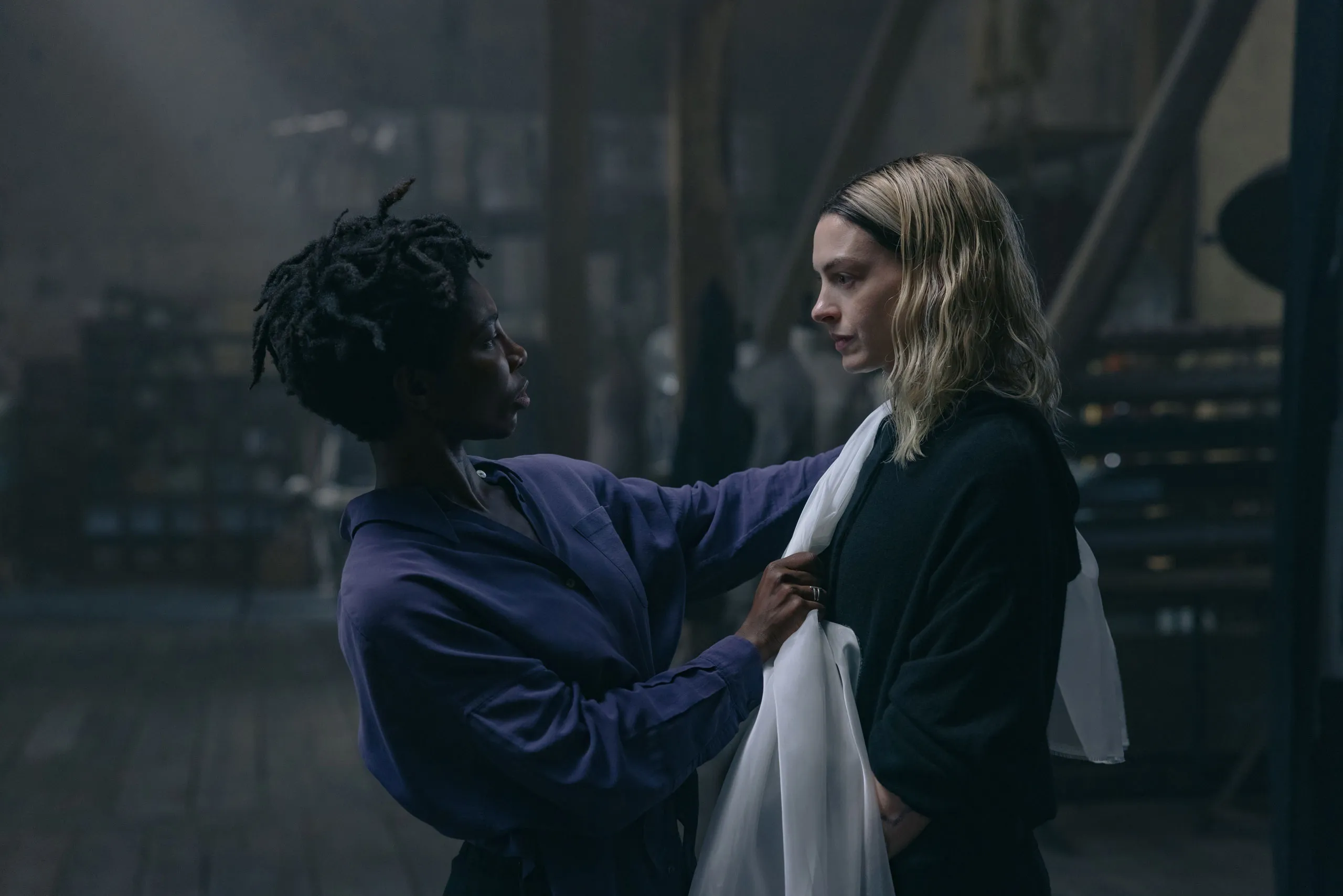
Mother Mary is a defiantly strange beast, liable to put-off as many as it pulls close. The first hour is almost all Coel, as Sam speaks to Mary in long, loquacious diatribes. It is deliberately affected, over-complex dialogue, but for all it’s self-conscious construction, Coel fits herself to it, and Lowery uses this to signpost his tale as outside of normality. We’re in some adjacent place, stagey and pompous like a play (Sam’s ramshackle converted barn is one of the film’s few settings). We’re within performative quotation marks. It’s like being inside a pop song. A power ballad. Lowery’s building to a crescendo.
There’s something of Suspiria about things. Both Argento’s and Guadagnino’s. Mary is like Suzy Bannion, arriving bedraggled at a mysterious, shadowy institution of women, and when she dances without music for Sam at her insistence, the moves evoke Dakota Johnson’s version of the character using her body to cast spells. Dance as exorcism. It goes on for so long. This movie’s version of Rooney Mara sitting down to eat a whole pie.
Mother Mary‘s second half redresses the balance between Coel and Hathaway somewhat, but only somewhat. Mary gets to tell a tale that takes us out of the barn, and wraps Lowery’s film up in the costume of a few other cinematic touchstones; movies about dastardly red dresses like In Fabric or I’m Dangerous Tonight. By this time the inference of the supernatural becomes more pronounced. Mary’s possessed dance becomes prophetic of the more pointedly fantastical tale that emerges. But as much as we’re told it isn’t a metaphor, it very much is one. Hate, resentment and contained passions must be expunged and expelled. There’s even a chalk circle on the ground. Mother Mary is witchy and feminine. There are no men in the film at all. And Lowery seems as afraid of the female as he is ensorcelled. It’s a love letter as delectably pretentious as a pop diva using exaggeration to explode outsized emotions.
FKA twigs turns up for a spell (pun intended) in Mary’s tale, and her renowned contortionism and dancing prowess is put to superb use. It might be her best film appearance to date. twigs also provides songs for the film, and you can tell which ones they are because they’re the better ones, the witchier ones, the ones that give Mary an edge of maleficence. Otherwise the most notable supporting performer is Hunter Schafer as Sam’s quiet, doting aide, ensuring that we know that Lowery’s a fan of Fassbinder’s The Bitter Tears of Petra Von Kant; a movie that feels in constant conversation with this one, off to the side.
All of this external namechecking might suggest that Mother Mary is little more than a patchwork cover version, but Lowery stamps it squarely with it’s own identity, making it part of a continuum and not just a muddled rehash. He uses many cinematic reference points (and more than those mentioned so far; there’s also Glazer, Refn, Peele…) but for the purposes of building his own defiantly odd expression of lovers redressing the balance. Mother Mary is ultimately a love story, and Lowery’s bombastic gothic art-pop phase, like a cinematic concept album before he shifts like a chameleon to whatever’s next. And just like such bold stylistic asides, it’ll find its small but voracious flock of defenders. I’ll be among them.



2 thoughts on “Review: Mother Mary”