
Director: Steven Soderbergh
Stars: Michaela Coel, Ian McKellen, Jessica Gunning
The tagline for The Christophers is ‘Art can be copied. Artists cannot’. Dismally, and more than a little ironically, Steven Soderbergh’s 37th(?) feature – which concerns itself with forging artworks – arrives in the UK in the aftermath of the director’s worrying comments that his next planned films (including a documentary on John Lennon) will use “a lot of AI”, as though he has wilfully missed the point of Ed Solomon’s screenplay from which The Christophers is drawn. Soderbergh’s been at the forefront of using new technologies in cinema before. He was right up there in the late ’90s/early ’00s experimenting with low-grade DV. But this mooted move toward the slop machine means this might be the last of his films worth covering for a while.
A continuation of what might come to be known as his ‘London phase’, this sprightly low-cost comedy drama focuses on Lori Butler (Michaela Coel), a former art student turned jobbing restorationist, who is contacted by old college acquaintance Sallie (Jessica Gunning) and her brother Barnaby (James Corden. Ew.) with a unique opportunity. The bumbling pair’s dear old dad is none other than Julian Sklar (Ian McKellan), a once-heralded figure in the art world whose work and reputation suffered a public decline of his own making via a mixture of publicity stunts, alcohol, clumsy comments and a tacky TV show called Art Fight that robbed him of his credibility. Julian’s most beloved works were a series known as ‘The Christophers’, and a set of eight unfinished canvases exist on the third-floor of his twin London townhouses. Evidently desperate for cash having been cast out of favour, Sallie and Barnaby propose that Lori complete the paintings in secret, posing as their father’s new assistant.
There’s something wry about seeing The Christophers in relatively close proximity to David Lowery’s Mother Mary. In that film Coel’s character held court with monologues for much of the first hour. Soderbergh’s latest finds her on the receiving end as, on meeting Julian, Lori can’t get a word in. McKellen’s an old stalwart whose way with a soliloquy is in no doubt, but Julian’s love for his own voice and opinion makes for a deliberately stifling first impression. This, coupled with Soderbergh’s own overly-shaky documenting of the interiors of his cluttered abode, seems intended to place the viewer on the same uneven footing as Lori. It’s almost too successful.
Fortunately, there’s a somewhat inevitable trajectory to this increasingly-charming two-hander. Solomon’s script observes the condescending mannerisms and assumptions of an older generation as readily as it picks up on the prickly PC policing of the younger. I was worried about this dynamic, as the trailer for the movie leaned quite heavily on excerpts of these moments, framing The Christophers as a boomer’s “kids today” comedy. Fortunately, they’re more seasoning than full flavour. The titular paintings are of particular sentimental value to Julian, being part and parcel of a relationship whose trajectory is told within the very methodology of their making. When it becomes clear that Lori – whose abilities he questions with frustrating frequency – not only sees but understands this progression between method and form, the relationship between them thaws.
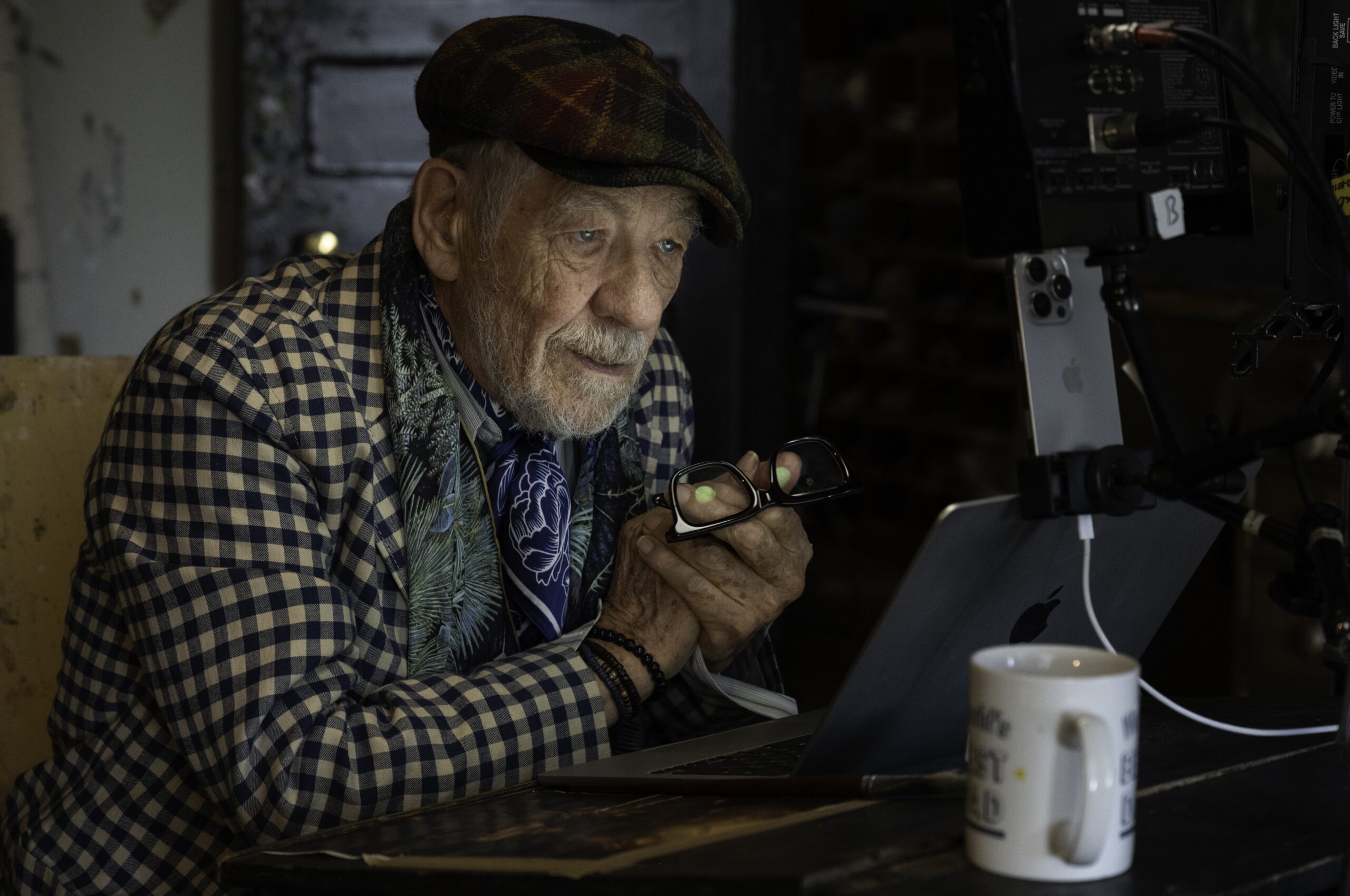
In juxtaposition to her work in Mother Mary, Coel is boxed into a quieter, more observant role. She shows she’s able to do as much in a minor key, and uses stance, poise and expression to communicate as much if not more than her counterpart’s theatrical diatribes. In short they’re both doing exceptional character work in different – yet complimentary – modes. All of which makes the horrible inclusion of James Corden all the more baffling. Still, his character’s an insufferable prick so, on that score, it makes a kind of sense.
Solomon’s screenplay has some sparkling little ideas, such as a dual montage that intercuts discovery (by Julian) with obfuscation (by Lori), and there are no end to the enjoyable put-downs fed to the old art master (I was particularly keen on him describing his children as the “heirs abhorrent”). There’s joyfully telling character work in feeding Sallie a weak “Oh, come on, mate” during a session of hard bargaining with Lori, too.
As it unfurls, the picture also gets meatier with ideas. There’s a stretch in which one piece of art exists in potentia between the two leads. Both have a conception of it, but it remains unrealised. One wonders; how close are the two ineffable expressions? Soderbergh seems unstoppable a good decade after his mooted retirement, but The Christophers‘ focus on legacy can’t help but make it feel like a ‘late period’ work (it is his latest, after all). And there’s some cosy truisms about finding freedom in letting go; destruction as a form of creation; rebirth and ascendency. There’s even some playful notes on the switching of roles – the dominant and subservient – both professionally and personally that, coupled with the setting, prime The Christophers for double-billing with Paul Thomas Anderson’s Phantom Thread.
“You get nothing when you stare at something through a screen” is one of Julian’s arguments against Lori’s own work, which is a slightly ironic manifesto when nested in a feature film. Lori ultimately proves him wrong with a creative, touching tribute at the film’s close. Maybe Soderbergh’s future work with AI will similarly challenge this notion of the impenetrable in a digitally realised miasma. For now, this is a modest but nimble continuation of a sprawling body of work from a restless soul. Unassuming in size and scale, but knotty with substance. A good bit of work.