

Director: Zach Cregger
Stars: Austin Abrams, Kali Reis, Paul Walter Hauser
Called upon to revive the cinematic fortunes of Capcom’s Resident Evil franchise, Zach Cregger has bypassed the obvious route taken by Johannes Roberts’ ill-fated, Jennifer Paige-sampling Welcome to Raccoon City, taking the tone and mechanics of the hit survival horror video game series as a jumping off point rather than producing a slavish cosplay of the series’ characters and convoluted lore. Cregger’s instinct is to simulate what it feels like to be the player, and he funnels that first-run-through inexperience and second guessing into Austin Abrams’ wholly ill-equipped and unprepared medical courier Bryan, tasked with transporting a schedule-A top priority package to Raccoon City General.
Things go wrong quickly. While mishandling a sensitive phone call with his girlfriend Michelle (placing Resident Evil immediately in the same metaphorical space as fellow video game adaptation Exit 8), Bryan skids in the snowfall and hits a frantic woman who has dashed out of the forest in the night. Abrams is already somewhere in the same register as his skeezy junkie character from Cregger’s previous film Weapons – a chancer who’ll take a shortcut given the opportunity – but Bryan’s more guided by conscience and can’t just leave this woman hurt in the middle of nowhere, even though she seems stricken by more than just his vehicle. Even a happenstance encounter with a police patrol car can’t course-correct Bryan’s evening, which leaves him limping on foot to a secluded farmhouse for increasingly urgent assistance. The dead aren’t staying dead and the dogs are… weird…
For those well-initiated in the sprawling video game universe, this should already be ringing certain bells, but Cregger’s decision to approach the IP in this manner – from the vantage of a bewildered outsider – feels like the right one. Even if his Resident Evil proves enough of a cash-cow to trigger a reinvigorated movie franchise, there’s little about this outing that suggests that kind of ambition. This is a self-contained reflection of a video game experience. A paperchain of set pieces for our reluctant hero to stumble between on his inexorable journey into the heart of Raccoon City.
Cregger weaponises Bryan’s POV perspective – along with delicate interplays of light and shadow – to create genuine unease. Multiple situations leave Bryan with no choice but to move forward (aping popular level design logic). Not since Paul W.S. Anderson’s actually-phenomenal Resident Evil: Retribution has this property been so interested in playing with and reshaping the experience of being in a game. The smart decision here is to up the vulnerability by sticking us with someone who’s not a very good player, staggering through with beginning’s luck. Bryan has to navigate maps. Is repeatedly frustrated by locks. The approach to weaponry is both refreshing and wryly metatextual. Refreshing in the sense that Bryan’s inexperience shows in his success rate, metatextual in the gradual ‘levelling-up’ of hardware as he makes his tentative progress.
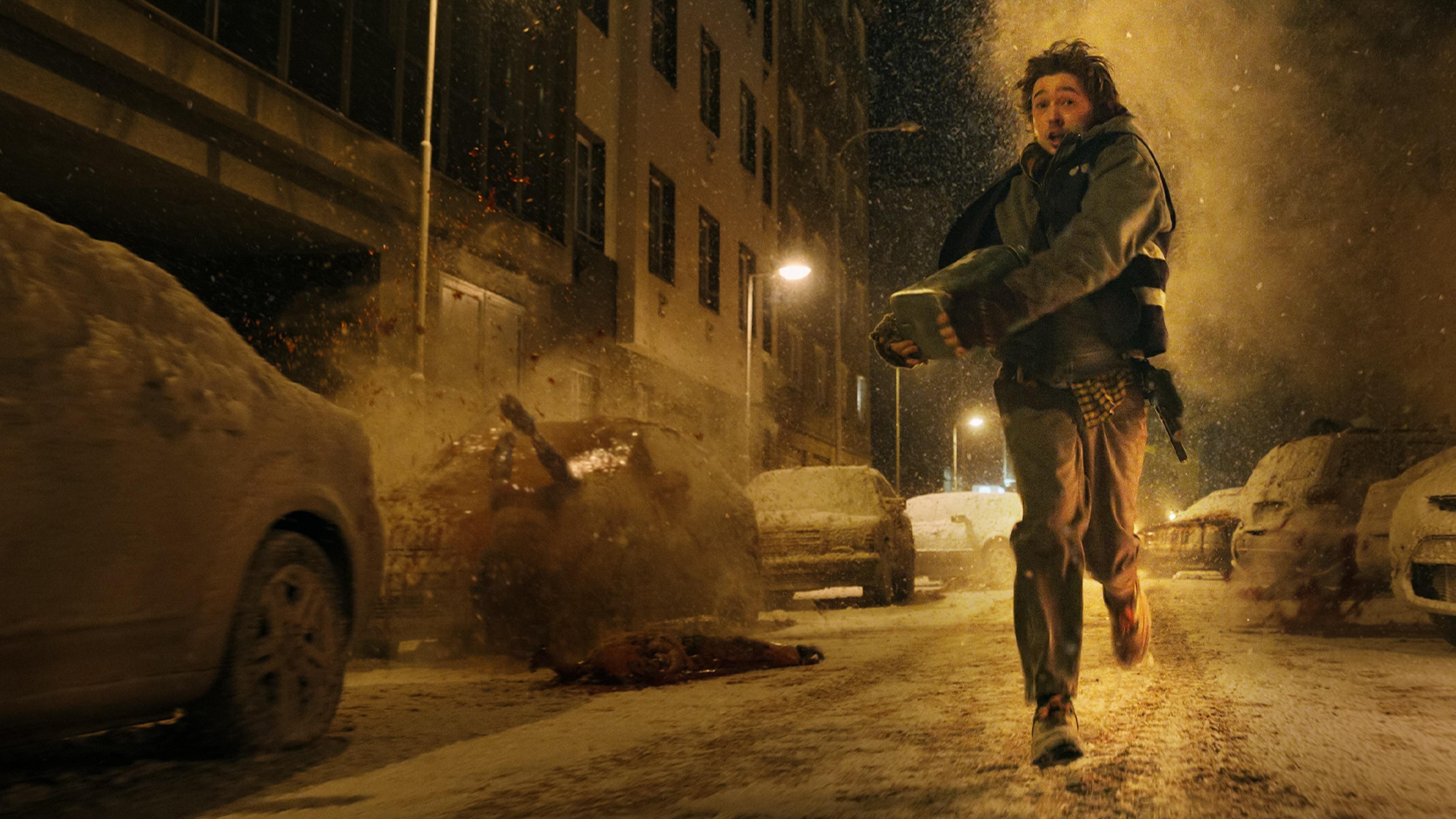
Unlike Barbarian or Weapons, Resident Evil is a no-messing straight A-to-B storyline, its narrative as lean and sparse as the snowy landscapes that typify it’s earliest and most effective stretches. Like the dynamic opening act of Barbarian, Resident Evil manages to be both funny AND suspenseful, arguably reaching a peak on both counts during a reluctant sojourn through an inevitable tunnel. This sequence – as much as any other – also finds Cregger toying with the simple tropes of horror cinema. He’ll tea-up a jump scare only to not-deliver, then smash you with one at another place and time entirely. By entering into the movie we’ve accepted that we’ll play by whatever rules he deems appropriate. We’re complicit with being fucked with, and there’s a lot of fun to be had if you surrender to your position in that contract.
By playing simply and directly, Resident Evil largely sidesteps the pitfalls that his two previous features sometimes fell in to. To different degrees both took detours that squandered the sustained panic of the better stretches. This offering’s B-movie B-line offers no such digressions, though it does succumb to another kind of slow-mounting deviation. The longer Bryan’s odyssey goes on for, the funnier it becomes. It’s as successfully funny as it is suspenseful, at least, for a while. However, come the third act, that balance shifts over. It’s as entertaining, but now in a different way, becoming more of a parody of the games it was so lovingly aping. In this transition (rather ironically) some of the heart and humanity is lost, to the extent that Resident Evil bows out on a deliciously cruel punchline, jettisoning entirely any desire for emotional heft.
For his part, Abrams shows he can fully carry a movie, and his work here is somewhere between Griffin Dunne (whom he physically resembles) in After Hours and Aaron Paul’s Jesse Pinkman (particularly in how he addresses, of all things, a ladder and a slightly too on-the-nose cry of “Yeah! Video games!” during the hike to the end). Much of his dialogue amounts to variations of “What the fuck?” but, honestly, given the situations he finds himself in, would any of us be more articulate?
There’s a cynicism about human nature here that tessellates exceedingly well with the chaos and hubris that fundamentally underpins the game series. That we’re victims of ourselves, first and foremost. These cruel ironies evidently appeal to Cregger, who’s made three films itemising our weaknesses now. Resident Evil is, on the surface, the least mature of these, but wait, maybe there is something more. Though he’s moved to articulate it in rather unsubtle monologue form, Bryan’s journey is an awakening to responsibility and maturity in the face of impending parenthood (at one point he literally says “This is life I’m carrying right now”). Cregger certainly doesn’t pass up the opportunity to turn the horrors of childbirth into gooey nightmarish monstrosities. Boasting creature effects that owe a considerable debt to John Carpenter’s The Thing (as does Ryan and Hays Holladay’s musical accompaniment), Cregger makes visceral horror out of the promise of new life, and in so doing turns a young man’s struggle to evolve into a fraught and wickedly funny balancing act.



1 thought on “Review: Resident Evil (2026)”