

Directors: Lance Oppenheim, Nathan Fielder
Stars: Elizabeth Holmes, Billy Evans, Amanda Seyfried
Where to start with this, Lance Oppenheim and Nathan Fielder’s sprawling, supposedly-zeitgeist-capturing near-three-hour documentary on not just Silicon Valley’s Theranos fraudster Elizabeth Holmes, but the very notion of truth itself? As no doubt intended by it’s creators, one’s thoughts in the aftermath feel like a conspiracy theorist’s pinboard, spidering out thread in different directions, so much so that locating the central nexus is confusing. I need to narrow focus.
In its simplest initial stages, You Can See Everything presents as a window into Holmes’ world – through invitation – as she and her family countdown her last 30-odd days before being incarcerated at Bryan Federal Prison Camp in Texas. Unfamiliar with Holmes? Don’t worry. The film will fill in the necessary blanks. We’re told that Holmes has chosen to work with Fielder based on seeing a few clips of his, but this feels naggingly insufficient for someone in such a precarious position. Fielder decamps to the family’s beachfront San Diego rental where he interviews Holmes and her partner Billy Evans. What strikes you about Holmes is her seeming openness and her wide, wide eyes, imploring Fielder – and by extension us – to believe her. And already the film feels affected and contorted by notions of the cult of celebrity.
Fielder is a case in point. A Canadian comedian with a cult following thanks to a string of shows which blur the lines of truth and fiction, Fielder has never confirmed an autism diagnosis, but his screen persona certainly furthers that idea. I came to You Can See Everything relatively new to Fielder’s approach. His deadpan delivery. The awkwardly extended pauses that he manufactures. Tools with which he tries to coax more from his subjects. What struck me seeing YCSE in a public space with a ready audience was how eager his fans were to laugh at the moments of ‘kooky’ discomfort brought about by his personality which, in combination with Holmes’, generates focused moments of inscrutable intimacy. There was a lot of forced laughter in the opening hour from a viewership primed to receive YCSE as uncanny. Fielder plays up to his celebrity persona, seeking out our laughter at the ‘funny neurodivergent guy’. I took to wondering, as Fielder sized up a purported master manipulator, who was exploiting whom here? And Holmes wasn’t even in the parameters of the question.
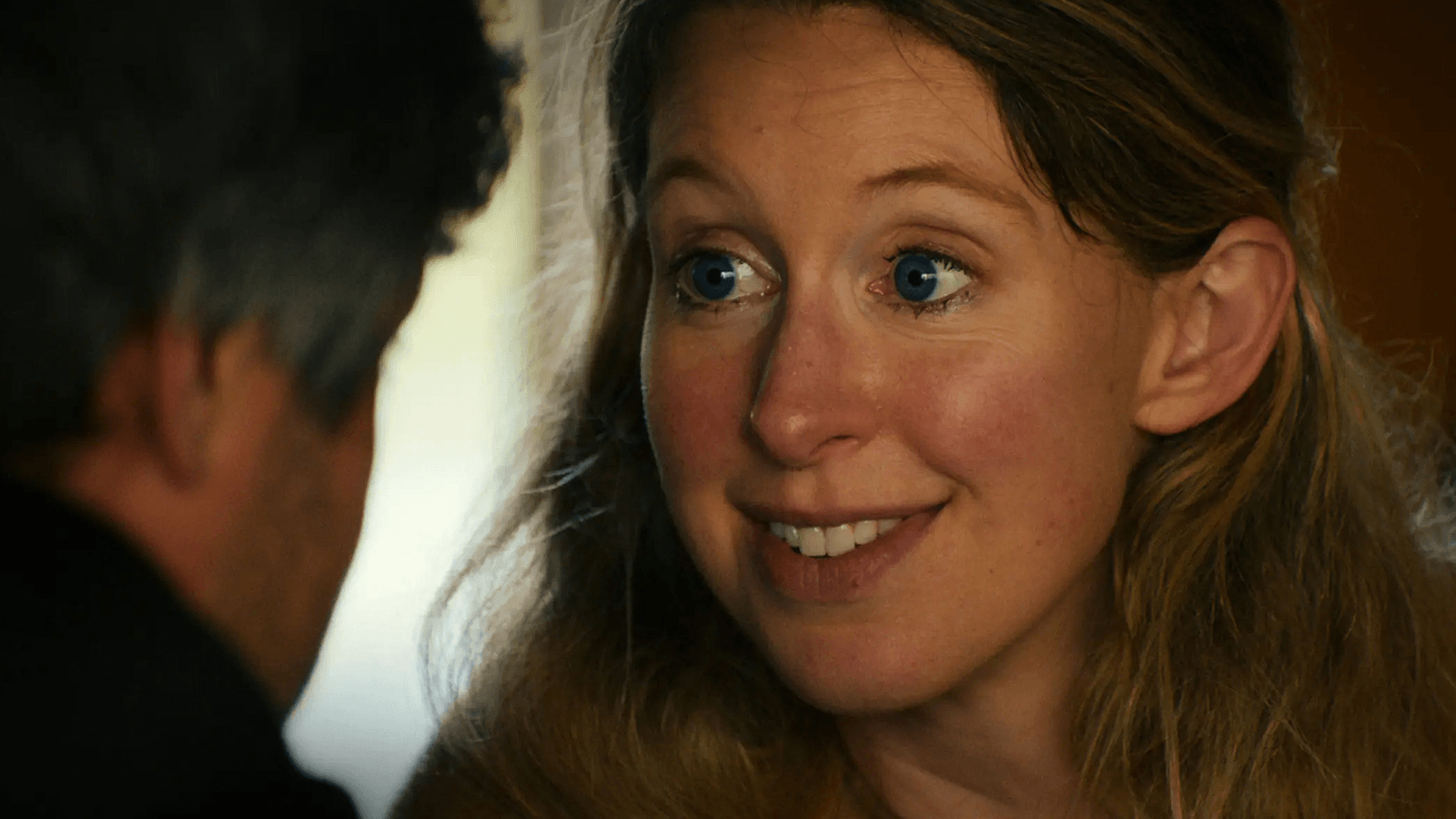
As things progress and the inevitable happens, Holmes isn’t even the focus of the film. Somewhere before the half-way mark, Fielder and Oppenheim’s time is up and Holmes does indeed go to prison. But we’ve already been fed a lot of information that paints Billy Evans in a very poor light, observations that, from the get-go, suggest a narcissistic manipulator with no qualms about gaslighting his partner – both romantic and in business – and whose high opinion of himself brays for some kind of dressing down. Two years later, Fielder finds Evans speaking for Holmes across a variety of platforms, always the middle man between the filmmakers and their subject who is now effectively silenced and physically removed. YCSE switches targets and drafts in Amanda Seyfried as both wily sidekick to Fielder’s mission and avatar for the absent Holmes in a series of reconstructions.
Seyfried’s relationship to Holmes is a complicated one, having played a character based on her in the hit miniseries The Dropout. Increasingly, YCSE is about facades and layers of truth and performance, and how those things intermingle and cause confusions. A talented and experienced actor, Seyfried is very camera savvy, and few of her interactions with Fielder feel candid, turning the back half of the film into a strange spy movie in which almost everything feels scripted, even the moments that aren’t supposed to be. In a way, Seyfried becomes as interesting as Holmes, Evans and Fielder. We’re presented an interconnected network of people for whom a permanent screen persona is always altering their onscreen dialogue. Through all these prisms and obfuscations, how does one get to a kernel of truth?
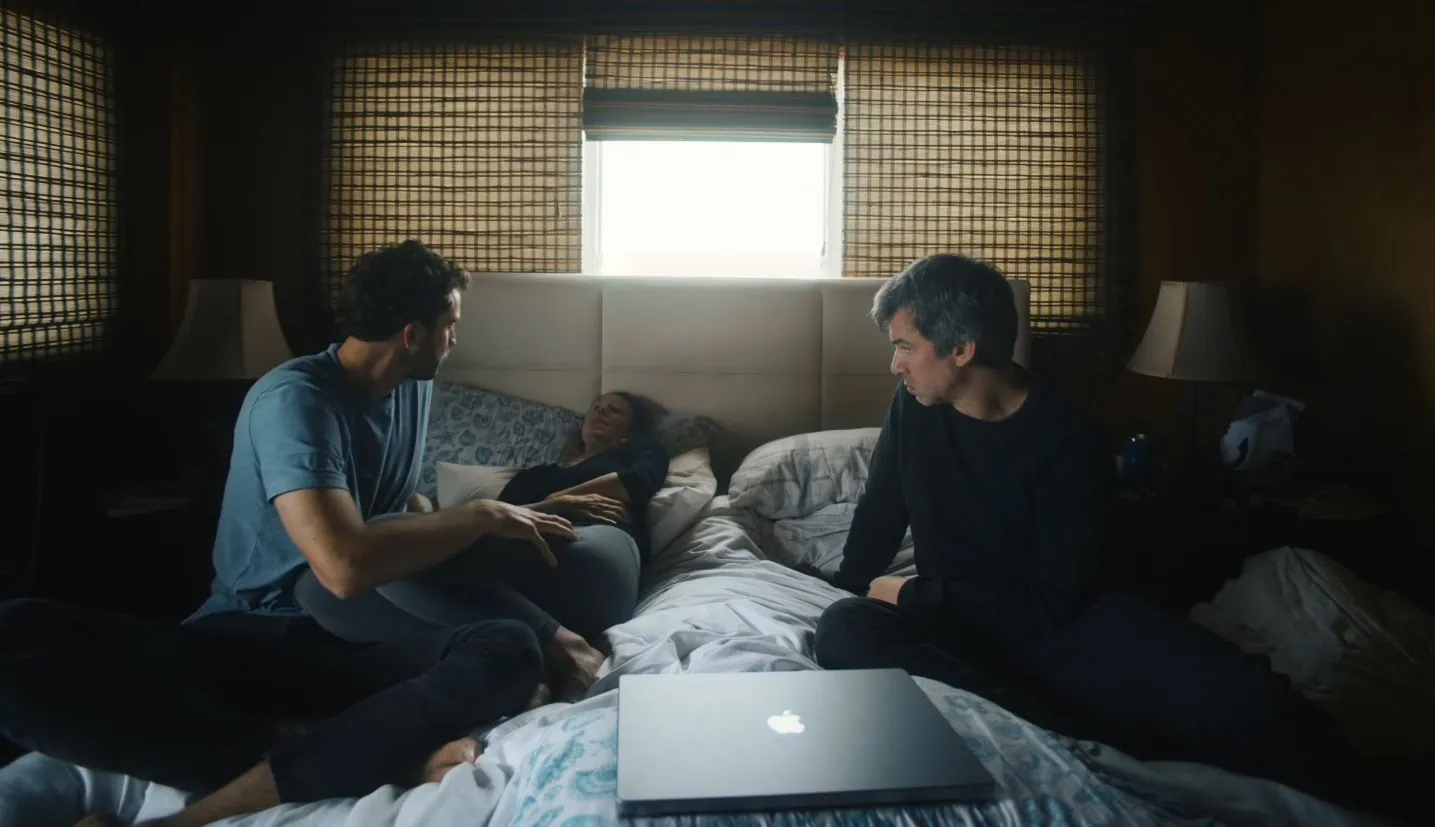
That is, ultimately, entirely the point. How can one know the truth? And with how much importance should we choose our words? This last, the film suggests, is of incredible importance, as on more than one occasion Fielder digs down into how just one word in a sentence can change how a statement is received. Holmes’ method of communication may be the entire reason behind her downfall. Fielder vocally crusades to present everything with authenticity, but we’re repeatedly asked to evaluate any given moment for its credulity. Even some of the early sequences in San Diego prompt questions about how they’ve been filmed, from multiple camera set-ups with 180 degree reversals, suggestive of multiple takes to obtain coverage of supposedly impromptu moments. Like Orson Welles’ F for Fake or any number of docu-dramas from the Iranian school of cinema (from the likes of Jafar Panahi, Samira Makhmalbaf or Abbas Kiarostami), YCSE interrogates what truth is in documentary cinema, and deconstructs it before an audience left with more questions than answers.
How is this zeitgiesty? In the age of AI and the post-truth of the Trump administrations, how is it not? Aren’t we all growing tired of constantly having to re-evaluate over and over any given piece of information or media for potential lies? Perhaps Fielder and Oppenheim’s film speaks to an audience so acutely because it parcels up these feelings of uncertainty and of being overwhelmed by the chaos, and hands them back to us in a funny, attractive, intellectually stimulating package? Two hours and fifty minutes whizz by, while Ari Balouzian’s music seems to deliberately invoke Jonny Greenwood’s scores for PTA, pitching the film toward a certain level of prestige. The ambitions for it are lofty and evident.
Evans comes out of this looking like a dirtbag business bro and a particularly contemporary kind of hustler. Seyfried like someone I wanna be best friends with. Holmes and Fielder – the outliers, the inscrutable ones – leave behind them knotty and problematic question marks, as is the intention. At all times the audience’s trust is both what’s requested and, right before us – as in a magician’s trick – manipulated. How does a filmmaker maintain distance and perspective? And what happens when they don’t? Have I seen everything? Questions, questions, questions. I’m going to need a pinboard.