

Directors: Yuval Abraham, Rachel Szor
Among my more shameful admissions of late is that I didn’t rush sooner to see NAZA because, well, the prospect of another contemporary documentary on the genocide happening in Gaza caused me to hesitate. Pardon my privilege, but we live in a deluge of horrors. The negative psychological toll of an average 10-minute doomscroll has me trying to mentally preserve myself. But that position is one of cowardice and complacency; something all-too easy to fall into as the days turn to weeks turn to months turn to years. Atrocities, disgustingly, can come to feel common. Their very normalisation, in fact, is studied here. Yuval Abraham and Rachel Szor were two of the names behind 2024’s urgent No Other Land. That they persist in the wake of so much is a testament to both their bravery and resilience, and their shared belief that the rest of us need to be reminded what’s happening a few thousand miles away. The embittered, angry persistence.
NAZA runs to 77-minutes. The night skies over Tel Aviv are gloomy with clouds, but they allow a man whose identity is concealed to be cast in silhouette. He’s Israeli, and in a calm and candid interview he is asked to detail his role in the strategic military offensive that has been targeting Palestinians. He speaks of how agents are trained to use software to deliver bombs. Bombs to destroy buildings. Buildings like hospitals and schools. Whole neighbourhoods. He’s lost count of how many. He’s not alone. Speaking on rooftops in 2023, Abraham and Szor interviewed 24 individuals whose anonymity is paramount to avoid reprisal for their divulgences. The term “NAZA” is determined to mean the collateral damage from a strike. The toll in civilians. It’s a method of abstraction. Of desensitisation. Another version of mental barricading to deal with the awful truth.
The propaganda of annihilation is spoken of softly. How, in the wake of October 7th, the concept of annihilation was delivered as decisive, remedial, even comforting. Finally, it will be over, because “they deserve it”. The normalisation of a casual evil. A decision to erase. But the people interviewed aren’t radical extremists. They’re office workers, middle-class, with left-leaning politics (or considered so by the state). Modern tools allow them to be, casually, monsters. The more you hear, the more Orwellian the system sounds. Moralistic or principled positions are simply forbidden. Ring-fenced and compartmentalised.
NAZA exposes the normalisation of surveillance, for both the intelligence agents in Israel tasked with monitoring their targets, and for the Palestinians who must live with the notion every waking moment. Relatively early, the use of AI to target suspects through profiling is brought up and quickly affirmed as inaccurate, causing – to quote one of its programmers – “mass killing on a huge scale”. The off-hand admission is chilling, reminiscent of Anwar Congo in The Act of Killing, albeit shorn of any facade of pride or egotism. The individual diminishes their responsibility, calling themselves “a small cog”. Interviewing, Abraham can’t help but challenge that act of evasion. But the details convey a new, particularly cold and algorithmic type of warfare. Desktop warfare which eradicates the notion of the individual just as it eradicates whole buildings. The end equation is the eradication of all of Gaza.
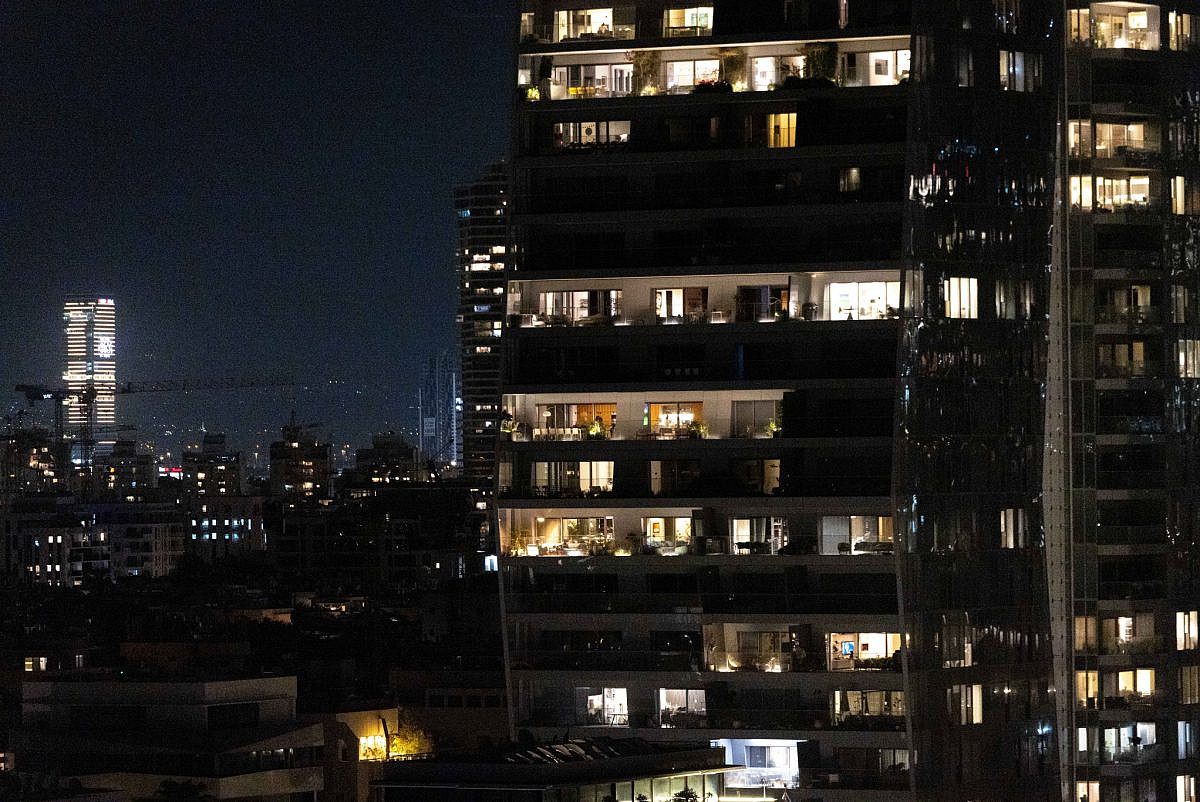
Archival footage intersperses these conversations, providing minimal context, historical details, an eerie non-relief. What connects the two modes is the unsettling quietude, reflected also in the voyeuristic asides between interviews. Shots of wall-sized flat screen televisions showing newscasts, seen through windows. The interviews are commonly framed by these rectangles of light. Apartments with blinds open, as though coquettishly inviting our own surveillance. As we’re told how high-rise buildings are tactically assessed – reduced to a numbers game – those figures are mentally imprinted on the innocuous Israelis surrounding them in the twilight. NAZA is pensive the way Gianfranco Rosi’s Notturno was pensive. It is a film waiting for interruption, evoking that sense of permanent tension pervasive on the ground. One speaker’s interview is interrupted by an air raid siren and strike. Those clouds, again, become present in the scene, discoloured by the flashes of unseen violence 70km away.
In the second half of the film Abraham talks to persons with more ‘front line’ experience, who have been on the ground in Gaza, burning down houses. Again the reports are matter-of-fact. Only one interviewee comes close to getting animated about their actions as they freely explain how, to them, the merciless “suffocating” of Gaza “makes sense”. Maybe worse is the following individual who invokes how fun it all is. The blackness obscuring his face becomes a painting of the vacuity of his soul. Israel’s other erasure. Off to the side, an upcoming screening of Shoah is advertised.
The candid power of NAZA is intense, galling, shocking. Numbing, in a way, because the people we hear – their voices altered to preserve their identities – are relaxed, resigned, direct in their admissions. When Abraha and Szor overlay their images with text, the messages are simple, clean and factual. “Thousand of families were bombed in their homes” is a sentence of academic, unvarnished honestly. How we read it, how NAZA places it in context is how it is weaponised. There’s no need to sensationalise something so massive in its wrongness. NAZA isn’t powerful because it screams at you; it’s powerful because it doesn’t, instead leaving you in a space of ambient sounds. Aircraft. Traffic. Distant but all around. Just another night in Tel Aviv. Only the end shakes up the format, hitting you in the face with the urgency on the ground. An airstrike of conscience.
Steel yourself and make time for it.


