

Director: Rafael Manuel
Stars: Jorrybell Agoto, Carmen Castellanos, Isabel Sicat
At the Manila golf and country club owned by Dr Palanca (Teroy Guzman), the caddies swelter in a dry heatwave. Collapsed atop produce, they lie in the breeze of a wall-mounted fan, all female, almost all in their teens. They are the quiet, unassuming (or simply unassumed?) workforce for the country’s business elite. Newcomer Isobel (Jorrybell Agoto) observes the rituals and hierarchies with a sharp sense of misgiving. When she is told by Charlie (Elle Velasco) not to trust the golfers, that they can be “not so nice”, she shows no sign of shock, nor should she. Isobel may be young but she’s part of a disposable workforce. More reverence is put on replacing the trees that wither in the heatwave. I was reminded of a moment in Barbara Kopple’s landmark documentary Harlan County, USA in which a retired miner notes of the company’s perspective; “We can always hire another man, but you gotta buy that mule”.
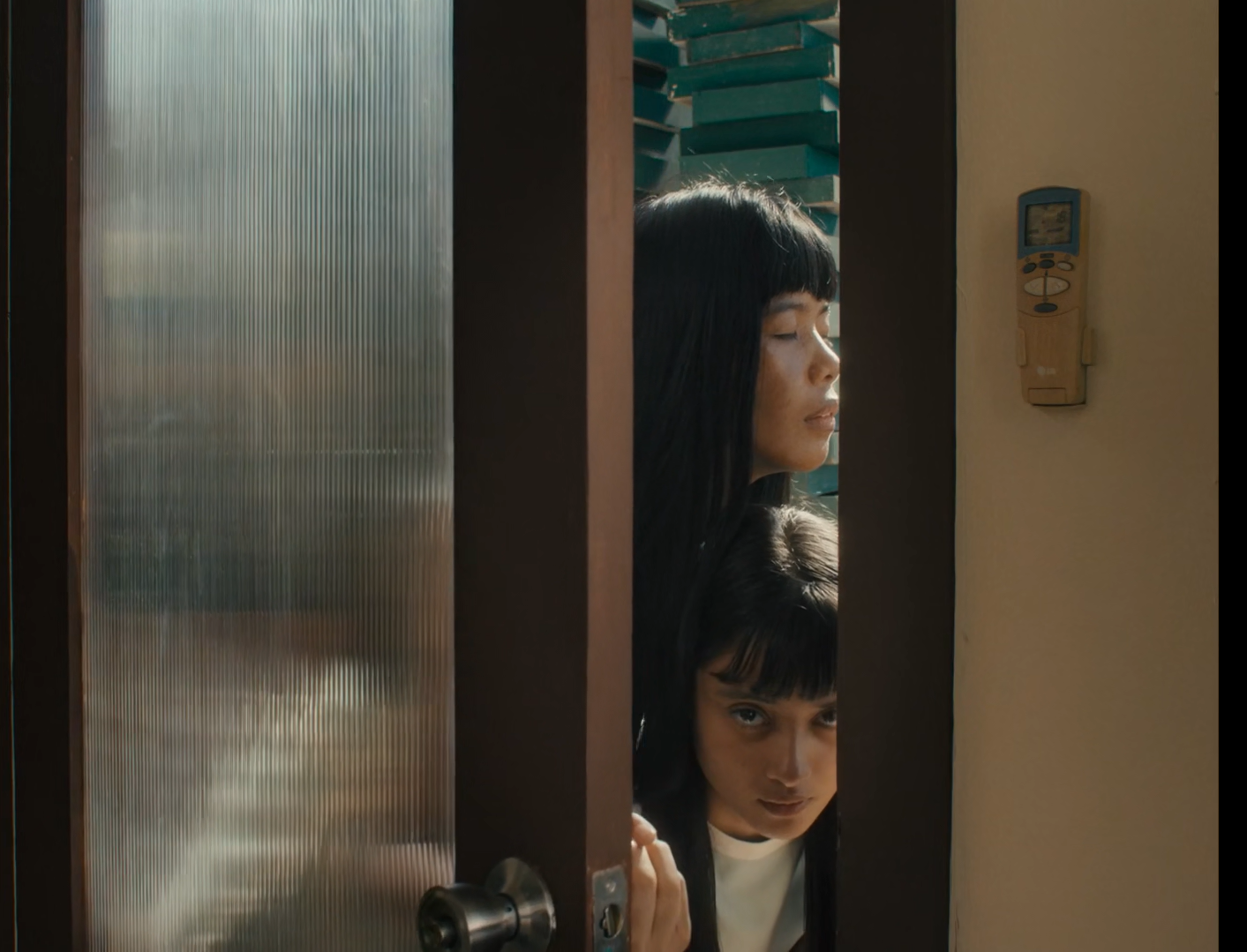
The ‘tee girls’ as they’re called appear interchangeable in their matching uniforms and similarly uniform age. Director Rafael Manuel often places them in the middle distance, minimising them, and also often in the lower half of the frame, visualising their place in society’s pecking order. But as Manuel’s laconic, smart and deceptively angry satire demonstrates, that doesn’t mean they’re not switched on to the farcial hypocrisies surrounding them, or the dangers and abuses lurking beneath the facade of carefully sculpted beauty. Indeed, a number of the young women are observed crutinsing their so-called ‘betters’ with detached irony; a level of condescension reserved for those who’ve grown quickly accustomed to bullshit.
Filipiñana is a quixotic, slow-cinema comedy of the drollest stripe, captured in languorous static takes, boxed-in to the old academy ratio. Everything feels measured and calibrated for acute aesthetic pleasure, even the hugely agreeable large salmon font of the title card. The film is as pristine as the undulating serenity evoked by the man-made golf course, drifting before the viewer against the the chirp of cicadas, the lull of Hawaiian musak or the tranquil ripple of water features. But for all Golf Depot’s attempts to cultivate this artificial paradise, there’s a persistent, seemingly inescapable rot. Mangoes are overripe, even rotten, and singular trees insist on withering. Symmetry and repetition makes the place seem orderly – the rows of golfers teeing off from the driving range are like a hall of mirrors – but the integrity of the front is constantly at risk. Taken for granted, the caddies make small infractions. They venture out onto the courses of their own accord, or finger the perfectly formed whipped cream that tops strawberry pink desserts.
Mr. Salud (Carlos Siguion-Reyna) bemoans to his niece Clara (Carmen Castellanos) that the country is suffering from ‘brain drain’, that the brightest Filipinos invariably leave the country for a life overseas (a catty remark as he is trying to get her to return from her life in the US), but the club has open aspirations to ‘diversify’ it’s clientele, seeking the riches of (most likely) western wealth. Filipiñana, then, is an acerbic comedy that laments the spiritual bankruptcy of the capitalist encroachment on Filipino culture and heritage. The too-perfect curves of the greens and fairways look no more realistic than the utopian sets of a backlot Star Trek show. The feeling one gets is that the people are strangers in their own strange land, a place terraformed by the west, replaced and plasticated. Clara insists that her uncle is harmless, but the film never lets up on the sense of potential violence from his more predatory peers. When she ultimately comes into direct contact with the results of their barbarism, her uncle reassures her that “no one will know”, just as a thunderclap signifies the cascade of overdue rain. It’s hard not to think of recent news stories that have brought the misdeeds of privileged men back into the public consciousness. A raindrop against a windowpane makes it look as though the whole land is crying.
With his patient observational eye, Manuel’s work is like a wry – or should that be rueful – Tsai Ming-liang or Carlos Reygadas, though less inclined toward obtuse abstraction or the punishingly bleak. The comedy is underplayed, thrown away even, giving it a flavour of the Greek Weird Wave; something Yorgos Lanthimos might have made if working with a set of dogme-like constraints paring him back. Finding buzz-name world cinema signifiers will only get your so far, however. Rather, this is original work that rubs shoulders with that of others but then bracingly stands apart, unique and resilient. Filipiñana is a series of cumulatively linked vignettes, an ensemble piece taking in multiple vantage points across the club’s palatial grounds, coalescing for a moment of potential vengeance caught in the waver of hesitancy. Accustom yourself to it’s calculated rhythms – slow, but never casual – and you may well get taken away on it’s gentle tide. Time starts to feel slippery, even meaningless in Manuel’s successful depiction of a microclimate designed to feel divorced from reality but one that is pitted with it’s disappointments. A failed utopia.
Often Manuel will suddenly hit you with the full regard of the ‘tee girls’, staring direct into camera, bored, annoyed or indifferent. A silence which always speaks volumes.