

Director: Lee Chang-dong
Stars: Sul Kyung-gu, Jeon Do-yeon, Cho Yeo-jeong
During a 9-5 working week we spend as much as a third of our time with our work colleagues. Often they’re the people we see and talk to the most, whether those interactions are strictly professional or otherwise. To consider them family, then, isn’t a ridiculous stretch of the imagination. For former welder Ho-seok (Sul Kyung-gu), his work colleagues were just that. He thought of them as his brothers and referred to them as such. Then the company he worked for, SP Heavy Industries, went through a restructuring and mass redundancies ensued (not without some serious union protesting). We meet the tight-lipped family man unable to bring himself to attend the funeral for a former ‘brother’ driven to suicide. He stays in the car while his wife Mi-ok (Jeon Do-yeon) and son Cheol (Jeong Seop) pay their respects.
The deep-set interiority of Ho-seok not only marks Sul’s performance out as one of the finest of the year, but engenders a considerable sense of amorphous unease throughout Lee Chang-dong’s masterful latest; his first in eight years after the (rightfully) lauded Burning. That film contended with a damaged and fragile male ego, and the memory of it almost feels weaponised here to make us wonder if we’re travelling the same road. The slightly-anachronistically-named Possible Love follows the relationships that build when Mi-ok is befriended by aspiring documentary filmmaker Ye-ji (Cho Yeo-jeong), an upper middle class woman who is seeking to make the vanishing labor workforce the subject of her first feature (not unlike Julie in The Souvenir). Feeling distanced from her embittered, stoic husband, Mi-ok embraces the opportunity to become the centre of attention, and Ye-ji takes full advantage of this to ingratiate herself into the family’s routines.
Possible Love unfurls over close to 3 hours and is novelistic in scope, burrowing into character motivations and often only revealing contextual details further into the narrative. Lee does this with a thoroughness that makes it feel considered from all sides. It’s a masterclass in storytelling, really, and only very occasionally feels as though the indulgent running time isn’t being put to essential use.
Before growing close to Ye-ji – whom she eventually starts affectionately calling ‘Sis’ in a mirror of her husband’s former behaviour – Mi-ok has what seems like a meet-cute with Ye-ji’s husband Sang-woo (Zo In-sung), a handsome younger man who helps to find her stray wedding ring (its slip from her finger suggestive of wandering desires). This intermarital interest is mirrored by Ye-ji’s clear desire to obtain an interview from the reticent Ho-seok. The women have their eyes on each other’s respective partners, but to different ends. But Possible Love isn’t some partner swapping comedy of errors. Lee pursues richer and more pressing avenues of enquiry, both in the responsibilities and ethics of documentary filmmaking, and in unravelling the evil tolls of capitalism. When Ho-seok does eventually open up, the act is an overdue, wrought confessional revealing a deeply humane pit of pain. Healing and cathartic, it suggests a Catholic read of the film; an urge backed up at the very beginning when Lee opens with the tenth commandment, “Thou shalt not covet”.
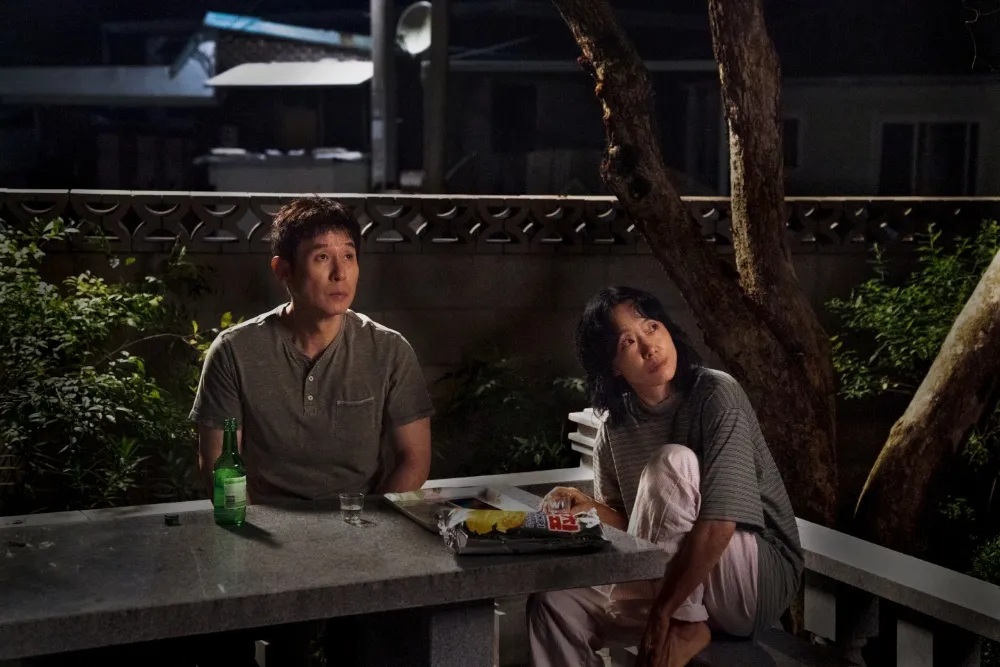
The covetousness of Possible Love isn’t primarily romantic, but classist. Ye-ji badgers her muses to holiday with her and Sang-woo at their beachfront holiday home. While Mi-ok has picked up on clues to the filmmaker’s relative wealth, the true schism between the families isn’t made clear to her until they arrive at the property. Here security cameras provide another kind of ever-seeing documentary footage, as Ye-ji’s ever-present camera grows more and more exhausting and invasive. Lee generates a sense of great fatigue with the notion of permanent surveillance, while occasional cuts to the CCTV POV only enhance the sense that we’re being led toward some eventual crime scene. For all it’s generous meandering, Possible Love is rendered compelling by this ongoing insinuation that the tale could spill into tragedy at a moment’s notice. The third act reveal is that the tragedy has already long-since happened, and we’re merely wading through the wreckage of what remains.
I was reminded, also, of the observer effect; the notion that studying something can inherently disturb its behaviour. How close can an objective documentarian be to their subject, and can a friendship ever be transactional? Ye-ji’s familiarity with her subjects comes from a questionable philosophy that she must love them, and she refers to her time in their company as “method acting”. Her empathy is forced and performative. Though well-intentioned it amounts to a kind of poverty tourism, and one can’t help but see that disingenuousness registering in the responses she receives from Mi-ok and Ho-seok (Cheol, shyly but wisely, simply hides in a cupboard). As much as Mi-ok plays up to the attention, she’s quick to declare when something’s off-limits. Perhaps aware on some level that she’s being manipulated, she entertains the pretense so long as she feels it’s complimentary. The underlying sense that she could turn, perhaps even violently, only enhances the potential for chaotic fallout come the third act. Slowly but surely Lee gets us to a place where any one of these people could upset the whole picture.
Along the way there are evocative flashbacks to the earlier years of Mi-ok and Ho-seok’s courtship as well as to the pivotal union-busting picket lines that preceded Ho-seok’s dismissal. Mini chapters unto themselves; detours that add weight and shade to the humbled couple we study as intently as Ye-ji does. Lee’s study of them is deeply concerned with the direction that Korean business and labor is taking as companies devalue the human aspect. As if in direct opposition to this, Lee has crafted a hand-held, handmade film that stands as a long, deep and compassionate study of human behaviour. That he doesn’t cave to expectation may wrong-foot in the moment, but in the aftermath only underscores that this is a seriously considered piece of work more interested in reflecting our world than the pantomimes of sensationalist melodrama or the inspiration of tawdry true crime. While its characters seek transcendence, the film itself vaults into a league all of its own.


