

Director: Paul Thomas Anderson
Stars: Teyana Taylor, Chase Infiniti, Leonardo DiCaprio
Paul Thomas Anderson has made a few contemporary-set films before (Hard Eight, Magnolia, Punch-Drunk Love), but none have felt as relevant to their times as his latest, searing, sensational offering. Loosely adapting elements of Thomas Pynchon’s 1990 novel Vineland, he brings the author’s typically screwball vision of ’80s counter culture into America’s bleary-eyed, doom-scrolling present.
Shot and produced between two Trump administrations and opening with a delirious half-hour prelude of immigration detention centres and bank heists exploding circa Obama’s first term, Anderson presents the Land of the Free under strict military watch, romantically imagining (uncovering?) an energised populous of revolutionaries (dubbed ‘the French 75’) fighting against rolling racist, fascist regimes with tremendous gusto and verve. Much of said gusto is embodied by Perfidia Beverly Hills (Teyana Taylor), as fervent in her convictions as she is confidently sexual. Indeed, the two pillars of her personality frequently seem intertwined.
Perfidia’s only physically present in this incredible opening act, photographed by Anderson via Licorice Pizza DP Michael Bauman in a manner that suggests the director is as slavishly enamoured with her as his co-leads. Leonardo DiCaprio is “Ghetto” Pat Calhoun, an explosives expert who has been drawn into Perfidia’s orbit; a wannabe revolutionary who seems to be only-just keeping pace with her. To his (far) right is Sean Penn’s gravelly Aryan manbaby Captain Steven Lockjaw (these Pynchonian names… *chef’s kiss*), ensorcelled by Perfidia during a raid to liberate Mexicans caught crossing the Californian border. Lockjaw becomes so transfixed that he extends his influence (among other things) in pursuit of her. A film’s worth of information is compressed into this opening salvo. A swift, energised, beautifully edited and compiled parcel unto itself before we flash forward 16 years.
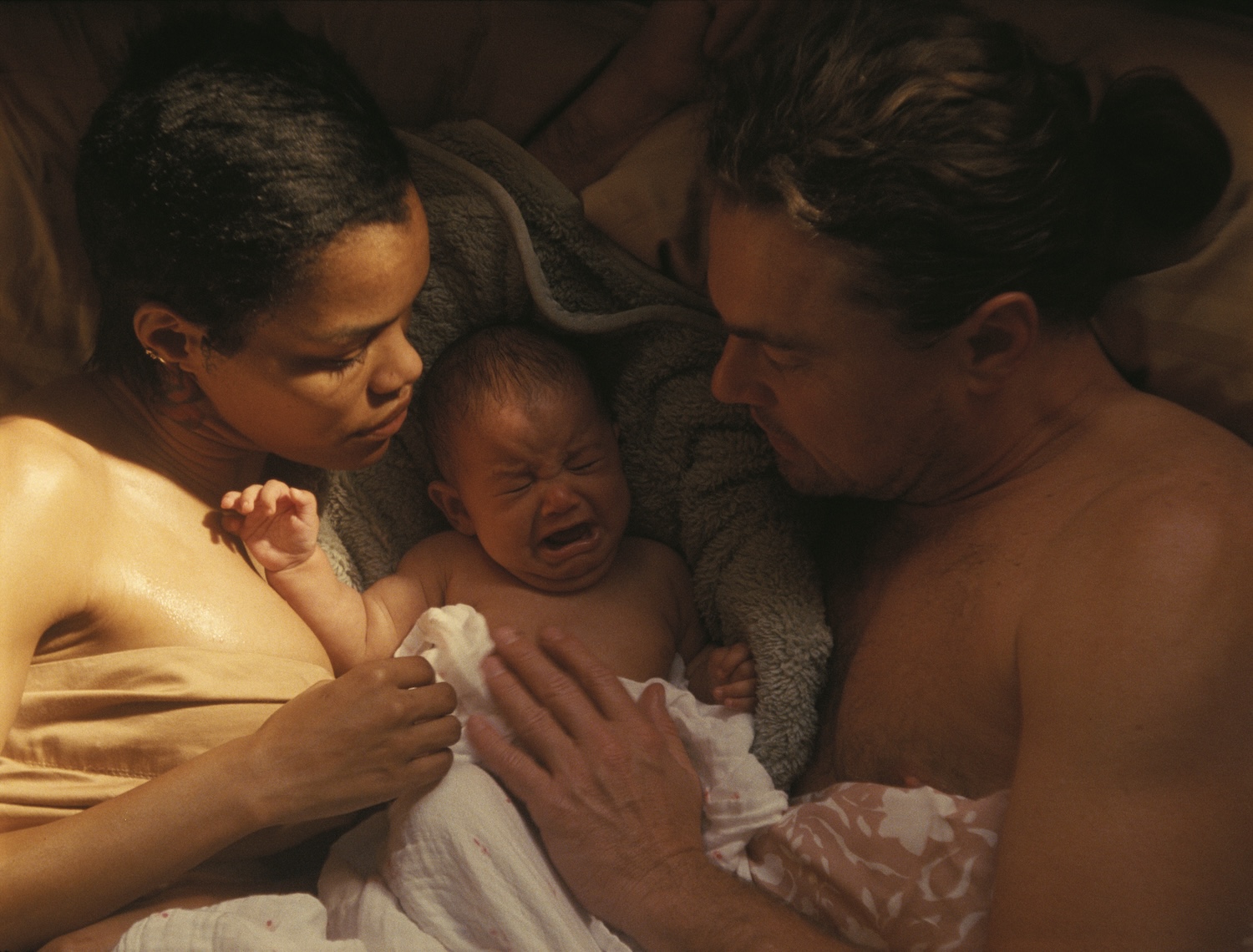
Perfidia has split and is thought dead by many. Pat has relocated to the sympathetic ‘sanctuary city’ of Baktan Cross, living under the name Bob Ferguson with their daughter Willa (Chase Infiniti) (real name Charlene). In the intervening years Bob has cooled his revolutionary jets and lives in a permanent fug of idly stoned paranoia, but he loves and is protective of his daughter as she starts planting her feet in the world. The energised spirit of his youth comes crashing down on their lives, however, when Lockjaw – now a colonel – belatedly comes looking for the both of them. They represent blots on his otherwise spotless career record, as he readies himself for induction into the KKK-adjacent Christmas Adventurers Club. Time to clean the slate…
What unfurls from here is, by necessity, more leisurely than the condensed, incendiary opening of the film, but it moves with an incredibly well-orchestrated pace, underpinned by Jonny Greenwood’s perpetually percolating score. As with Killers of the Flower Moon, DiCaprio’s name takes poll position, but in truth he’s one player in an ensemble work that cruises forward with a ceaseless, charismatic momentum of Anderson’s making. Somewhat surprisingly, Penn has just as much screen time and character consideration, inviting the viewer to reflect on the disparities (and occasional similarities) between the two men, who both yearn for and bristle against the security of their larger, respective conclaves.
I strangely found myself thinking a lot about Kill Bill as a counterpoint. Both pieces are maximalist human sagas that rove years and distance geared toward mainstream enjoyment. But more – and this is key – in how they both take something exotic we Average Joes and Janes are comfortably sure truly exist (revolutionary groups / assassins) in order to toy imaginatively with the brio of what the world might look like if they functioned on a much larger, pulpier canvas. It’s storytelling of utmost generosity.
Arguably the most rousing stretch of One Battle After Another is a long night’s adventure for Bob when he goes to his daughter’s karate sensei Sergio St. Carlos (Benecio del Toro) for help. Anderson orchestrates before our eyes an organised, compassionate community of revolutionaries who are prepared to commit to both altruistic assistance and to stand in harm’s way as the bootheels of fascist America come clicking. Anderson is, generally, a romantic filmmaker (Inherent Vice and Phantom Thread particularly), but I’d argue nothing in his filmography to date is as romantic as this notion of a united America patriotically working against the state.
There’s a further turn for the film’s final third, which sees the harsh desert daylight transform One Battle After Another, ultimately, into a neo-Western, one that culminates with one of the most incredible (and unusual) car chases along an astonishing stretch of road. It’s not the speed or chaos of the action that makes it great (indeed, there’s little to no chaos to speak of), it’s the determined suspense of it. Suspense that is carved out of the quite stunning geography. Another all-timer sequence for Anderson.
Flicking back to Killers of the Flower Moon for a moment, and it’s a comparable piece for DiCaprio in other ways. As with Scorsese’s late-game masterpiece, DiCaprio is operating in a commendably egoless mode. Bob is obviously far less odious than Ernest Buckhart, but he’s about as clueless. You can sense the actor digging deep here, and putting a confused and desperate power into Bob’s rejuvenation, even as he spends the entire film chasing the action. It’s his funniest work since The Wolf of Wall Street and he makes for a great buffon, particularly a surprisingly long ‘bit’ that finds him rallying against the sensitive bureaucracy that seems to have overwhelmed his former compadres. Over the road, Penn presents a complex contradiction; a caricature that seems well contemplated, and not without his own cinematic touchstones. There are moments and gestures within Col. Lockjaw that come straight out of Sterling Hayden’s maniacal turn in Dr. Strangelove. But it’s the boyish naivety in him that lingers longest.
But above all, and not just from these immensely watchable men, One Battle After Another is about its women. From the incredible sexual spectre of Taylor’s Parfidia to the awakening assertiveness in Infiniti’s Willa. They’re two among many. From Support the Girls highlight and breakout Shayna McHayle as ‘Junglepussy’, demanding that her hostages look at her face, to Magnolia alum April Grace as the coolly collected Sister Rochelle, mother superior of a convent of sympathetic nuns, growing weed and taking no shit.
The wonderful Regina Hall, too; relatively quiet here as fellow comrade Deandra, she often simply bears witness. For all that One Battle After Another invites us to laugh and takes us on a riotous thrill ride, a single tear down her cheek resonates strongest. There’s an infinite amount of hurt in America, most of it caused by those who have sworn to protect it. Custodians of vile institutions. What does America have to defend itself? It has people who care about one another, like Deandra. A sentimental notion perhaps, but one delivered by Anderson with a straight face, barely hidden beneath this movie’s outer smirk. Even when he’s tried to hide it, he’s always had tremendous heart. And maybe heart’s what’ll save America, if anything can. It’s an optimist’s notion.
¡Viva la Revolución! A(nother) PT Anderson masterpiece.

 The Lost Highway Hotel
3 thoughts on “Review: One Battle After Another”