

Director: Lance Oppenheim
Stars: Robert Pattinson, Merritt Wever, Skyler Gisondo
I’ll admit that, circa 2006, I was probably one of the ones watching John Locke fight off a polar bear in LOST rather than a viewer of America’s increasing stream of reality TV and docutainment that came to rule networks globally, so the To Catch A Predator phenomena passed me by. But I did see David Osit’s Predators at the tail end of last year – a documentary which challenges the motivations of Chris Hansen’s paedophile entrapment show – and which proves a worthy primer for Lance Oppenheim’s intentions with Primetime.
Robert Pattinson plays a version of Chris Hansen, TV news reporter turned celebrity bounty hunter and ringmaster of Dateline NBC’s smash hit show, which used actors who appear underage to trap keyboard monsters who think they had a chance of sleeping with a consenting child. Primetime sets this up swiftly with a darkly uncomfortable example featuring an aghast Tony Revolori (online handle MarriedAndLookingForFun31313). While the network head is bemused and possibly sickened by the show, he understands ratings and wants more of them, so moves Hansen’s project into a primetime slot to compete with ABC’s desert island mystery sensation. Chris is thrilled, even if his two boys and increasingly estranged wife (Anna Faris) would rather just have him back in their lives. But a bigger spotlight means more pressure to deliver. Harder, better, more scandalous. And Chris’ online ‘researcher’ Xavier (Matthew Maher) – the founder of vigilante group “Perverted Justice” – keeps whispering about bringing in their ‘whale’…
The first act of the film is constructed as a convergence between the stories of Hansen and of aspiring actor Daniel Plum (Skyler Gisondo), who finds himself playing a 13-year-old in a ‘live rehearsal’ for Chris’ gung-ho producer Andie Bender (Merritt Wever). Through Daniel Primetime charts a course of ethical second guessing. Initially ‘Decoy Dan’ is particularly naive, thankful for the opportunity, and confused as to why his peers don’t share his enthusiasm. As his experiences on Predator progress and he reaches for more of the limelight, a sinking feeling grows; a moral rot which Dan has to reconcile.
For Chris no such quandary exists. He is judge, jury and executioner, and Primetime paints his devotion to the show as a moral certainty, coloured by experiences reporting in India a decade previously. If anything the film furthers an uneasy kinship between Hansen and the men he seeks to shame. In preparation for each encounter he recites over and over their dark chatroom desires, while the film skews the real life chronology by contemporising an extra-marital affair, placing him dangerously close to similarly unflattering limelight in the court of public opinion. Pattinson’s performance is tightly controlled and intense, pushing into Hansen’s own complicated relationship with the media spotlight. Recording VO for a promo spot over and over again he adopts a slight drawl, sculpting with his voice a slicker persona. Navigating his personal life he is much more tentative and fumbling. In combination we receive the impression of a fracturing facade, just as Predator itself ultimately comes undone.
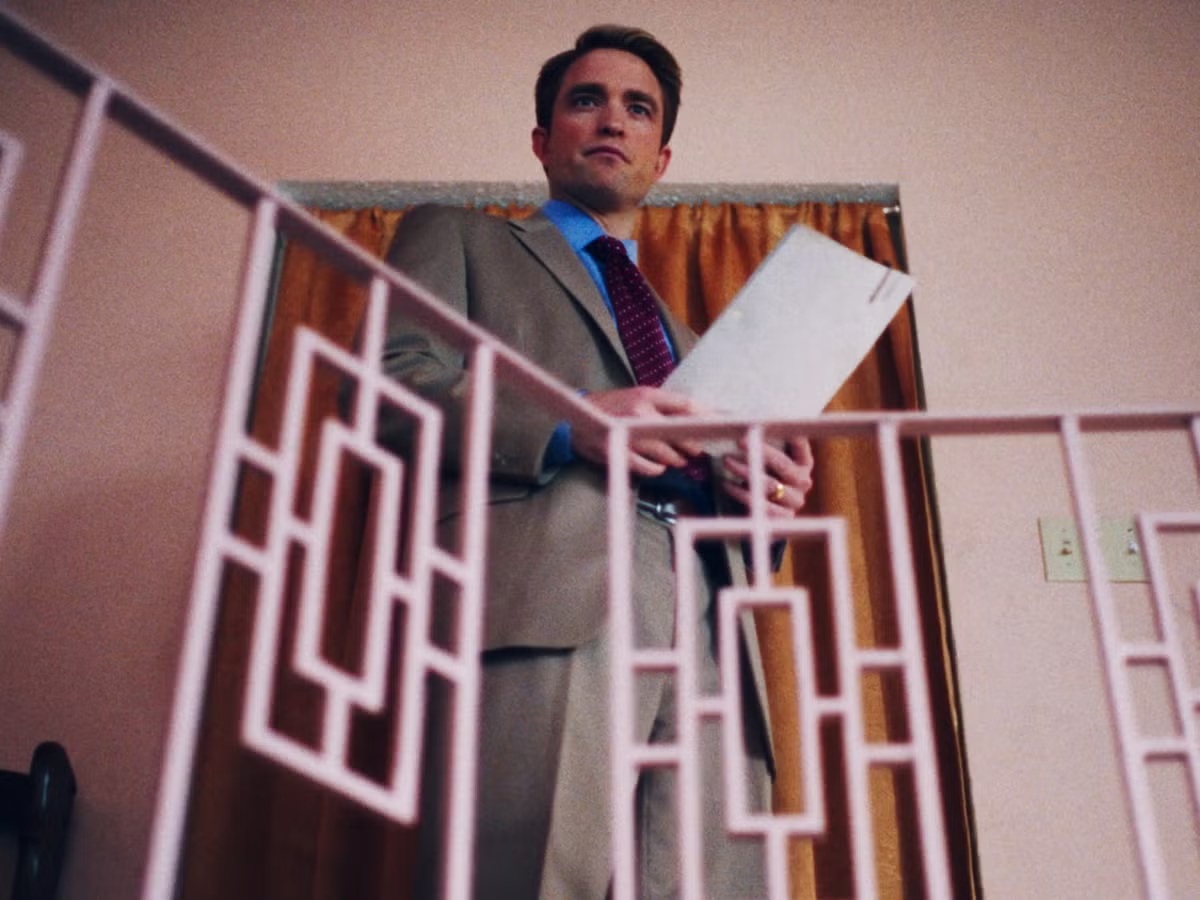
The influence of television is felt throughout, from the eagerness of the Murphy, Texas police department to welcome and engage with Hansen’s team to Daniel’s dedication to learning his craft through tapes of Inside the Actor’s Studio with Billy Bob Thornton. The insider view from behind the curtain, meanwhile, is pure ruthlessness as a rival network attempts to poach Andie,
The lurid bleed of videotape permeates Primetime as much as the concerted effort to imbue as many scenes as possible with eerie, ethereal blue light sourced from laptops, swimming pools, TV screens, even lightning – the movie’s own irresistible predilection. Lingering shots of a professional camera dropped into a swimming pool feel pointed, like some twisted take on the narrating corpse from Sunset Blvd. We’re made to feel submerged in a digital miasma, a placed rendered claustrophobic by cinematographer David Bolen’s commitment to uncomfortable close-ups. The camera becomes both accuser and recipient of hostile rebuttals. Through it’s lens we feel what Daniel feels; the taint of what Hansen has drawn them all close to. The weariness of living in proximity to this vile societal underbelly that continues to haunt us in the present.
Primetime becomes a sweaty chase movie as Hansen and his team close in on their ‘whale’, District Attorney Bill Conradt (Alex Winter). The notorious fallout of this episode effectively brought an end to Predator, and leaves us in an even murkier moral quagmire. If anything Oppenheim’s film feels like the rare biopic/revisionist re-enactment that asks for a sequel, so strong is the sense that the fallout from this crescendo is worthy of further unpicking. Perhaps that is the task Oppenheim – more frequently a documentarian – pointedly tasks us with as the credits crawl. The proposal, ultimately, is that Predator was never about justice or crime prevention, but about market share and escalating sensationalism. The hollowness ends up writ large on Daniel’s face (Gisondo is kind of fantastic).
Like Predator itself, I’d imagine, this all makes for decidedly queasy (if compulsive) viewing.