
Director: Joachim Trier
Stars: Stellan Skarsgård, Renate Reinsve, Inga Ibsdotter Lilleaas
The poetic opening to Joachim Trier’s Sentimental Value focuses on the Borg family home; a spacious, detached, middle class property, as seen through the young eyes of troubled actress Nora (Renate Reinsve). She recalls a childhood essay in which she anthropomorphised the house, pictured it full with life, empty without people, creaking and groaning and thrumming from those who called it home. From the off there’s this inference that the house is host to its occupants. That the Borgs are akin to symbiotic parasites within. That perhaps moods and emotions are exchanged, and that a vast crack caused by subsidence is redolent of a fault in the family’s own genetic makeup.
Hereditary tendencies toward depression are itemised over the following two hours, as the fractured family are forced to deal with the cracks in their masonry. Patriarch Gustav Borg (Stellan Skarsgård) has been an absentee father for decades, prioritising his illustrious career as a venerated art house filmmaker. He intends a final project to be shot at the family home, seemingly inspired by the suicide of his own mother within the building, and seeks to cast his eldest daughter Nora in the lead role. Nora, wrestling with her own bouts of stage fright and resentful of her father’s taciturn interest in their lives, refuses to read his script. A keen American star, Rachel Kemp (Elle Fanning), presents Gustav with an alternative opportunity.
There’s a scene deep in the middle of Sentimental Value in which Gustav gifts his 9-year-old grandson Erik (Øyvind Hesjedal Loven) a bundle of wildly inappropriate DVDs of edgy European art house cinema. Titles from the likes of Gaspar Noé and Michael Haneke. Haneke’s Code Unknown has, by this point, announced itself as a particular influence on Trier’s film, as he borrows from it the pointed cuts to black that separate each sequence in the film, detaching events from one another. Free of intertitles, these chapter stops have a subliminal distancing effect, much as they do in Haneke’s work. Sentimental Value feels observational. The house becomes an enclosure, the family zoo animals for our study.
This is a relatively subdued offering following Trier’s globe-conquering 2021 film The Worst Person in the World. It’s knottier, more introverted, less inclined to court audience’s fancy with grand flourishes. At its heart it’s a four-way character piece, affording space and consideration to Gustav, Nora, her younger sister Agnes (Inga Ibsdotter Lilleaas) and well-meaning interloper Rachel Kemp. Rachel struggles to grasp the interiority of Gustav’s screenplay, perhaps from a misconception that her character is purely a transposition of Gustav’s mother, when the inspiration comes from elsewhere in the family bloodline. Histories of grief, trauma and depression slowly worm their way out of the woodwork. Sentimental Value presents these complex, unseen maladies with an astuteness and sensibility that mental health isn’t always afforded on screen. It’s a credit to the writing and all four performances that the ineffable is communicated so convincingly, without bluster or grandstanding.
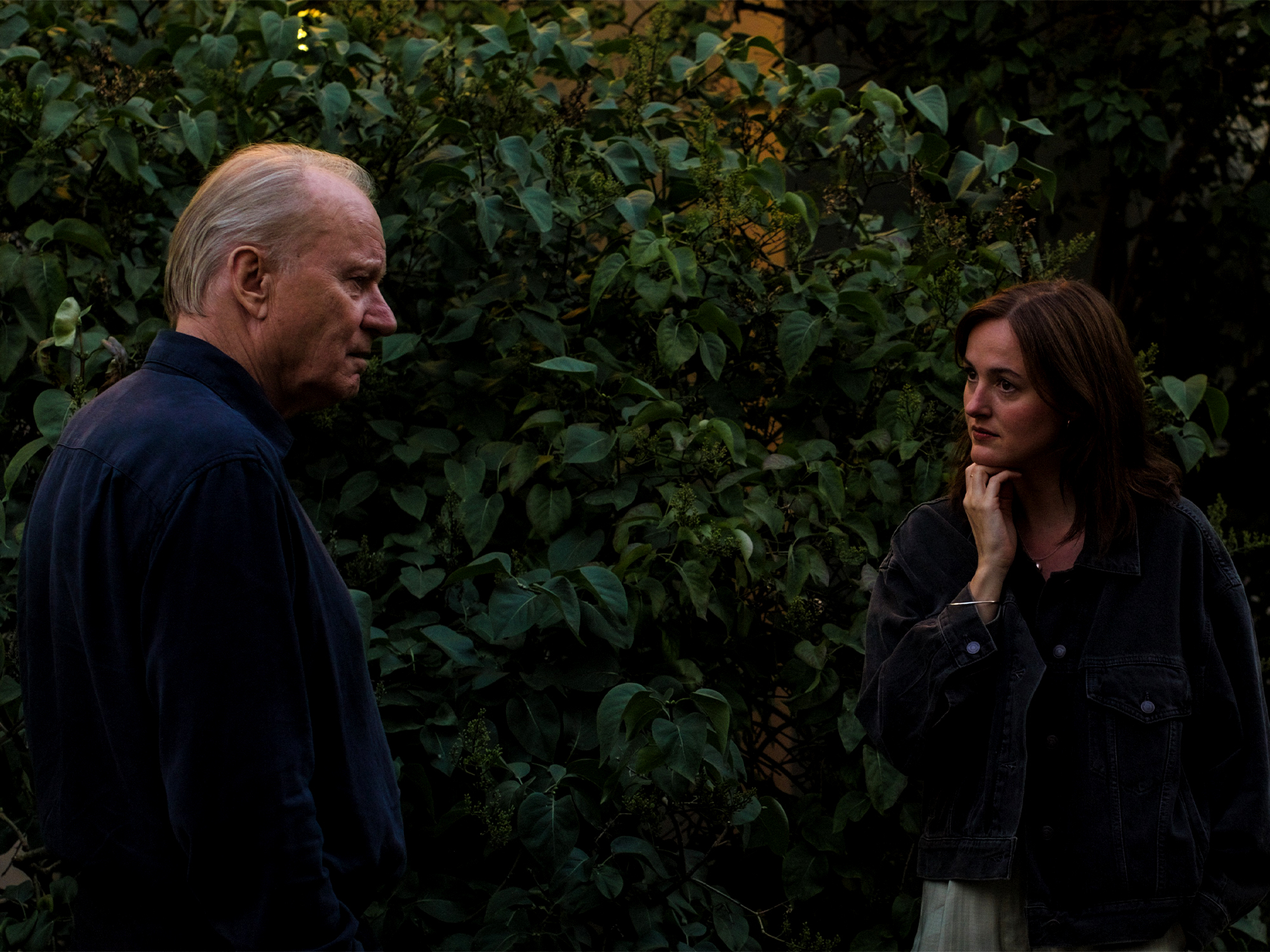
While Sentimental Value is a remarkably mature work, it’s also a tad unruly and unfocused, prone to tangents and stylistic asides that feel slightly (and maybe deliberately) unfinished. A second spiel of narration as we flashback into the family history announces the end of the first act, but doesn’t recur again. Elsewhere, Agnes’ investigations into her grandmother’s ordeal during World War II are sombre and affecting, but don’t become an explicit point of contention in the remaining story. They serve a purpose, helping us to understand that Gustav has mined the family’s traumas for his art before, but also serve to make this work a little sprawling and anecdotal.
Sentimental Value rallies against a certain bourgeoisie tendency that enshrouds most middle class films about filmmaking. There’s an inherent indulgence in such stories, and we receive a lot of them. While there’s plenty of meat at the core of Trier’s film to assuage such accusations, this is also a markedly tasteful effort, lacking in energy or momentum from beginning to end. As already attested, the writing and performances bare him out, but this viewer also longed for a little more kick or spunk or attitude in a piece that sometimes feels too polite or reluctant to get its hands dirty.
But there are prizes within, for sure. Particularly any scene shared between Reinsve and Ibsdotter Lilleaas, so convincing here as sisters navigating different paths. Skarsgård has been praised and justly so (though, along with Josh O’Connor for Wake Up Dead Man, I’m starting to wonder if it’s Awards Season that doesn’t understand what a supporting role is, or if I’m the one confused – these are clearly lead roles). And Elle Fanning caps off a stellar and diverse year’s work. She’s really emerged in 2025.
Still, Sentimental Value feels just a shade too precious to fully warm to for this writer. Its house of wounds like fragile glass that might crack if pressed upon too hard. Come the end of the film there’s some tension or confusion over how to remedy a cancerous depression that’s built into the very bones of a place. Can you just whitewash it over? One senses that these characters all find healthy exits, at least. And the film’s optimistic grace notes display a (yes) sentimentality that is at least well-earned.

 The Lost Highway Hotel
1 thought on “Review: Sentimental Value”