
There’s a scene a little over half an hour into Twin Peaks: Fire Walk with Me which never fails to give me goosebumps. Actually, it’s more of a line reading. Lazing on the seats in the Hayward family living room are Donna (Moira Kelly) and her best friend Laura Palmer (Sheryl Lee) who is doomed to die by the film’s end. High school girls, they’re talking about boys. Suddenly, out of nowhere Donna poses the question, “Do you think, if you were falling in space, you’d slow down after a while or go faster and faster?” The music – up until this point an amiable Angelo Badalamenti pretty ’50s backdrop – chills. It’s like a cold wind has blown through the room, and Laura, eyes distant, answers:
“Faster and faster. And for a long while you wouldn’t feel anything. And then you’d burst into fire, forever. And the angels wouldn’t help you. Because they’ve all gone away.”
Chills. Every time. In this moment, and with this answer, Laura is a brief soothsayer, as though the young woman – worn by experience and older than her years – has some sense of the end hurtling toward her, as well as the futility of any hope of rescue. But director David Lynch (forever aware of the vital importance of sound as a tool), feathers in a sonic sense of foreshadowing also, in a move that would prove pivotal when designing the soundscape of his next film, Lost Highway. For a brief moment in this scene we hear elements of the theme that will play at the cathartic finale, when Laura is finally united with her angel. It dips in and out of sensory perception, like a déjà vu in reverse.
Through moments like this, Twin Peaks: Fire Walk with Me almost subconsciously meshes together; a movie of wildly different story and tonal strands that somehow feels complete in spite of the mess and sprawl. Savagely edited down from an initial cut rumoured to exceed four hours, the version that played theatres, got savaged by critics and was booed out of Cannes is the definitive version. Reappraised in many quarters as a masterpiece, Fire Walk with Me is made great by the compromises of its creation. In its strange edits it attains a kind of power and confidence, presents the idea of an entire world that exists whether the movie is playing or not. We get to visit it and grasp whatever we can in our fleeting stay, then mourn that, like a dream, we have to let it go until next time.
In spite of the cumbersome name of this blog (at over 1,300 published pieces it’s too late for a rebrand) and past proclamations that my favourite movie is Mulholland Drive, the passing of years have seen FWWM prove out as the Lynch feature I couldn’t bear to part with. I watch it at least a couple of times a year. I feel restored afterward. And that’s strange given what a wounded experience it is, dealing with the irrevocable damage of familial betrayal and the dark secrets beneath the surface of so much idyllic Americana.
But I love every minute of it. It’s moods and feelings. Last night I got to see it in a cinema (for the second time), and once again it had me swooning. I was overjoyed to hear the packed screening laughing through the relatively light opening half hour (everyone loves Irene at Hap’s!), and noticed the palpable, respectful shift once we settled in with Laura Palmer and her last days. I welled-up twice (once at Julee Cruise’s “Questions in a World of Blue”, and again when Laura says to James “Your Laura disappeared. It’s just me now”), and I smiled and cried at the end. That most moving of endings when, after her murder, Laura is released from the burdens of the world that so disappointed her. I sat instinctively matching the emotions in Sheryl Lee’s phenomenal lead performance. We were briefly one.
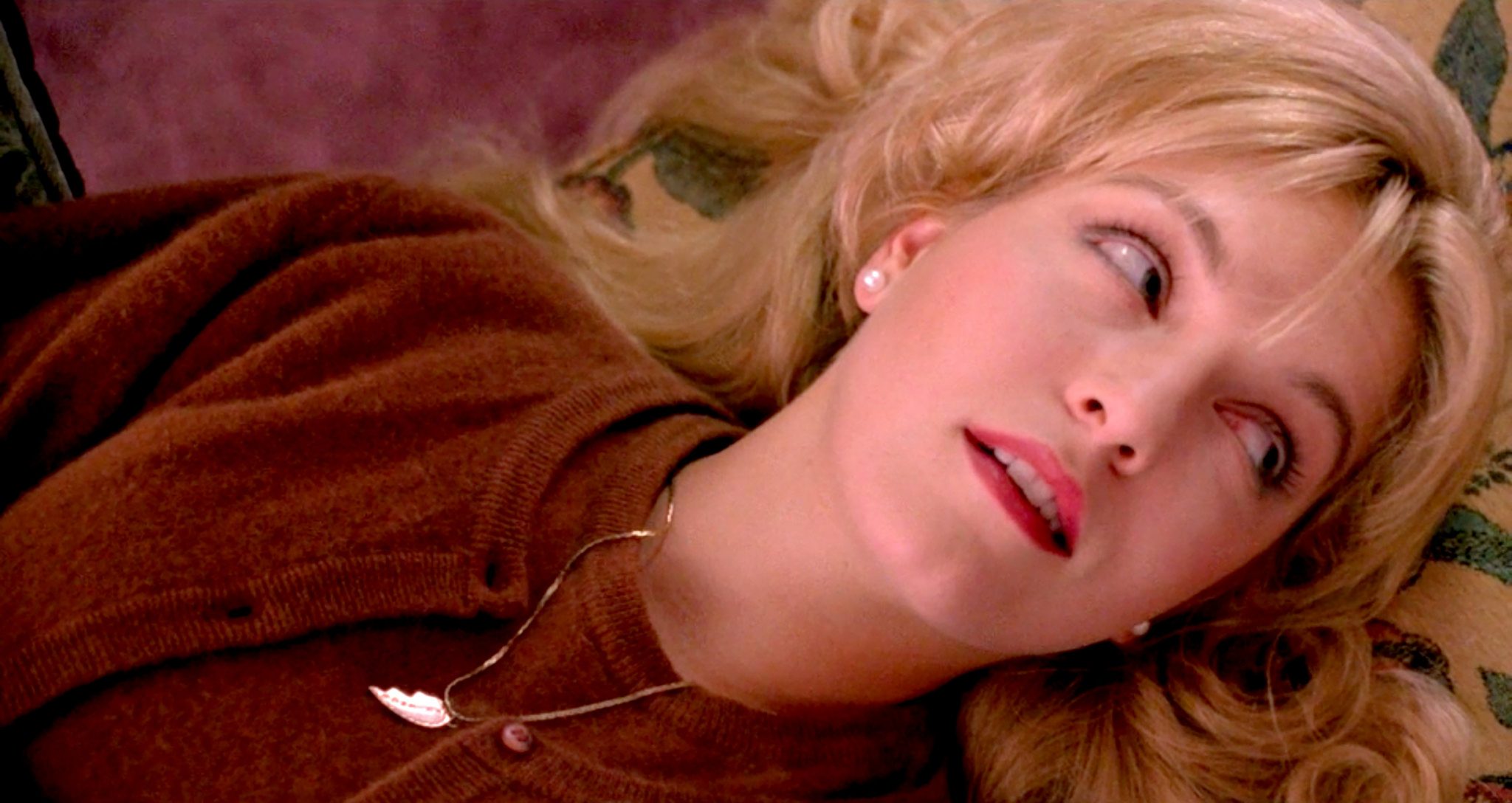
The trouble with writing about this movie for me is that there’s no element of it I don’t want to write about. To do a deep dive on. To mine for all possibilities and secrets. I rearranged some old words about it way-back-when in 2012 for my ongoing Why I Love… series, but reading those back now I’m horrified at a) my own writing and b) the piece’s inability to adequately convey how many things about the movie are precious.
It would take a scene-by-scene deconstruction to fully burrow into this ongoing obsession; something which I have conflicted feelings over because Lynch’s work is so instinctual, so without filter. It feels like a direct link to the source. Tying these images and sounds to definitions feels like constricting them. Efforts to contain and quantify something almost without a metric. Still, I may one day make the attempt, simply because Fire Walk with Me won’t let me go.
I’ve dallied over how to eulogise David Lynch’s passing on this platform. While a great many filmmakers have contributed to my love of the movies, his expressions keep on dazzling me the most. The public outpouring online at the time of his death was remarkable to witness, a shared grief at the loss of a great artist that felt comparable – appropriately – to when David Bowie’s death was reported at the beginning of 2016. The scale was similar.
What’s been heartening to witness in the months since has been the love and attention afforded his work. Magazines like Sight & Sound dedicated entire issues to his memorial, while cinemas across the world have launched retrospectives to share those worlds once more. Indeed, the screening I attended this week was part of a year-long effort from Picturehouse to show all of his features and more, which has already also included an 8-hour marathon of the entire first season of Twin Peaks (I was in hog’s heaven).
I live in a small city in a rural area. A long way from the world, as Sheriff Truman might put it. But there was barely a seat to spare; a rousing and appreciative sight given FWWM’s reputation as a bit of a ‘difficult’ film. I didn’t speak to any of the other cinemagoers. I spotted several Twin Peaks t-shirts (I was sporting my own Roadhouse tee). But there was an amorphous sense of community there. That if you were in the room, one sensed, you were probably ok. The kind of vibe only recently felt at screenings of Jane Schoenbrun’s I Saw the TV Glow (which wears its TP influence on it’s sleeve).
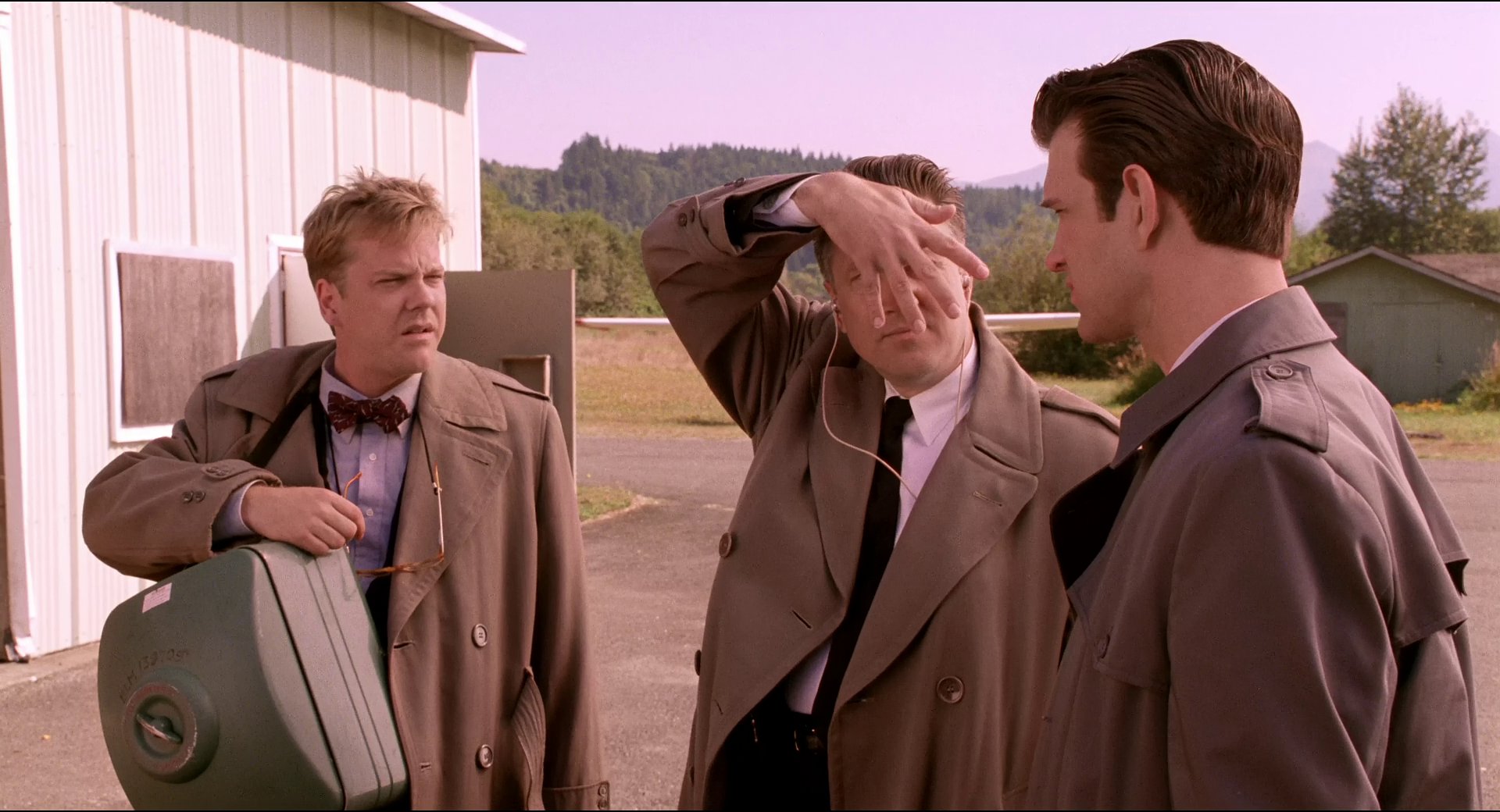
For me the magic starts with that melancholy theme, that first signifier that we’ve left the safety of the TV series behind (fittingly following by the destruction of a TV set), and soon crystalises as we’re introduced to Agents Chester Desmond (Chris Isaak) and Sam Stanley (Kiefer Sutherland), who I wish we’d gotten to spend more time with elsewhere. I love the absurd messages conveyed to them by Lil (Kimberly Ann Cole) and the alluring mystery of the Blue Rose.
And then it’s that American car, those open roads and those Douglas Firs. Lynch drives us into a special world. We’re delivered there. Ushered over some undefined border that isn’t on any roadmap. If there’s a tipping point where the magic begins, its those shots as Desmond and Stanley deconstruct Gordon Cole’s (also Lynch) cryptic offerings, guiding us into the magic of this beguiling vision of the Pacific Northwest, where the woods and the dead are filled with secrets, and where there’s always music in the air.
I could go on. The urge to do that scene-by-scene deep dive rises in me again. But I’ll leave it for now. Twin Peaks: Fire Walk with Me is perfect enough without it, and perfectly imperfect all at the same time.
 The Lost Highway Hotel