

Director: Steven Soderbergh
Stars: Pierce Brosnan, Cate Blanchett, Michael Fassbender
While his biggest screenwriting credits remain the likes of IP hits Mission: Impossible, Indiana Jones and Jurassic Park, David Koepp has found his niche proffering forth his own material for the mid-budget movie, specialising in taut scripts that utilise few locations for maximum results. From David Fincher’s (underrated) Panic Room through his fruitful collaborations with Steven Soderbergh on (the also underrated) Kimi and, just recently, ghost-POV pot boiler Presence. While some of the dialogue in the latter stuck awkwardly in the mouths of the cast, Koepp flexes with better humour – or is just better served – here, offering up a contained little espionage thriller that also plays to some of Soderbergh’s strengths. Light on action but high on smarts, Black Bag is a welcome return to form for both creatives; a movie that feels both tight as a drum and cast off as if it were easy.
Set within the toxically incestuous corridors of UK-based intelligence agency NCSC, we’re introduced first to fastidious neat-freak George Woodhouse (Michael Fassbender) – an old-fashioned bookish spy in the George Smiley mould (their shared first name may even be a deliberate tilt from Koepp). George is married to fellow spook Kathryn St. John (Cate Blanchett), and while the pair must – by necessity – keep secrets from one another, they’d do anything for each other, too. This bond of trust is put to the test when fellow agent Meacham (Gustaf Skarsgård) passes George intel that there’s a traitor in the agency – a list of names with Kathryn’s at the top.
The opening act of the story centres itself around an intimate dinner party hosted by George for all of his suspects, rounded out by fellow workplace couples Clarissa (Marisa Abela) and Freddie (Tom Burke), Zoe (Naomie Harris) and James (Regé-Jean Page). With a home-cooked meal laced with an extra something to get tongues wagging, George surreptitiously grills his guests with psychological games that put ‘ripples in the water’ to borrow from the agent himself. These exchanges, which delve into the dirty laundry of their interpersonal relationships, openly bring to mind the frank confessionals of Soderbergh’s sensational name-making debut sex, lies and videotape. Dressed up in the trappings of a svelte genre picture, it feels as though Soderbergh has come full circle.
There’s a little smattering of international intrigue thanks to Kathryn’s secretive trip to Zurich, but in the main Black Bag is a decidedly office-based affair, juicy for the shifting dynamics between this sextet rather than any Bondian action set pieces. Soderbergh keeps things clipping along, and the lighting department find interesting ways to set rooms aglow. The Woodhouse home burns with warm ambers, contrasting the corporate glass and chrome of NCSC HQ. There we also find Pierce Brosnan in a slyly knowing role as boss figure Arthur Steiglitz, fretting over the movie’s McGuffin; something called ‘Severus’ which Kathryn may or may not have sold to foreign interests.
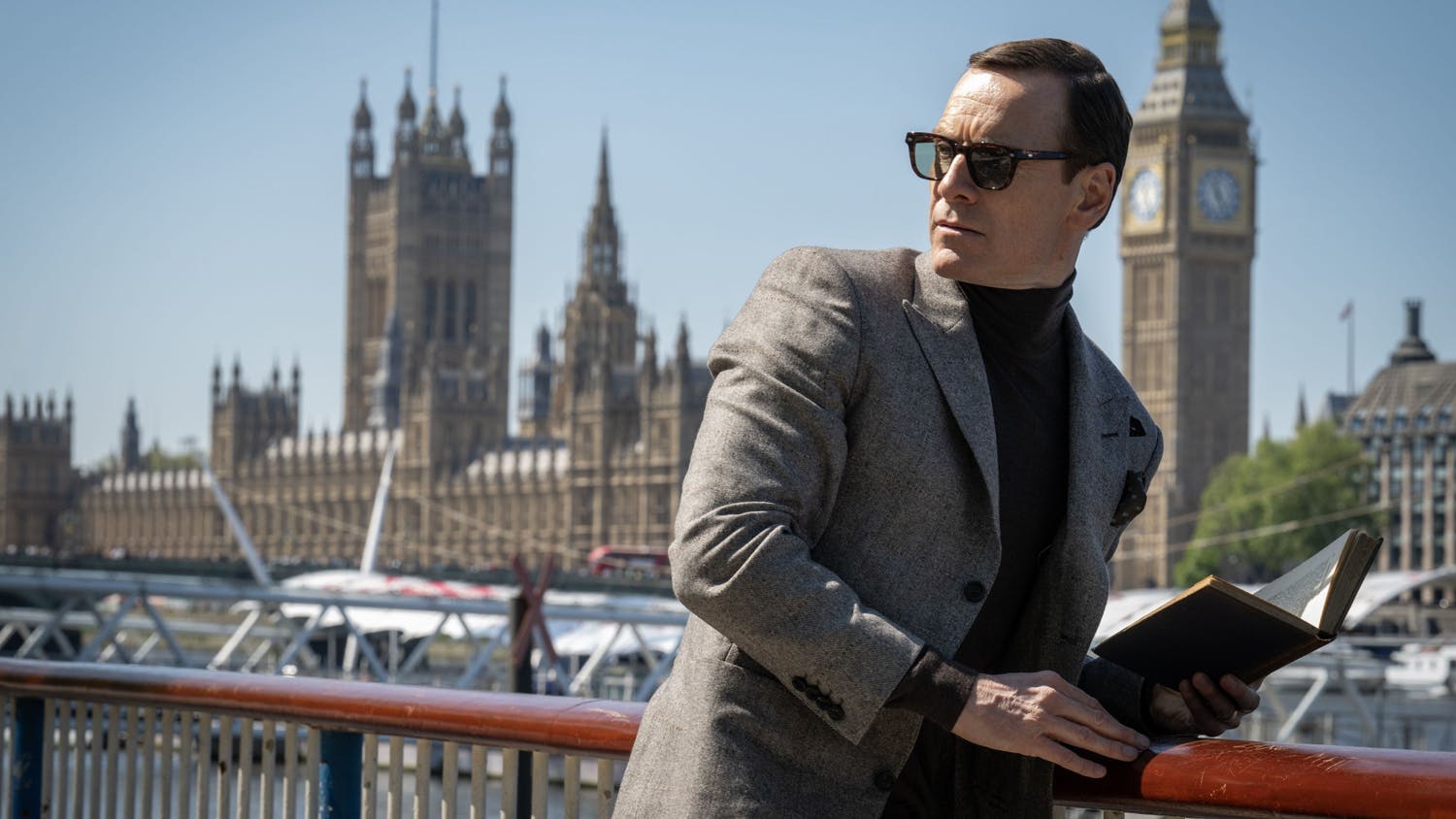
This is an actors’ piece and everyone is on fine form. For Alien fans pining for the concluding chapter of the ‘David Trilogy’, some respite might be found in Fassbender’s portrayal of George, which often comes daringly close to the mannerisms of his Machiavellian robot. Burke conjures some of the pomp and pomposity of Anthony from The Souvenir, albeit more openly ramshackle, but the real standout turns out to be Abela as Clarissa, single-handedly reviving her career after Back to Black as a data analyst with an alluringly played penchant for perversity. If anyone’s under utilised, it’s Blanchett, who’s kept at arm’s length for much of the running time as George (and the audience)’s chief suspect.
Notions of trust and fidelity underpin pretty much every scene here, but where most thrillers of this nature focus on patriotic integrity, Black Bag picks at the conflicts of interest in romantic couplings. The nature of the job for these six people adds another layer of duplicity, making the search for true fidelity all the more interesting. It’s a nimble little piece that lures the viewer around by the nose, even if some of it’s ultimate reveals are reasonably easy to predict. It’s also dryly hilarious throughout, pocked with the kind of droll humour that one might otherwise look for in an episode of Frasier. Indeed, Soderbergh could have played this one as an out-and-out comedy if he’d wanted to. Instead he traverses a tightrope of understated seriousness, allowing a smirk to crack every once in a while to keep the goodwill flowing.
At a compact 94 minutes there’s not an ounce of fat to be found. David Holmes returns to the Soderbergh stable to underpin proceedings with metronomic beats to keep us keenly attuned to the tight passage of time, and with such a stellar cast, this is almost ‘Oceans does espionage’, albeit on a smartly controlled budget. That it all culminates in a mirror dinner scene feels just delectable, perfectly suiting the small scale of this amply enjoyable little thriller. With well over 30 features under his belt, you can comfortably file this in the top half of Soderbergh’s efforts if ranking movies is your thing. Like a double agent it comes and goes so unassumingly that you’d be forgiven for taking it for granted the entire time. That’s a testament to how effortlessly the creative team here carry this one across the finish line. A class act.

 The Lost Highway Hotel
3 thoughts on “Review: Black Bag”