

Director: Greg Kwedar
Stars: Clarence Maclin, Colman Domingo, Paul Raci
Back in 2013, Paolo and Vittorio Taviani spirited us within the walls of an Italian maximum security prison for their documentary Caesar Must Die; an austere depiction of inmates performing Shakespeare to sooth the tempestuous beasts of their tragic natures. Shot in black and white, it was a ponderous, brooding affair, but a possible precursor to Greg Kwedar’s A24 venture Sing Sing, which takes a day pass between the bars of the prison sat on the Hudson River to sit a spell with members of the RTA – Rehabilitation Through the Arts – program.
Based on John H. Richardson’s 2005 Esquire article ‘The Sing Sing Follies’, Kwedar depicts the varying personas seeking solace through performing arts. Indeed, in many respects Sing Sing is a prison escape movie, only the escapes here are internal, souls reaching out from behind learned bravado and the conditioning of – frequently – hood masculinity. Most of the cast come from the real RTA program and play themselves.
Our guide is one of the few outliers. Colman Domingo stars as aspiring playwright and peacocking thespian John ‘Divine G’ Whitfield. Together with Brent Buell (Paul Raci) he heads the committee that keeps the players on a six monthly rotation of material. We join them closing out a performance of A Midsummer Night’s Dream and on the scratch for new members to join their troupe.
Enter Clarence ‘Divine Eye’ Maclin (himself), still running street hustles within the prison walls and not, on first estimation, the type likely to fall in with the rest of Divine G’s players. Much of Sing Sing charts a bristling power dynamic between the two Divines. G often interjecting from a fatherly, somewhat condescending ‘learned’ perspective, Eye pushing back and puffing up like a claustrophobic attack dog ready to loose his muzzle.
Both performers are absolutely in their zones. Domingo – one of North America’s finest character actors – has a habit of playing big and theatrical, which is well-suited to Divine G’s ego and largess. Maclin is among the film’s most watchable revelations. Coming from a place of personal truth, there’s not a false note to be found in his reconstruction of a man meeting his inner sensitivity for the first time.
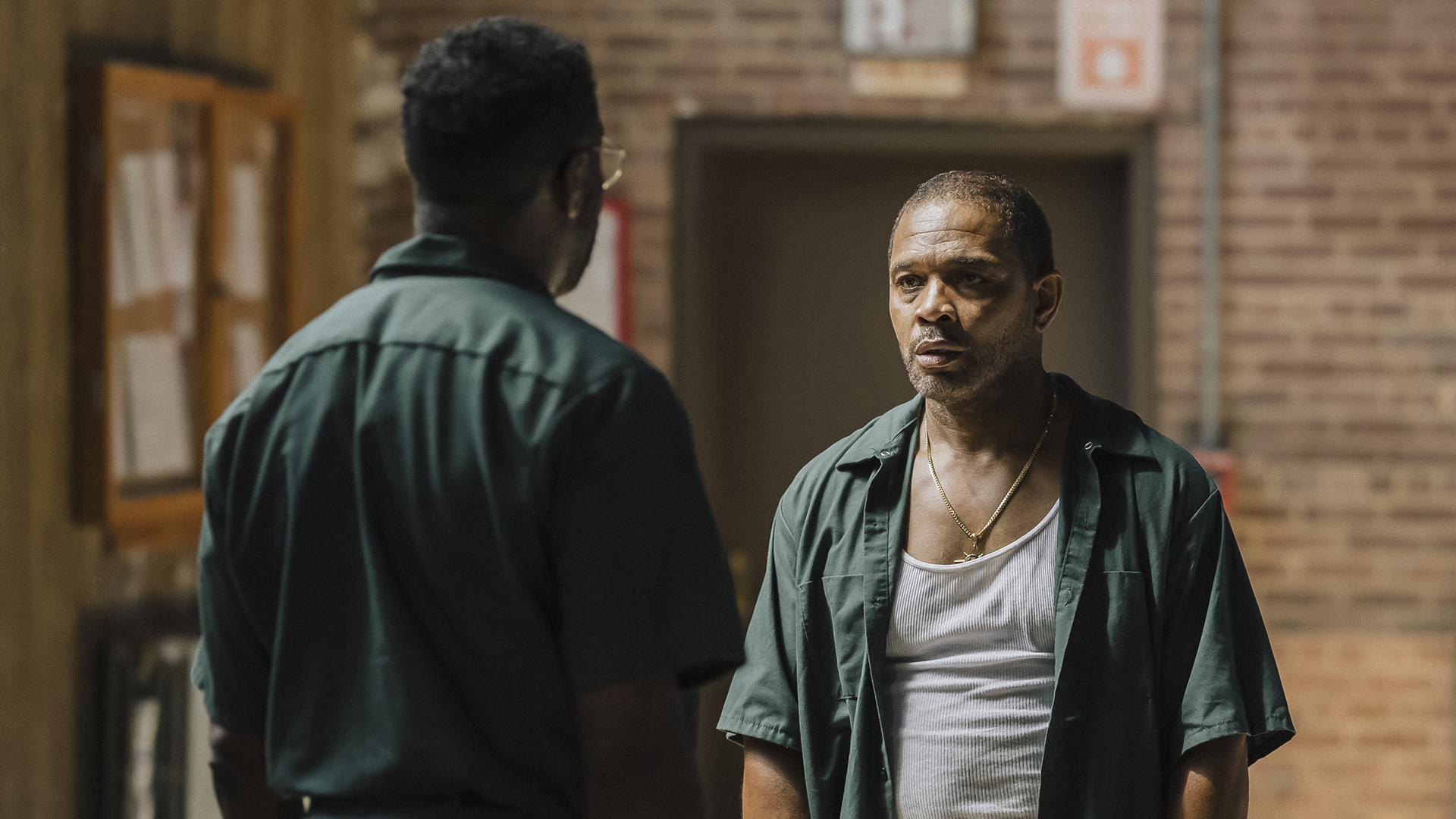
Kwedar smartly defers to the stories and emotions of his players, shooting Sing Sing with the lo-fi spontaneity of documentary. Scenes often feel equal parts written and workshopped; a fitting line to blur considering how frequently we’re held within the walls of the group’s rehearsal space, bringing to mind the porous boundaries visited often by Jacques Rivette. The other key player here is Sean San Jose as Divine G’s neighbour on the block and fellow member of the RTA, Mike Mike. The relationship between these two men – often divided by brick – is nakedly confessional. Each playing the other man’s priest. It’s an underplayed tender love story.
While G tries to mask the opportunity to perform one of his self-penned plays with false modesty, Eye gets the group workshopping a patchwork comedy piece for their next production – a true ensemble piece that travels through time to various genre fantasies, allowing each member of the group a chance to revel in their own ideal escapism. G is a little snide at the idea, but it becomes a vehicle for some sincere and personalised rehabilitation work. It explores the importance of the individual in a collaborative medium like theatre, and in doing so connects this piece (perhaps unintentionally) to Hirokazu Kore-eda’s limbo masterpiece After Life, with which it shares similar settings, palette and temperaments. Both see lost souls creating from within a scene to be cherished. A temporary expression of the profoundly personal, caught in the film camera like a miracle.
There’s a fine line to be skirted in earnest drama pieces like Sing Sing which could tip over into the mawkish or overtly sentimental at any moment. Important subplots to do with G and Eye’s respective parole hearings seem like the most likely to engender such missteps. Kudos to all involved that they never do, and Sing Sing manages to stay true to its central conceit and sense of lived in realism. Only the final couple of scenes feel like something out of more familiar genre fare like The Shawshank Redemption, but – as in Darabont’s beloved movie – such moments are earned by the work that comes before them.
The prison movie has been around since we’ve been making movies, and has gone through various phases. Innovation or newness is always possible, providing you’ve got the imagination and the spirit to see such avenues. Sing Sing joins recent highs Great Freedom and The Mustang in providing us spirited and humane depictions of life Inside, and there are players here you’ll remember long after the credits roll and you’ve return to your privileged lives outside of the movie theatre.

 The Lost Highway Hotel