
Director: Oliver Laxe
Stars: Sergi López, Jade Oukid, Stefania Gadda
In Islam, the Pul-e-Siraat is a bridge, the width of a hair, sharp as a razor, which one must traverse in order to cross into Paradise. Below, is Hell. As a concept it speaks to the absurdity of retaining purity in the land of the living. The precariousness is certainly mirrored in Oliver Laxe’s widely acclaimed, impressively rendered but challenging film.
Luis (Sergi López) is in the deserts of Morocco looking for his missing daughter, Mar. Along for the journey are his pre-teen son Esteban (Bruno Núñez) and their dog Pipa. They’re conspicuous among their company as they look for Mar among European ravers gathered in a remote location, all enthralled with the hypnotic, relentless EDM beats of a giant, monolithic sound system. When the military curtail the event, Luis and Esteban ride the coattails of a gang of lifetime ravers moving on to another gathering to the south, though their new company doubt their commitment or preparedness for the tough journey ahead.
Sirāt assumes the form of a gritty road movie. Characterisation is sparse, to say the least. We don’t really get to know Luis and Esteban. They’re more like functional ciphers. Their rugged companions seem a far more interesting and sympathetic bunch. A self-made family bonded by their consuming passion for the beat. The film also suggests that the difficulty in finding these oases of hedonism is as addictive, and missing limbs among their numbers feel like gloomy foreshadowing for the tribulations ahead.
When we look into a crowd of these ravers, before their elation is interrupted, it is a sea of white faces, and there’s a strong feeling that Laxe is prying into a broader sense of exotic tourism, but it’s hard not to feel as though Sirāt is similarly exploiting its setting. There’s a war of some kind in the peripheries that we’re not given any context for, and a strong sense of punishment levelled at this set of characters for their blithe partying on the doorstep of suffering. Mar, too, feels under the amorphous threat of being a stranger in a strange land. With his lack of specificity, Laxe’s position grows uncomfortable, geopolitically vague and circumspect, as though he’s guilty of relying on the ignorance of a western audience (this viewer shamefully included).
Flip the coin and there’s something else happening here too (many things, actually). Bartering for gas, those bulky all-terrain vehicles and the leathery-skinned veterans of some unspecified conflict… it all feels like an apocalyptic vision of purgatory in the vein of George Miller’s Mad Max series. Contemporaneously it feels as though Laxe is continuing Harmony Korine’s daydream of a halcyon Armageddon from Spring Breakers. A world populated by those whose only remaining recourse or religion is a hedonistic death wish.
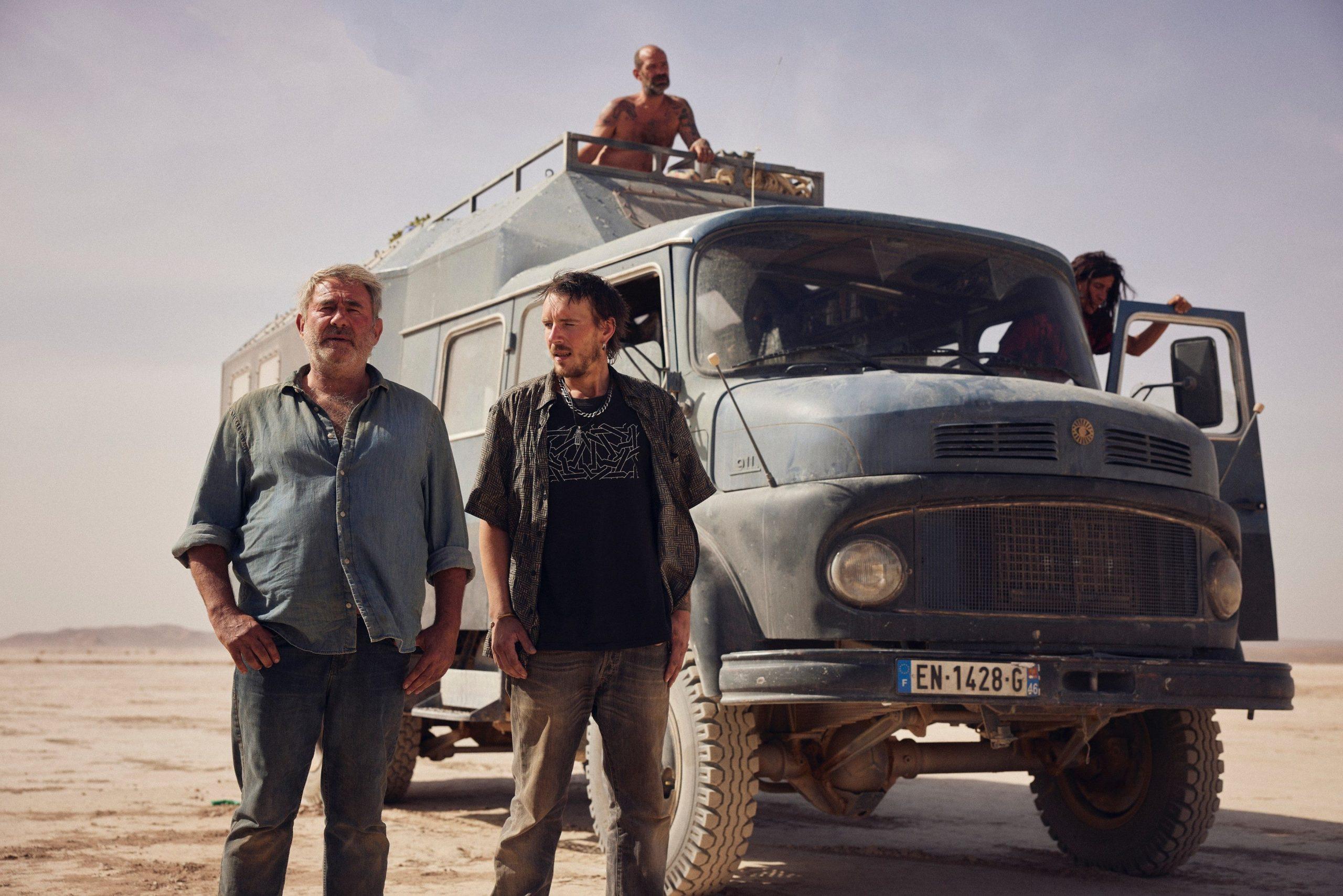
Technically it’s all something of a marvel, handsomely shot with an exaggerated, bassy soundscape that beefs up the violent potential of both the music and the landscape. When it comes to a gingerly navigated sequence in which the shambling convoy traverses winding switchbacks with sheer drops, Cristóbal Fernández’s edit conjures a frightful sense of peril. A bus rocking in a pot hole. A boy playing recklessly with a ball. We feel something is coming through the agitated cadence that the movie takes on more than the images themselves. When something does happen, Laxe’s film self-detonates, leaving the viewer dumbfounded by the callous rupture left in its wake. The road movie is over, and we’re left – like these lost ravers – looking in every direction for some semblance of a recognisable path.
The second hour, then, is a far more challenging place. Assumptions and expectations are turned upside down. The film even feels aggressive toward it’s audience, asking us what we’re here for. What makes us happy? Laxe’s inclination for cruelty in these late stretches risks seriously undermining any sense of enjoyment or investment. But is enjoyment what we deserve? It’s hard to look away, but it comes to feel as though we’ve been set on the Pul-e-Siraat. That we’re being tested. It’s not a comfortable situation. Laxe comes to feel like a Haneke or a Noé, interrogating his audience. It’s a gripping but also exasperating experience, one that wilfully rejects traditional notions of resolution. The film doesn’t so much dead-end as disappear in a noxious cloud of black smoke.
Honestly, as this point in time, I don’t know what to think of Sirāt. I admire it’s craft, but lament how underwritten some of it feels. I applaud the non-judgmental depiction of the raver collective, but also get the sense that everyone here is on trial, and that the judge is merciless. I want the soundtrack but I’m worried it’ll give me terrible flashbacks. But I also feel sure I’ll want to sit and wrestle with this picture again. While you could boil it down to a reductive Life, and Nothing More x Wages of Fear x Fury Road formula, it also isn’t that. It’s unique. And there’s probably a very good (and much longer) argument about why it’s unique. Why people don’t make films this shape. But Laxe did. It exists now. He’s passed it to us to reckon with.
Son of a bitch.

 The Lost Highway Hotel