
Director: Bi Gan
Stars: Shu Qi, Jackson Yee, Li Gengxi
I didn’t see the best film of 2018 until the second day of 2020, but when I did clap my eyes on Bi Gan’s Long Day’s Journey into Night, I was ensorcelled. I may not have fully understood the plot mechanics at work, but there was intrigue and enough interior logic to keep me eager and invested. I searched every frame for meaning and found some intuitable codes in its hypnotic construction. Then the title card hit over halfway through the picture, followed by an hour-long tracking shot through a mesmeric dream. I’m not often astounded by a movie, but that one did it. Whatever was to come next from the Chinese maestro, I’d be there for it.
It was in this mindset that I hungrily approached Resurrection – Bi’s first feature offering since – which from the promotional materials cagily promised more of the same. In a sense that’s true enough. There are rain-drenched streets soaked in neon, star-crossed lovers, another gargantuan tracking shot in the second half… but in tone and content this is a much more volatile and maximalist beast. I’d call it populist if it wasn’t so grindingly boring and impenetrable. Cross-breeding science fiction with mysticism and gamely throwing in a hundred years of cinema history at the same time, the results are dazzling. But also wilfully obtuse, distancing and terminally fragmented. It’s a feast, but a feast when you’re not hungry. I haven’t felt so alienated by a movie in a long, long time, which means this will no doubt land – for me, at least – as among the year’s most bitter disappointments.
So, what is it? After watching for 159 minutes and having sat and slept on it, I’m not certain I can confidently tell you. There’s a beautifully constructed prologue; an ode to silent cinema in which Shu Qi’s narrating ‘Great Other’ traverses a maze of myriad sets redolent of Méliès and Murnau. Vital exposition is thrown at us on brief intertitle cards that carry abstract concepts of a half-explained dystopian idea. That there are those who still dare to dream who are called Deliriants, and the inference that these are the cineastes and filmmakers. That we in the audience are naturally among them.
Resurrection feels like the dreams of Deliriant Jackson Yee, who goes by many names and experiences a progressive series of vignettes that move forward through cinema history. A noirish escapade to do with luggage. A formally restrained passage of Chinese folklore involving the Spirit of Bitterness (Chen Yongzhong) born from a discarded tooth. A mid-to-late 20th century aside on hucksterism and magic tricks. And ultimately a burgeoning romance with a vampire (Li Gengxi) on the eve of the millennium, which features this film’s bravura roaming take. We might not traverse mountains this time, but arguably Bi uses it to do something even more daring, moving in and out of first-person POV without a cut.
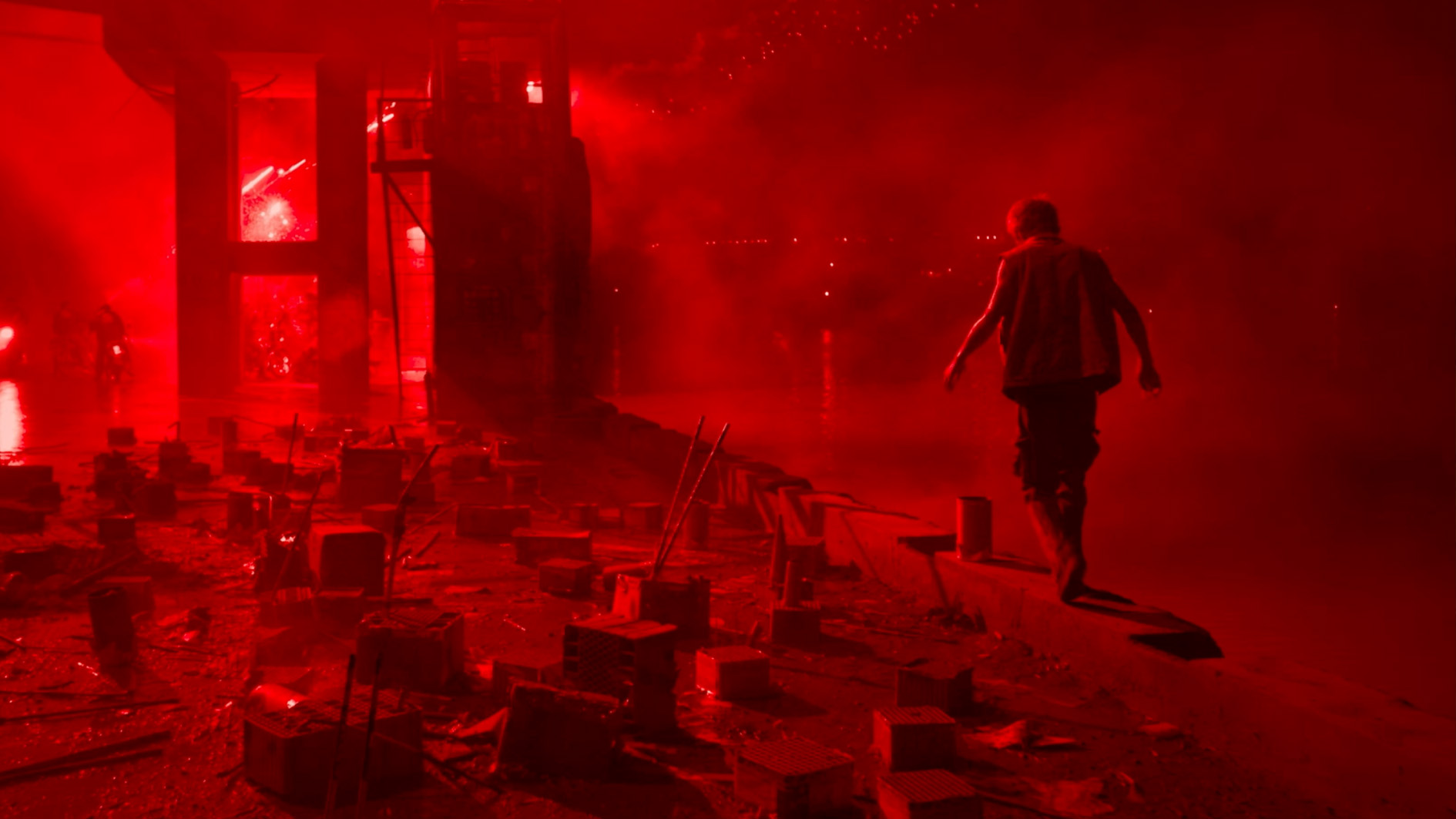
The presentation is some of the most technically impressive I’ve ever seen, as is to be expected from a filmmaker with the experience and craft of the Chinese film industry at his disposal. Making this journey of dreams or past lives an ode to the legacies of cinema itself, Bi is able to play in a number of sandboxes, and makes clear references to Welles, Ford, Tarkovsky, Gilliam, Lynch (inevitably) and more. But Easter Eggs for subscribers to Sight & Sound aren’t enough. Bi is content with enigmatic disarray as part of his constructive brio, but where Long Day’s Journey has graspable characters and the through-line of a defined mystery, the episodes that make up Resurrection are flighty, isolated, even obstinate. Even as someone with more patience for narratively complex, ‘difficult’ or elliptical cinema than most, I found nearly nothing worth holding onto inside Bi’s beautifully gilded cages. It’s a very long visual banquet with a familiar sense of reverence for the magic of the movies, but barely anything more remains.
Put simply, I didn’t understand, and I felt isolated from the experience from very early on. Perhaps due to this, my focus felt under constant attack from the bad behaviour of many other patrons. So this is going to turn into a small rant, I’m afraid. It feels particularly ironic, to me, when the film is (in part) about the sanctity of the cinema, to wholly disengage and spend your experience scrolling on your phone, as the two people directly in front of me did, showing each other reels and giggling. Elsewhere, a good number of people were taking flash photos of the movie from their own phones, as though the event were primarily an opportunity for a new Insta post. The person next to me was causing the entire row to shake by alternately jiggling one leg then the other for two and a half hours (which may not have been voluntary, so I felt bad for my irritation). Trying to persevere with a deliberately baffling piece of art became an endurance test that may have coloured my experience beyond saving. I’ve rarely felt as annoyed by both an audience and a film in my life.
So really, this is almost a non-review. An admission of defeat in front of what I’d hoped to be the film of the year. It was beautiful, but I came to detest it. I can appreciate it’s aesthetic worth, but I had a shockingly terrible time. For all Bi’s embrace of cinema history, his film seems to wilfully exclude the audience; an artistic choice I can’t fully reconcile. So I’m left with a simple, condescending plea that I’d hoped to avoid.
Behaves yourselves at the cinema, sit still and show some respect, even if you’re not engaged. You can always bitch about it afterwards.

 The Lost Highway Hotel