
Director: Christophe Gans
Stars: Jeremy Irvine, Hannah Emily Anderson, Nicola Alexis
While endemic of an era of particularly wonky video game adaptations to the screen, Christophe Gans’ convoluted and overstuffed screen version of Silent Hill from 2006 still has ardent fans. Perhaps it endures most keenly for its faithfulness to the aesthetics of the source (if not it’s fidelity to the story). Still, it is Silent Hill 2 that retains the most adoration among gamers, something renewed of late in the wake of Bloober’s handsome remake (and maybe boosted further by the success of Silent Hill f). With that IP rejuvenation in mind, it’s less of a surprise to find Gans back, some 20 years later, bringing his own sequel to the big screen.
And in many respects it does feel as though those 20 years never happened. While an entirely separate story from last time out, Gans’ reverence for the look and feel of the material hasn’t changed a jot. It isn’t long before we’re mired with main character James Sunderland (Jeremy Irvine) in a soup of CG backgrounds that appear conspicuously dated, as though the technology were frozen in 2006 also. Return to Silent Hill isn’t just a film adaptation of a video game, it feels like a video game, and asks for similar suspensions of disbelief.
There are intentional decisions, but risky ones. When fellow filmmaking gamer Paul W.S. Anderson presented us his crassly realised George R.R. Martin adaptation In the Lost Lands last year – rendered largely within Unreal Engine – the film was widely rejected. Granted, it had a host of other problems, but there are a set of cinema expectations that audiences inherently bring to the table. Return to Silent Hill similarly rejects a lot of these in favour of a kind of fever-dream remix of Silent Hill 2. The aesthetics suit Gans far better than they did PWSA, but those ardent fans might balk at the narrative choices made by Gans and fellow screenwriters Sandra Vo-Anh and William Schneider.
Basically, purists are gonna shit the bed. We’re still dealing with James’ return to the sleepy town of Silent Hill having received a letter from his lost love Mary (Hannah Emily Anderson), and instead finding a burb infested with writhing creatures, rolling fog and pitted with seemingly-damned survivors. But from very early on Gans and his team start making adjustments to the text that seem intended to deliberately trigger the game’s faithfuls. No longer does Mary’s letter open, evocatively, with “In my restless dreams…”. There are sharper turns and inversions ahead.
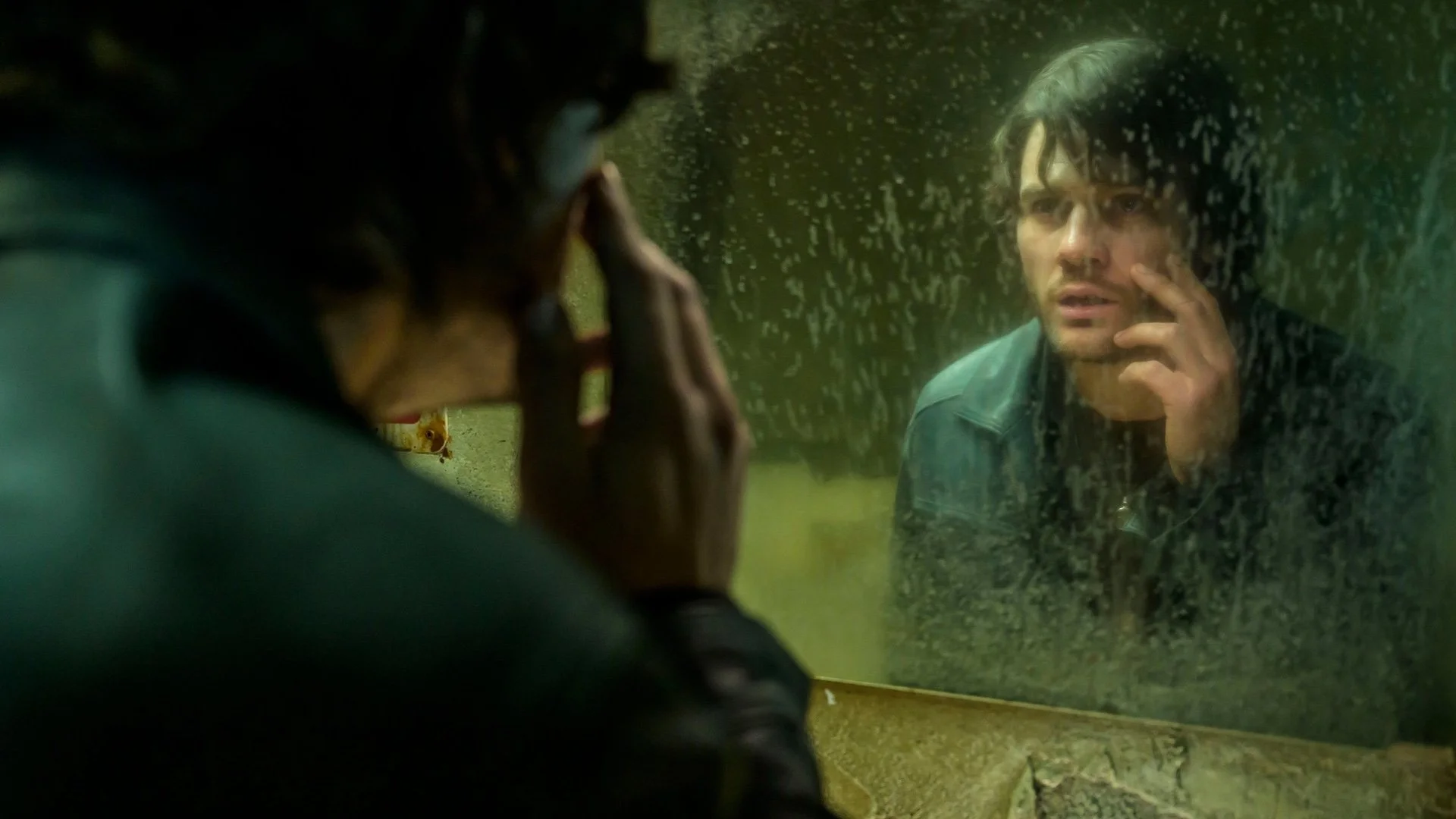
The bones of it are largely there. James has a tough time in an apartment building where he finds clues that suggest Mary might be at the town’s hospital. We move level to level. But an increasing number of details are swapped out, erased or inverted. The game worked by accumulation. Evidence stacked up over time that James was trapped in a mental prison of his own making, and that even the outsiders ‘you’ interacted with were manifestations of this. Gans’ speed-run assumes you’re going to have this knowledge, so dispenses with coyness, and even changes the purpose of some characters. Here, the literal and metaphorical are one, and the result is a tumbling fevered dream of a movie with quite explicitly open intentions.
Some of the game’s most intense passages are dispensed with entirely or radically curtailed. Particularly the prison and the labyrinth. Some may well bemoan that their at-home experiences aren’t dutifully replicated, but Gans might have made a smart play here, as the movie at large presents itself as a prison and labyrinth. Those concepts are exploded outward, rendering these sections largely redundant.
There are questionable choices, for sure. But out of these wildly taken liberties, what’s been adjusted or added is as often quite creative. The task of an adaptation is always a little damned-if-you-do, damned-if-you-don’t. Return to Silent Hill alters the journey but retains a great spiritual simpatico with the Konami game, re-contextualising its visuals into an Escher-like facsimile.
So it’s sorta fitting that the performances and dialogue are janky as fuck. That the costuming, stern architecture and crude effects make this pure cosplay cinema projected at us from the same realms as an Evanescence music video. Gans daubs the cinema screen like a painter with garish, semi-pixelated globs. But in his mess (and it is messy) much of the core emotional heft is communicated. A select audience may just find this freefall into grief and acceptance just as resonant as those who return, over and over again, to Rob Zombie’s Halloween II for it’s brash and cathartic expressions of PTSD. When final boss Moth Mary rises into the air above Lakeview Hotel, it still feels as though Gans has got us to where we’re intended. He’s just jumbled the ingredients in an effort to see if they create the same recipe with a different mixture.
I can’t hate this for taking some pretty bold swings that seem designed to infuriate devotees. More open viewers might see that Gans has delivered something faithful after all, a new experience of something people know in their bones.
 The Lost Highway Hotel