

Director: Nia DaCosta
Stars: Jack O’Connell, Ralph Fiennes, Chi Lewis-Parry
One of the last images that flashes on screen during the end credit crawl of 28 Years Later is a St George’s flag, so fitting for a film that acted as a deeply pessimistic requiem for the decline of England’s green and pleasant lands. In the months since that belated continuation of the franchise, England has seen a troubling rise in performative nationalism, with those flags – along with Union Jacks – tied to any and all dual carriageway streetlamps, proliferated by resourceful nighttime whack-jobs. The intent, supposedly, is a flurry of patriotism. The outcome bristles with an implied territorial aggression fundamentally tied to an idea that our best years are behind us.
With The Bone Temple, writer Alex Garland continues to pick at ideas of national identity and sentiments of a lost Britain amid the ruins of a fallen empire. Danny Boyle hands directing duties over to the versatile Nia DaCosta for this swift follow-up, which picks up not long after we left off, with young Spike (Alfie Williams) surrounded by Jack O’Connell’s mob of murderous ‘Jimmies’. The gobsmacking coda to 28 Years Later – with this maniacal bunch cartwheeling about the place killing infected – left us in a tonally precarious position. With Garland as the sole scribe, The Bone Temple feels like a natural continuation, but DaCosta’s sensibilities rein-in the hyper-kinetic sensibilities that Boyle so stamped upon this series.
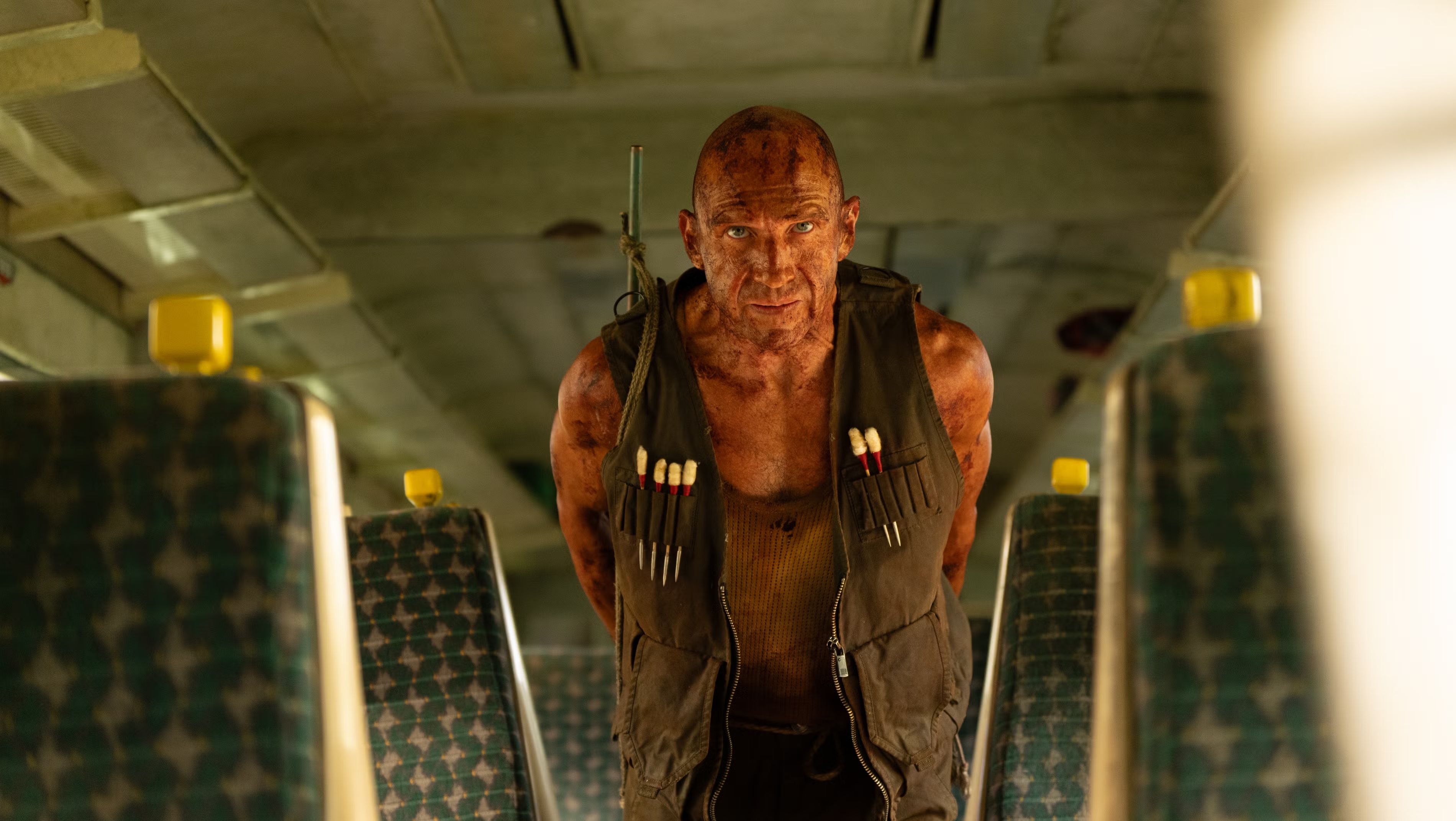
The film effectively hunkers down in two camps and details their inexorable collision. On the one hand we feel Spike’s every flinch as he endures the threatening pack behaviour encouraged by warped satanist Sir Lord Jimmy Crystal (O’Connell), on the other we return to the ornate bone ossuary constructed by mild-mannered loner Dr. Ian Kelson (Ralph Fiennes), as he continues his attempts to tame the wild Alpha he has nicknamed Samson (Chi Lewis-Parry).
Jimmy’s rambling assault on the landscape, offering up sacrifices to his ‘father’ Old Nick and romancing days of yore that he barely remembers (principally Teletubbies, but also the unacknowledged cult celebrity of Jimmy Savile, whose crimes would not have been confirmed in this timeline), is an ethos built on chaos. Chance is built into his pack selection rituals; arbitrary fights to the death between would-be victims and his cowered faithfuls. Kelson, meanwhile, represents order, from his medicinal background routed in the principles of science to the considered symmetry of his memento mori. Kelson also rests somewhat faithfully on the ideals of a half-remembered past, cherishing notions of bygone order. His work with Samson initially seems downright crazy, but it speaks to an ambition to reclaim some notion of humanity that Jimmy’s violent crusade hasn’t room for.
There’s even a third patriarch dedicated to a more fact-driven approach to British history. But we can’t talk about them here…
Kelson we already had some idea of. The Bone Temple affords us the opportunity to get to know Sir Jimmy, a corollary for a few choice celebrity ringleaders in our current climate. Crazed by what he survived as a child, Jimmy has built a new religion that casts himself as an antichrist figure, orders dictated by the Old Nick he hears in his head. But the viewer is given clear indication that this is a sham he has come to believe in over the years. A routine in both senses. Among his followers there is Jimmy Ink (Erin Kellyman), a true believer, who stands out from the other ‘fingers’ of his fist, who are more a mix of blinkered sheep and the terrorised. Jimmy’s responsibility for all of this hangs heavy over the film, and Ink’s belief could be Jimmy’s undoing, as it backs him into a corner where he must reckon with his own lies. The stage is set for an almost Shakespearean final confrontation in the circular auditorium of Kelson’s monument to the fallen.
There’s quite a change to the surrounding crew presenting this continuation. DaCosta drops Boyle’s prior visual motif of montaging ideas of Britain’s feudal past and, with the aid of cinematographer Sean Bobbit, dials back some of the restless energy that has previously typified the franchise. The result is a film that feels more hunkered down and focused. Hildur Guðnadóttir takes over scoring duties from Young Fathers, but channels a mostly kindred sense of thrumming unease, if not quite so jaundiced. Thanks to these more contained elements, The Bone Temple feels less volatile than its brethren, but DaCosta doesn’t skimp when it comes Garland’s nastier impulses. This is Horror cinema with a capital ‘H’, and a sequence in which Jimmy corrals prospective victims in a barn will give the squeamish plenty of cause for their wriggling. The violence is oppressive.
And that’s in part the film’s major gear shift. For the first time (Samson notwithstanding) the infected are largely out of the story’s main focus. Those braying for ravenous hordes may themselves feel starved. No, The Bone Temple is about human frailties, from cowardice to blood-lust and our propensity for cruelty (here ironically re-monikered ‘charity’). It’s interesting, then, that it doesn’t all feel crushingly misanthropic, and this is largely down to the sympathetic, even optimistic instincts portrayed through Fiennes as Dr. Kelson. As it’s a genre performance it’ll likely be overlooked by awards bodies, but it’s just as laudable as any of his work in more prestige fare, and credit to Fiennes for approaching it with the same gusto. In O’Connell he has a grotesquely watchable foil. When these two get to talking, one can sense the glee of all involved. Garland, DaCosta and the actors manufacturing a delirious post-apocalyptic meeting of downright bizarre mythic figures.

 The Lost Highway Hotel