
Year: 1969
Director: Yasuzō Masumura
Stars: Mako Midori, Eiji Funakoshi, Noriko Sengoku
A generally under-sung or under-referenced entity from the frenzy of activity happening in Japan at the end of the 1960s, Yasuzō Masumura’s Blind Beast is among that era’s most vivid and disquieting offerings; a chamber piece of remarkably haunting design that retains the ability to shock over 50 years later. Born within a hive of excitement as filmmakers flexed the limits of what might be deemed acceptable on screen with relaxed censorship laws (it’s contemporaneous with Teruo Ishii’s quite literal torture porn cycle), Masumura mounted a dark examination of the extremes of obsession, one that also reveals the generational tensions of a sexual revolution.
The film opens with young model Aki (Mako Midori) narrating a series of monochrome art photographs of herself, nude and in chains; a shoot she acquiesced to for a venerated artist, Mr Yamana. The gallery exhibition has a sculpture of her body as its centrepiece, and this is where she first notices a blind stranger (Eiji Funakoshi) pawing inquisitively at the statue. Aki feels a troubling psychic bond to the blind man’s invasive groping, but is this his power or hers? Or some kind of nexus between them pre-empting their relationship to come?
The blind man, Michio, turns out to be quite dangerous. Posing as a replacement masseur for Aki – a scene which also introduces Aki’s own associations between roughness and pleasure – Michio subdues and kidnaps her. It transpires that he’s a keen artist himself. Aki wakes imprisoned in his studio, itself within a disused factory out in the country (that it is a factory – a building for production – feels incredibly telling of Japan’s psychological placement of women in society).
In a reveal both alarming and, frankly, staggering, the large black space is adorned on all walls with sculptures of naked body parts. Aki finds herself imprisoned between walls of eyes, mouths, arms, noses, navels, legs, ears and breasts. And, in the centre of the space, two giant statues of naked female forms – one lying on it’s back, one on it’s front – both headless. The space is a shrine to Michio’s (and society’s) objectification of women, and Aki is his prime fixation. Indeed, when she awakes in this space, unaware of what it contains, she is presented as little more than a face in the dark; the low light, her clothes and black hair cutting her features out, separating them just like the manufactured body parts that adorn the studio.
Michio is a psychotic and a sociopath but his studio is undeniably erotic. A fondler’s pleasure palace of unbridled and unchecked gratification. A cathedral of fetishes that enables all manner of micro-perversions. As Aki climbs upon the huge statues that dominate the floor, Blind Beast contends with the fetish of the giantess (look it up, or encounter such cult films as Attack of the 50 Foot Woman or its cheaper modern grandchildren from Jim Wynorski and Fred Olen Ray). Her size compared to the statues also infantalises her, makes her a small, terrified child. As he chases her around the huge legs and over the torsos their game of cat and mouse might even seem like naive child’s play but for the urgent threat of sexual violence inherent in Michio’s mania.

But much as he has the upper-hand in the situation, Michio is keen to play the supplicant. He worships Aki, and grovels confessionally, “I’ll be your slave”. His kidnapping of her is an attempt to force an artist/muse relationship. It’s an egotistical fantasy, one seemingly encouraged by his mother Shino (Noriko Sengoku), who also lives on site and prepares Aki the meals she rejects out of protest. Michio’s relationship to his mother is incredibly telling, and Aki immediately latches onto this as she attempts a kind of psychological warfare to gain the advantage. She uses the skills she knows she has. Flattery. Bargaining. She tries her best to manipulate Michio’s tendency toward subservience. But the mother is harder to charm and quell. Aki ‘outs’ Shino’s perversion, that she is substituting Michio for a husband or a lover, and does so blithely, to her face, with Michio in the room. He’s amused.
Shino’s puritanical view of nude glamour modelling belies her generational conservatism and through this Masumura’s film grows reflective of a changing Japan. There’s a younger, more radical generation emerging that idolises youth and sex. At the mid-point of the film one might even take the view that Blind Beast itself is conservative, demonising this shift in morality. The representation of blindness in the film remains deeply problematic. A garish othering. But the film’s final third muddies all waters, descending into taboo areas that comingle pleasure and pain, and it remains as extreme, confrontational and disturbing as anything in the cinema of Takashi Miike or his millennial brethren.
Prefiguring the psycho-sexual apocalypses of JG Ballard and David Cronenberg with their respective versions of Crash or Marina de Van’s incredible In My Skin, Michio accidentally kills his mother as the three of them writhe in a murderous ménage à trois. Her body is buried in the factory anteroom. Now alone with Aki and untethered from his mother’s judgmental moral worldview, Michio locks himself in with his captive. Her rape is implied. We hear her scream and Masumura cuts to the wall of ears. Our forced inaction makes us complicit. Then, her narration returning to account for the passing of time, Aki describes her increasing Stockholm syndrome and the romantic feelings she accumulates for Michio. And things get weird.
Imprisoned in the depths of the studio – an elaborate sensory depravation chamber – Aki herself starts to go blind. A physical manifestation, perhaps, of her weakening psychological state. Michio comes to value human connection over his obsession with the inanimate sculptures he has produced to quench his former sexual urges. The two, previously existing at extremes, find a queasy common ground, both becoming increasingly committed to “the tactile ecstasy of our caresses”.
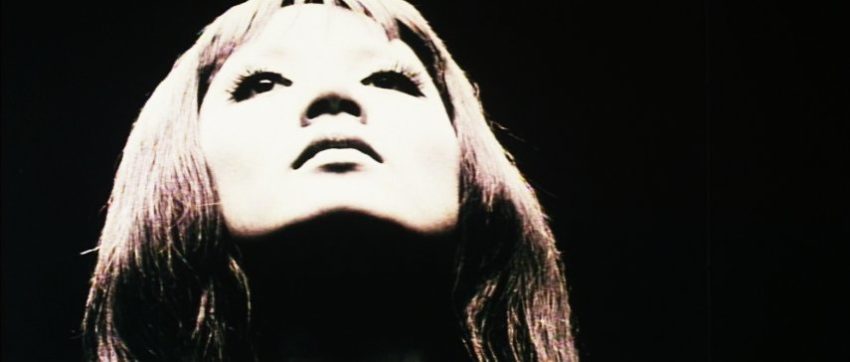
From here Blind Beast grows darkly inquisitive of our compulsions and hunger for increasingly intensive experiences. Deprived of the outside world and all other stimuli, rejecting the inanimate body parts that adorn their shared space, Aki and Michio’s obsession and infatuation with one another becomes an ouroboros. An unquenchable need to achieve greater sensory extremes. More. Harder. Touch is no longer enough, and soon anything is permissible. Biting. Clawing. Whipping. Aki is tied up with ropes, bringing us back to the beginning. Her initial photoshoot coming to seem like a fated warning. They indulge in “the inhuman rite of drinking one another’s blood”, briefly toying with vampirism. All the while the pair are degrading. Their obsession leads to neglect. From Shino’s corpse rotting in the next room to their own withering vitality. Rarely has a study in death wish and self-annihilation been so inexorably ferocious.
Ultimately the severed limbs that adorn the walls of the studio – representative earlier of men’s objectification of women – become a precursor to the torturous finale. Aki begs Michio to sever her limbs. She begs out of desire for the ecstatic sensation, but in doing so she capitulates to society’s depersonalisation and dismembering of the female form. Michio is deranged enough to comply. Rationality is behind them. As he crudely severs her arms and then legs with a crafting knife and mallet, Masumura concedes to taste and decorum, artfully cutting instead to Michio’s sculpture of Aki, as its plaster limbs crash to the floor (an echo of the psychic link between art and subject at the film’s beginning). Spent from this horrific crescendo, the scene becomes a murder-suicide and the tale is over.
Blind Beast is an audacious film. Wrought from a short story by Edogawa Rampo, the resulting film is a daring descent into sexual depravity, but one that feels icily free of judgment, even as it indulges in incredible extremes. It exists within a lineage of exploitation cinema, and one feels that Masumura is aware of this. That he’s in a contract with the audience to supply a certain mixture of lascivious thrills. Blind Beast delivers these, but it also delivers an intellectual study on our selfishness when desire is prioritised. The myopia of intense hedonism. The blinkers of obsession. Maybe it is a conservative film, in spite of the extremities of it’s finale, but there’s also something incredibly liberating about Aki and Michio giving themselves over to their compulsions. Some dark envy is elicited. Their acts are macabre and irreversible. But in that final devastation lies something that we in the audience can’t access unless we follow. That is, perhaps, the ultimate fetish. Ultimately, binary political readings are reductive and unfulfilling.
Watching Blind Beast feels like sidling up to some kind of precipice. It feels a little dangerous and uncertain. There are thrills in such feelings, along with the objective beauty of the film’s construction. Those sculptures and their presentation really are something.
Probably not one to sit down to with the parents, but an astonishingly mature exploration of the darker side of our compulsive nature, one that feels decades ahead of its time. A roadmap for Cronenberg, for Marina de Van, for the emerging wave of body horror sickos looking to find new ways to recontextualise and celebrate the human body and the extremes of tolerances. It’s a living film, and a vital one.
 The Lost Highway Hotel