

Director: India Donaldson
Stars: Lily Collias, James Le Gros, Danny McCarthy
Operating very much in the spirit of Kelly Reichardt’s sophomore feature Old Joy from 2006, India Donaldson makes her promising feature debut here with a deftly judged return to nature in the wilds of the Catskills, supplicating to Reichardt’s favoured restraint and humanism, but with an added sting in the tail.
In Old Joy former friends Mark (Daniel London) and Kurt (Will Oldham) reunited for a camping weekend in the Oregon hills only to discover an uncomfortable, bittersweet distance had grown between them; an inevitable by-product of the passing of time. It’s a judicious study of male relationships at a certain time in life. Here, Donaldson interjects the dynamic by adding a crucial third. For Good One, she studies the relationship between middle aged pals Chris (James Le Gros) and Matt (Danny McCarthy) through the eyes of Chris’ eighteen-year-old daughter Sam (Lily Collias), in the process providing us a surrogate character through which to experience a variety of pleasures, tensions and microaggressions.
The trip was intended as a foursome, but Matt’s moody son Dylan (Julian Grady) quits on the expedition, leaving the dynamic uneven and strained from the get-go. A passive observer for much of the time, Sam smiles wryly as her father berates Matt for over-packing, catching for our benefit the subtle power plays occurring between the two men on a variety of fronts. Both men are now divorcees who have stacked up respective (and even corelating) mistakes and regrets. These things gently unspool over the course of a long weekend in the wilderness. Amid the sightseeing, hiking and general good humour there’s an undercurrent of passive aggressive resentments. The collateral damage, one might say, of knowing people too well and too long.
Donaldson avoids many a pitfall in her scripting, making the piecemeal reveal of backstory and circumstance seem casual, as opposed to having her characters lumpenly regurgitate exposition for our benefit. Her players understand the assignment in a manner befitting this decision. Le Gros is a seasoned character actor (and even a Reichardt veteran), and he falls into a comfortable patter with the relatively inexperienced Collias. For her part, the young actor recalls both the physicality and the vulnerability of Sidney Flanigan’s willowy breakout performance in Never Rarely Sometimes Always. Sam’s older male companions make gibes about her generation and sexuality (assuming she’s a vegetarian; making a point of referencing her queerness), but she takes this with the air of one accustomed to generational dissonance. She loves her dad and will tolerate his friend. Up to a point.
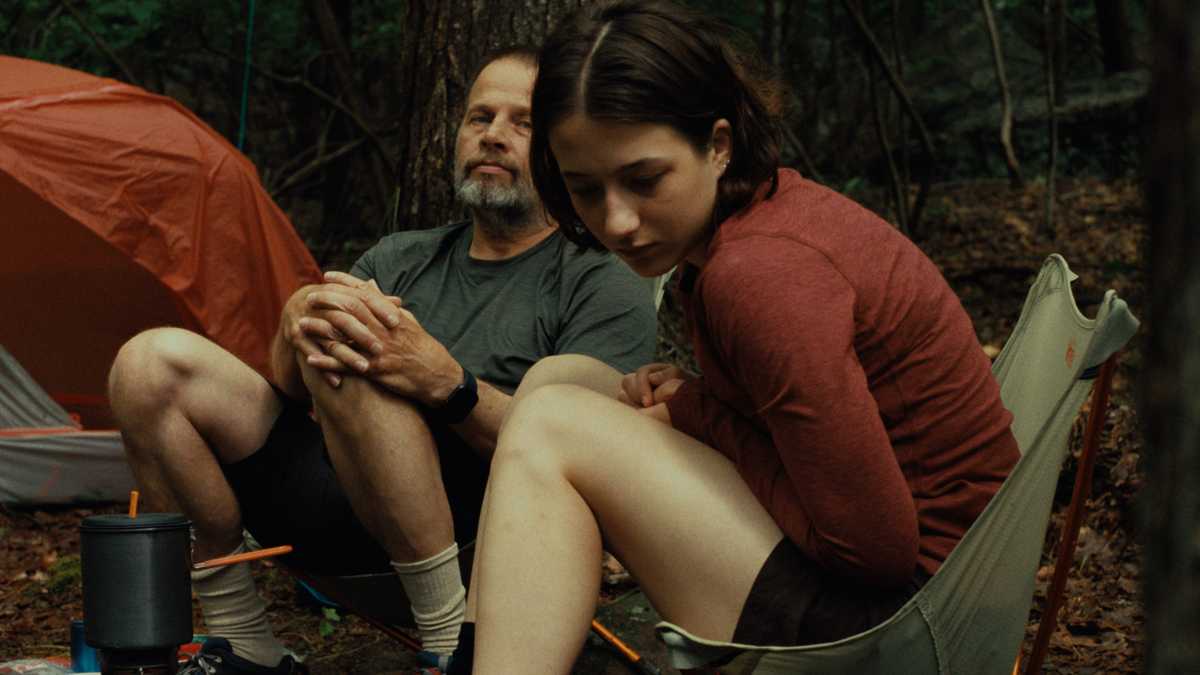
For the most part of it’s swift running time Good One makes good indulging the microdramas of the hiking trip as though that’s plenty to occupy us, and they are. Producer, first AD and editor Graham Mason helps her keep focused, while the simple elegance and warmth of Wilson Cameron’s cinematography makes pretty wonders of the Catskills’ natural beauty. A late swimming sequence is a minor revelation; clouds part and the scene is bathed in a honeyed glow redolent of Peter Weir’s Picnic at Hanging Rock. Donaldson nails the diaristic poetry of her venture.
There’s an underplayed tension that Sam is on her period (a marked reminder of her pertinent femininity). Unaware of this, Chris’ paranoia over bears seeds the possibility that this could veer into the horrors of something like Backcountry. More keenly, however, the film itemises the subtle ways in which gender roles are naively pressed upon Sam by her company. There’s almost no maliciousness to it, but Chris and Matt are oblivious to the ways that their behaviour colour Sam’s temperament, boxing her in without realising that they’re doing it.
Having settled us into this well-observed dynamic, Good One suddenly veers, presenting a betrayal of trust as wearying as it is sadly predictable. It’s quietly mortifying that, when she needs her dad’s support the most, Sam is let down as the codes of Men of a Certain Age assert themselves. The downhill to the end is characterised by a level of day-to-day disappointment and heartbreak that one might initially take as the film itself letting us down. But Good One is quietly, effectively conveying a subjective moment of devastation all the more wretched for it’s ordinariness. The bubble of the film is burst as we realise the kind of memory this will all become for Sam.
This being an indie debut, there’s the impulse to ponder how autobiographical it might be, but Donaldson’s presentation of this key turn in the film could be lifted from any everyday testimony or experience. The truth of that is as deflating as the picture itself. That it is so successful is a testament to it’s creator’s control and manipulation of mood. Good One challenges its audience to recognise themselves in it’s reflecting waters. For middle aged men to perhaps recognise the impact of their actions, and for young women to feel seen and understood. All this nestled in a fine tradition of rural Americana. As debuts go, it’s as aptly named as any.
 The Lost Highway Hotel