
Year: 2001
Director: Claire Denis
Stars: Béatrice Dalle, Tricia Vessey, Vincent Gallo
For a filmmaker so regularly and rightfully spoken of as one of the best still living and working, its frustratingly difficult to see a lot of Claire Denis films in the UK in something approaching decent quality. Out of print DVDs are the treasures of charity shops, and some of these – like New Wave Films’ release of 35 Shots of Rum – don’t even have the promised subtitles. Importing high-priced foreign market discs or torrenting illegal copies can be the only methods of seeing the work, which feels frankly absurd. So it’s an occasion when a streamer happens to get the limited rights to one of these darkly precious gems.
Right now MUBI UK has Trouble Every Day – presumably as an art-house nod to Halloween – which is more than enough reason to jump on the opportunity to revisit and celebrate what was once the black sheep of Denis’ catalogue after the feted career high of Beau Travail.
It’s a long time ago now, but my revisionist memory at least seems to think that Beau Travail was recognised as a major work more or less from its debut on the festival circuit, while Trouble Every Day was met with an altogether cagier, more skeptical set of responses. A reaction against success, one might be quick to assume… except Denis’ motives and methodology never really register as anything close to that petty.
In fact, watching the film back now, years later, with its reputation changed and its status assured, it really doesn’t feel significantly removed from Beau Travail, at least in terms of craft and construction. Denis’ signatures are there. Dialogue is kept to a minimum. Disparate elements of a narrative are introduced without bias and the audience is encouraged to make the pieces fit. Violence and tenderness cohabitate in ways that represent characters wrestling with their own, internal voices.
Conventional wisdom dictates that Trouble Every Day exists within the loose framework of New French Extreme cinema; ultra-violent auteur cinema often documenting the grisly downfall of passive, middle-class French people, often involving lashings of bloody gore and/or graphic and upsetting sex (sometimes un-simulated). Pushing the boundaries of what might be permitted on screen, these films (the likes of Baise-moi, In My Skin, Inside et al) generally reject the label of a ‘movement’ as the filmmakers themselves didn’t discuss or collaborate. There was no mandate. But such films feel connected by a sense of politics, manifesting unrest or complacency, and testing it, too.
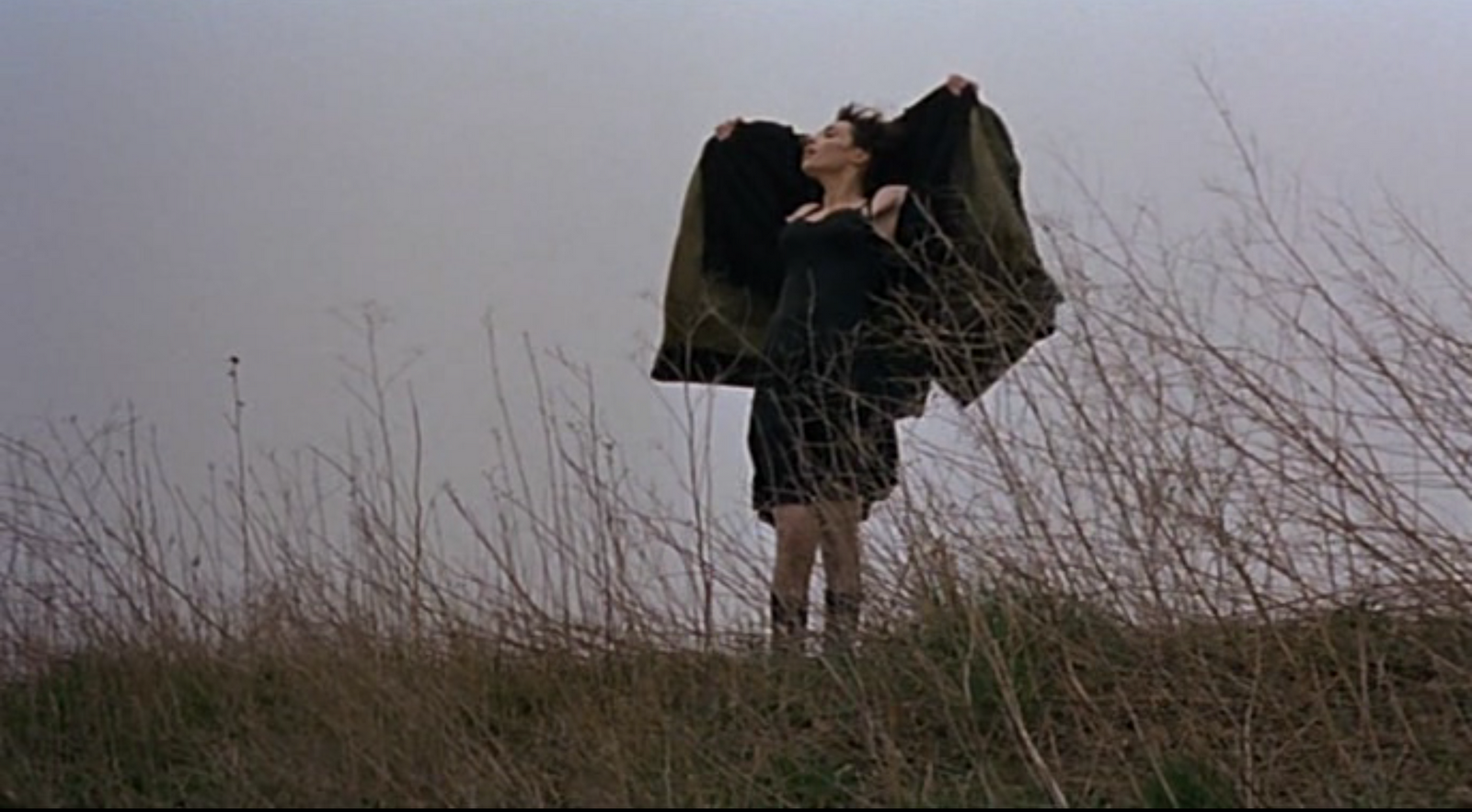
Trouble Every Day concerns an American couple – Shane (Vincent Gallo) and June (Tricia Vessey) – honeymooning in Paris. They’re cutely in the first flush of love. Mawkish, clingy and sentimental. But Shane has an ulterior motive for their visit, seeking out Alex Descas’ geneticist Dr. Léo Semenau. Léo is preoccupied himself, looking after and confining his wife Coré (Beatrice Dalle), who appears to have developed an inhuman bloodlust. The husband has become the keeper of Dalle’s striking visage of the insatiable, inhuman feminine – a manifestation of the darkly erotic and desirous from Denis that presents in the traditions of a horror film.
What remains incredible and perpetually surprising about Denis’ work – no matter how many times one of her films is re-watched or reconsidered – is how hypnotically fluid and engaging her images are. Time drifts sensuously. The first hour of Trouble Every Day goes by in an absolute blur. It genuinely feels like dreaming – something so many filmmakers try to replicate, but which so few manage to conjure with such uncanny accuracy.
The musical backing of Tindersticks – which has become a staple collaboration in Denis’ career – is as essential in setting and sustaining mood here as it is in other career highs like Bastards or (the possibly still underrated) Both Sides of the Blade. Swooning, melodramatic and gorgeous, their strings soar in bewitching counterpoint during Coré’s graphic biting of a willing victim, her teeth dancing bloodily about his lips as they both cry. Afterward she gorges in a naked silence, suddenly all the more intimate with the music removed. Sighs are all. Pleasure and pain comingle.
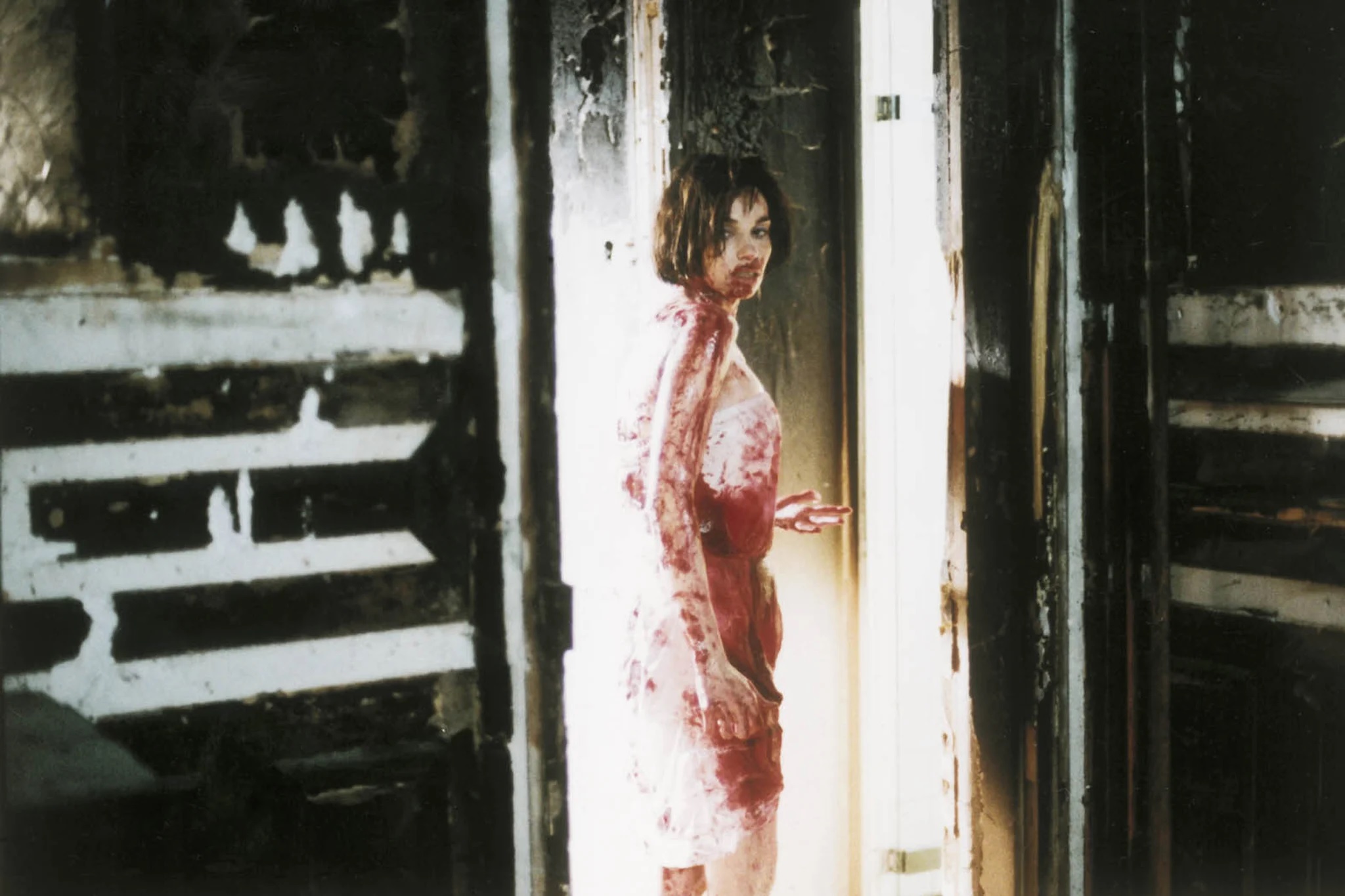
It’s fair to say that Dalle – already an icon of French cinema as far back as the ’80s – found a whole new audience through Trouble Every Day, including aspiring filmmakers Alexandre Bustillo and Julien Maury who would go on to cast her as the fearsome antagonist of their bracingly extreme home invasion movie Inside. The most memorable and striking images of Trouble Every Day are of Dalle, semi-nude, smeared about the lips and arms with blood. Denis promotes the idea that a woman’s needs, her desires, are still considered transgressive. Reasons for society to be horrified. Also in those images is patriarchal society’s terror at menstruation – the bloody woman as the ultimate of body horrors. Shane’s obsession with finding Léo may in reality be an obsession with finding Coré. That for all the picturesque sweetness of his marriage to June, Coré’s carnality is the side of the feminine that he is truly interested in, truly taken with. Trouble Every Day feels like an exploration of the allure of the sinful and the debauched.
That their eventual meeting ends in violence feels pre-ordained, but instead of feeling resolved or sated, Shane is left simultaneously worked-up and bereft. He returns to June, sleeps with her, but it isn’t satisfying and he ultimately brings himself to climax and rejects her. Having somewhat mystifyingly acquired a puppy, he later returns to the hotel and rapes one of the maids (Florence Loiret Caille), who has skittered fleetingly through the tapestry of Nelly Quettier’s edit.
Is she just a surrogate for the unfulfilling end to his exchange with Coré? Is this some Ballardian new form of communication? A fucked-up pathogen of evil intent, body-jumping through Paris? Or maybe a means by which Denis can muse – bear with me – on notions of devotion? Just as Léo cleaned up for Coré, protected her secret, administered care, so June tacitly enters a contract of custodianship over Shane. Although not a direct witness to his attack on the maid, June seems to sense what’s happened in him. In the film’s final shot, where she seems to understand, does she becoming his keeper and kindred to Léo? Is there an element of this in all relationships? The dominant and the subservient, even if the subservient is the more outwardly aggressive and animalistic? She feels almost motherly to him in that final moment. Or is it to be read as a psychological reflection of the individual? The id and it’s keeper. The rational and the irrational fused as one.
Trouble Every Day – like the best of Denis’ work – isn’t about providing us answers but encouraging us down dark alleys of uncertainties. Evocative, rain-washed Parisian avenues where mystery reigns, where one is free to suppose but where dangers lurk in the shadows. Loving her movies can be all-consuming. When they’re this scarce, gorging becomes a necessity.
 The Lost Highway Hotel
1 thought on “Why I Love… #174: Trouble Every Day”