

Director: Alice Rohrwacher
Stars: Josh O’Connor, Isabella Rossellini, Carol Duarte
Alice Rohrwacher’s cinema is often in search of the divine or miraculous. Her wonderful debut Corpo Celeste conjured a deft intersection of Catholicism and coming-of-age tempestuousness. Shimmering masterwork The Wonders depicts a time of similarly seismic change for a rural family via the commanding daughter’s bewitchment with Monica Bellucci (fair). While Happy As Lazzaro beguiled with the seemingly divine appearance of it’s titular figure, a meek saint in a world of indifferent industry.
Her latest, La Chimera, arrives well-timed to draw in new viewers, starring Josh O’Connor still fresh from all the panting praise for his turn in Luca Gadagnino’s Challengers. O’Connor stars as Arthur, a taciturn archaeologist grave-robber freshly released from prison who retreats to the Italian countryside where he reluctantly falls back in with a pantomime collective of idiosyncratic, self-mythologising ‘tombaroli’. O’Connor is inscrutable; a fitting choice. Though Arthur’s Italian is good, it is imperfect, underscoring his outsider status as an unfinished, directionless bohemian, and as a foreigner both accepted by yet excised from the Italian community.
Rohrwacher shoots on 16 and 35mm, moving freely between them, the curved edges of the frame providing La Chimera a fittingly nostalgic bent. It has the unreliable tint of memory, like a revelatory summer holiday that’s become a cherished reminiscence. As seen through a Kodak Carousel, perhaps. It’s a fitting aesthetic choice as La Chimera is so rooted in history ,some of it psychological. The opening shots are from within Arthur, half-asleep, half-remembering his beloved Beniamina (Yle Vianello), whose memory is conjured in conversation as soon as he is reunited with matriarch Flora (Isabella Rossellini).
Divination makes a literal return to Rohrwacher’s work here, as Arthur uses dowsing techniques to (re)locate a buried tomb. A moment of discovery and epiphany that turns his world (and ours) upside down. But is it just performative exaltation…?
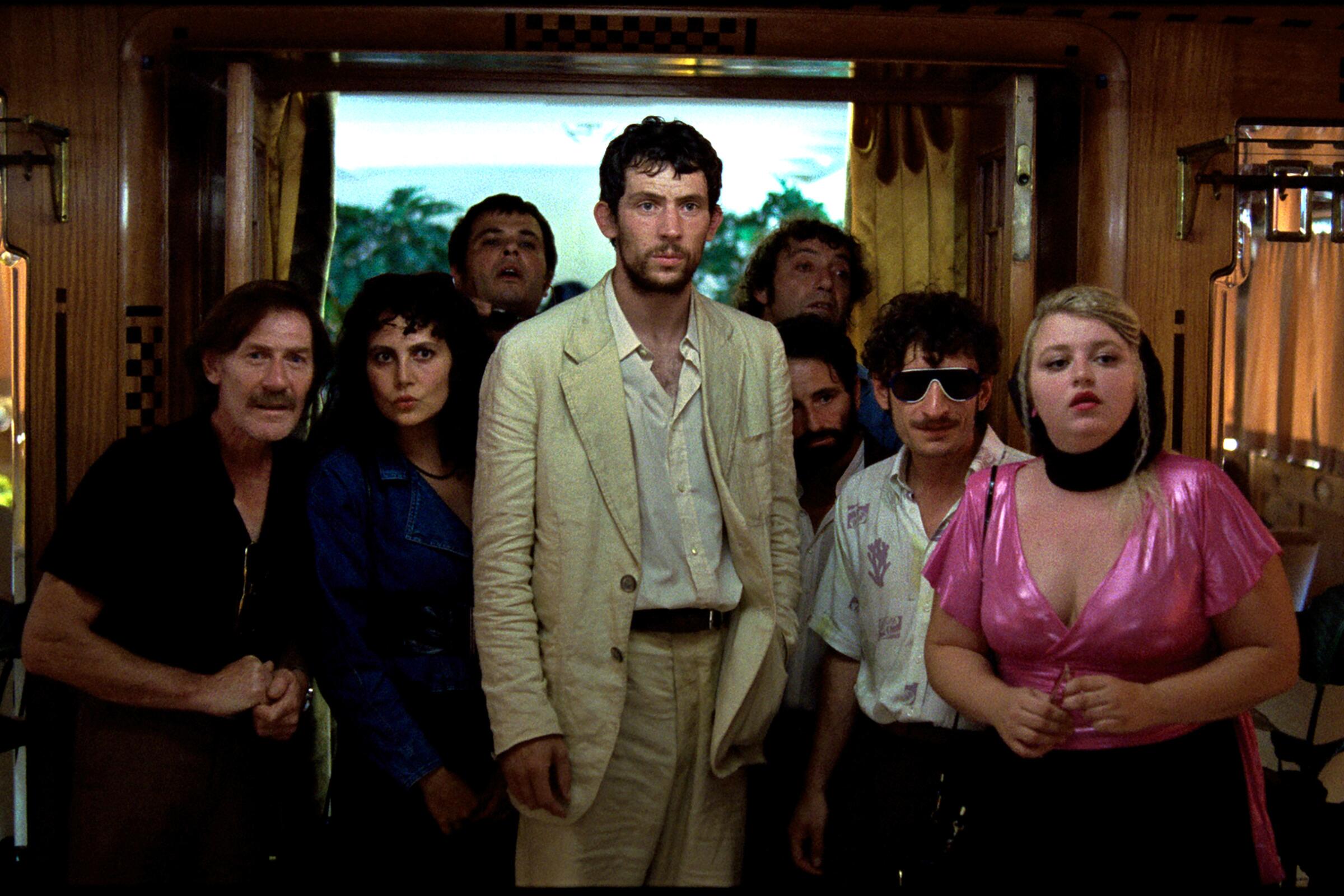
The past exists in the present here, not just in the narrative preoccupation with excavating Etruscan artefacts for prosperity and profit, but in the wider, rolling environs. See the old buildings with craggy walls and leaking roofs that make up the rural Italian topography, rooted in place for centuries, cold yet also warm thanks to the appreciation and spirit of the souls that walk their drafty halls and parlours.
This week – at the time of writing – there’s a stir over an AI facsimile of a film gaining some traction online. A glossy, lifeless atrocity. Though not explicitly intended as such, Rohrwacher’s cinema stands in absolute refusal of such generic, inhuman experiments. La Chimera – like her previous films – thrives because of its earthen quality. It feels like bitter kernels of grit in your mouth. Tactile, imperfect, even unpleasant (actually it’s glorious), but an experience. It’s photography a fact of it’s creation. Rohrwacher, though unseen, feels like an intrinsic part of the telling. At certain points, the camera is even interacted with. ‘Ornament of nature’ Melodie (Lou Roy-Lecollinet) coquettishly breaks the fourth wall to chide the enduring legacy of Italian machismo. It’s such a playful flourish, one that ensures our presence is part of La Chimera.
The surprises keep coming. Kraftwerk on the soundtrack an hour in is a joyfully anachronistic-feeling touch. Plus who knew the spirit of Benny Hill was alive and well? Rohrwacher’s graverobbing and the crew’s sped-up escapes are comic, giddy even. And the manner in which the group’s purloined items are fenced recalls the absurdism of Peter Strickland. How about an argument that descends into a literal growling match?
The second hour of La Chimera transitions into something that feels unusual and new for Rohrwacher, approximating her own version of a pulpy Mediterranean thriller, with rival gangs and a yacht-bound clandestine appraisal soiree. Here one senses the exploitation and hierarchies even in an outlaw society. Still, you can feel her version of neo-realism morphing into something else, something previously uncharted. Something that comes to an end with Arthur waking from a dream, asking us to wonder, perhaps, how far from reality we’ve strayed…
Or does it come to an end? This new and temporary(?) third mode feels the least like the waking world. The film becomes layers of storytelling, layers of fantasy. Of course, it’s up to us to decide what’s what. Rohrwacher wouldn’t have us stop participating now. Whichever mode we’re in, cinematographer Hélène Louvart continues to make a case that, currently, she’s among the best out there doing it.
Nestled within La Chimera is the notion that the past leaves gifts for the future. Alice Rohrwacher’s cinema is liable to become such a gift to future generations of cineastes when the time comes to learn from the works of our times. Those that feel redolent of it and those, like La Chimera, that seem to be fighting against it to retain something tactile yet mythic.
Though be warned, a further lesson here is that, by fixating on relics of the past, one runs the risk of missing what’s right in front of you.

 The Lost Highway Hotel
1 thought on “Review: La Chimera”