
Director: Gareth Edwards
Stars: Gemma Chan, John David Washington, Madeleine Yuna Voyles
You have to hand it to Gareth Edwards. Taking a seven-year hiatus only to return with an unabashedly pro-AI movie right as mass consensus is turning to hostility and distrust is some pretty bad timing. Only a year or two ago and the battle at the heart of The Creator might have seemed so much more fantastic and separated from our daily lives. Instead it feels awkwardly out of step with the turn in the cultural zeitgeist (especially with the strikes in Hollywood only just reaching tentative agreements; strikes in which the subject of AI is front and centre). It’s unfortunate for Edwards to say the least, as he’s taken a pretty big swing here and admirably presented a mid-budget sci-fi action movie that looks better than most top-ticket films you might mentioned.
The lithe visuals of The Creator are its most impressive feature, and that Edwards has pulled them together on a comparatively modest budget rumoured to be in the region of $80 million shouldn’t surprise too much. This is the man, after all, who cobbled together an effects-strewn indie debut (2010’s Monsters) on approx. $500,000, with many of the digital creations his own. Still, The Creator puts nearly all of Hollywood to shame, not just for the handsome integration of its VFX shots, but its judicial use of them in combination with lighting and framing. Outside of Cameron, smoke and mirrors have rarely carried a film so well.
That this is an original piece is heartening also. Edwards doubled-down on his early promise with major franchises (Godzilla, Star Wars), and such tentpoles are so stiflingly prevalent that anything disconnected from pre-existing IP feels like a bold anomaly. The only problem is that, because of this, being original means something now, and The Creator is awfully familiar, essentially cross-pollinating elements of Akira, The Terminator, A.I. (inevitably), District 9 and a handful more. It’s also jumbled, condensed, repetitively plotted and flaggingly predictable.
Over half a century from now, the US’s trust in AI has been shattered thanks to the machines dumping a nuke onto Los Angeles. While the tech has been outlawed stateside, ‘New Asia’ (actually just South East Asia) continues to embrace it, generating an ideological war. Joshua (John David Washington) lost his family in the LA detonation and so fights against the machines. We join him 5 years after an undercover job in New Asia cost him his dear wife Maya (Gemma Chan); killed by the US’s weapons platform NOMAD, taking their unborn child, too. Joshua is strong-armed back into the fight by the unscrupulous brass when they reveal footage of Maya still alive. His mission? Help them find the enemy’s secret weapon.
Said weapon turns out to be an AI child (Madeline Yuna Voyles) that Joshua dubs Alphie as the two of them abscond various warzones. Eyeing his own objective of reunion with Maya, Joshua breaks ranks and the US army – and their weapons platform – pursue him on a cyclically catastrophic chase through AI territory. Of course, Alphie is no ordinary ‘Simulant’; it/she has messianic powers that we’re told (in some awfully convenient exposition based on nothing) will develop into world conquering capabilities.
This sense that Alphie represents some golden child or Neo-like ‘one’ swims murkily in the background of The Creator, underdeveloped like so many of its more interesting (and often borrowed) concepts. See also the way identity is being reconfigured in this imagined future. You can sell your likeness to hardware companies, or have your dying consciousness downloaded into a Simulant body (if only for a few seconds). These are ideas that have sustained entire books and movies, but they are used functionally here to set up and knock down set pieces, telegraphing much of the movie’s plot turns in the process. No sooner has Joshua said he’d give anything for a few more seconds with Maya, you know it’s going to underpin some emotional beat waiting for us in act three. Similar turns signpost many other moves in the story. Very little of what unfolds actually surprises.
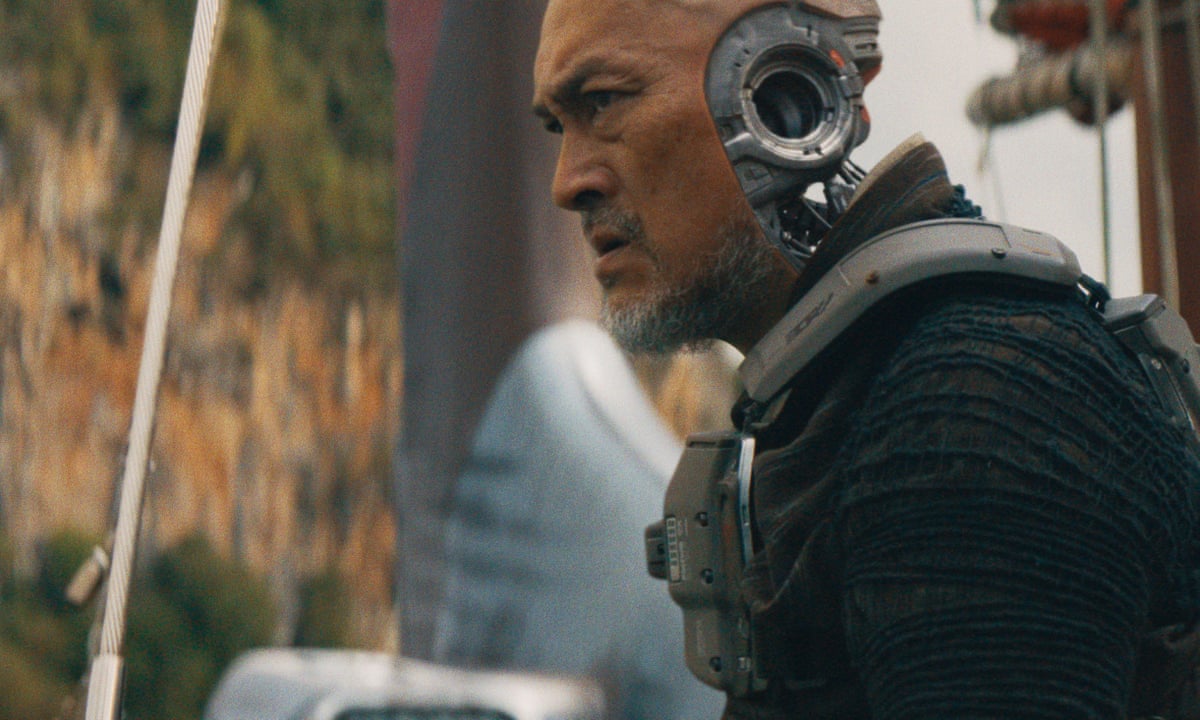
The Creator may suffer from familiarity, but it remains ambitious in its scope. Maybe a little too ambitious for a 2 hour movie. Edwards fumbles many of the story’s major emotional beats (particularly those related to Maya) because there’s a sense that he doesn’t have the time to let them breathe with a wider ideological war to contend with. It steals from the emotional core of the film. Sweet as the inevitable connection between Joshua and Alphie becomes, this too feels stilted, cliff-noted, not particularly strong or special, despite earnest performances from Washington and the breakthrough Yuna Voyles. The film’s finale desperately wants to pull heartstrings – the mechanism is there for all to see – but the characterisation has ultimately been too thin. Factor in audience bias against AI, and The Creator fizzles where it ought to soar.
Edwards and co-writer Chris Weitz (also Rogue One) do their best to muddy the waters of their conceived war. The US top brass (represented here by Ralph Ineson and Allison Janney) lie repeatedly and employ cruel tactics to achieve their goals. Janney’s Col. Howell talks through tears of how her own sons were tortured by AIs which reads as something she genuinely believes, but later representations of the Simulant resistance are wholly at odds with this, suggesting this is a lie. The Creator doesn’t need to clarify this, but leaving it open damages Edwards’ request for us to react with absolutes.
A sequence in which a dog inadvertently blows up an entire squad of police droids is presented comically… but wait… isn’t that the side we’re supposed to be rooting for? The Creator withholds this (thinly) for a while. In the moment we’re not so sure. But in the aftermath one can’t help but ponder the intention of that scene and its place in the wider context, other than to provide one of the few points of levity. Both sides seem keen on surreptitiously volleying incendiary devices back and forth across enemy lines. Over and over this is the crux of a scene. It becomes so common that it loses all meaning. Oh, the folly of war! But again it is to the detriment of the wider request to take this as a good vs. evil binary, which is where The Creator ends. Ultimately Edwards wants something much thornier than his 2 hours will allow.
The racial lines that accompany this war also itch. Simulants are overwhelming presented as Asian, which gives rise to the certainly unintentional implication that Asian people aren’t real people; a racist othering intended to reflect on our own histories with prejudice and slavery, but which instils an ‘off’ sensation that never really goes away. Images of robots being compressed in crushers deliberately resemble photographs of genocidal death pits, reminding us of this same othering promoted by perpetrators of genocide. Xenophobia is a core theme here, and Edwards and Weitz are eager to paint the US military machine as the ultimate baddie (easily relatable), but there’s something about this racial bisection that harkens sourly back to the US treatment and depiction of the Vietnamese in the ’60s and ’70s.
In spite of failings which are largely found in the screenplay, I’d still like to see The Creator succeed. In large part to remind Hollywood that more gambles with ‘original’ material could be richly rewarded at the box office. But not just this reason. Edwards’ visual achievements here raise questions about the choices happening on productions like the recent Indiana Jones or Fast X; two of the most expensive movies ever made, both of which look utterly horrendous thanks to their glaringly sloppy CG – the very element that purports to eat up most of the budget. If Edwards can bring something this handsome in on $80 mil, there are fundamental questions about resources and responsibility in Hollywood that The Creator ought to provoke.

 The Lost Highway Hotel
1 thought on “Review: The Creator”