
Year: 1933
Directors: Mervyn LeRoy, Busby Berkeley
Stars: Warren William, Joan Blondell, Dick Powell
From it’s very beginning, Mervyn LeRoy and Busby Berkley’s peerless 1933 variety show appears to be a capitalist’s dream. “We’re in the Money” presents Berkley’s undulating dance troupe in a depression-era fantasy of affluence, dispelling the worries and woes of fiscal uncertainty. The dancers carry oversized currency, they bend and sing beside stacks of cash. Gold Diggers of 1933 seems set to embrace the most plutocratic of American values. The value of the buck. Even the movie’s name suggests the unscrupulous floozies are ready and waiting to exploit the era’s poor saps for their dough.
So it’s perhaps surprising that the movie ends – phenomenally – with a full-throated rebuke of such things; a socialist anti-war spectacle. It’s one of the greatest show cappers in all of Hollywood history, revelling in a set of values and ideas set against the industry that fostered it’s creation.
It’s a movie miracle.
The story is one of several adaptations made around this time of Avery Hopwood’s 1919 play The Gold Diggers; a fairly standard tale of an inspired theatre producer who salvages a play and – by extension – buoys the sinking careers of its players. It’s a framework that’s become a staple running throughout movie history. We’ve seen it remixed and regurgitated over and over, from Fred Astaire right up through this year’s Magic Mike’s Last Dance, and surely beyond. The bare narrative bones allow for a basic, undemanding dramatic arc upon which any variety of performances can be hung like laundry.
For LeRoy, it affords a then-timely opportunity to provide escapism from the Great Depression while using said national crisis as a thankless punching bag. Viewed 90 years later during the Cost of Living Crisis, one feels as though its not just the narrative arc that perpetuates, but our precarious relationship with commerce and capital. Of course, the causes of financial panic 90 years ago and now vary. You could write entire papers on their disparate complexities, but the anxieties that such hardships conjure remain the same. Gallows humour is a natural escape tactic.
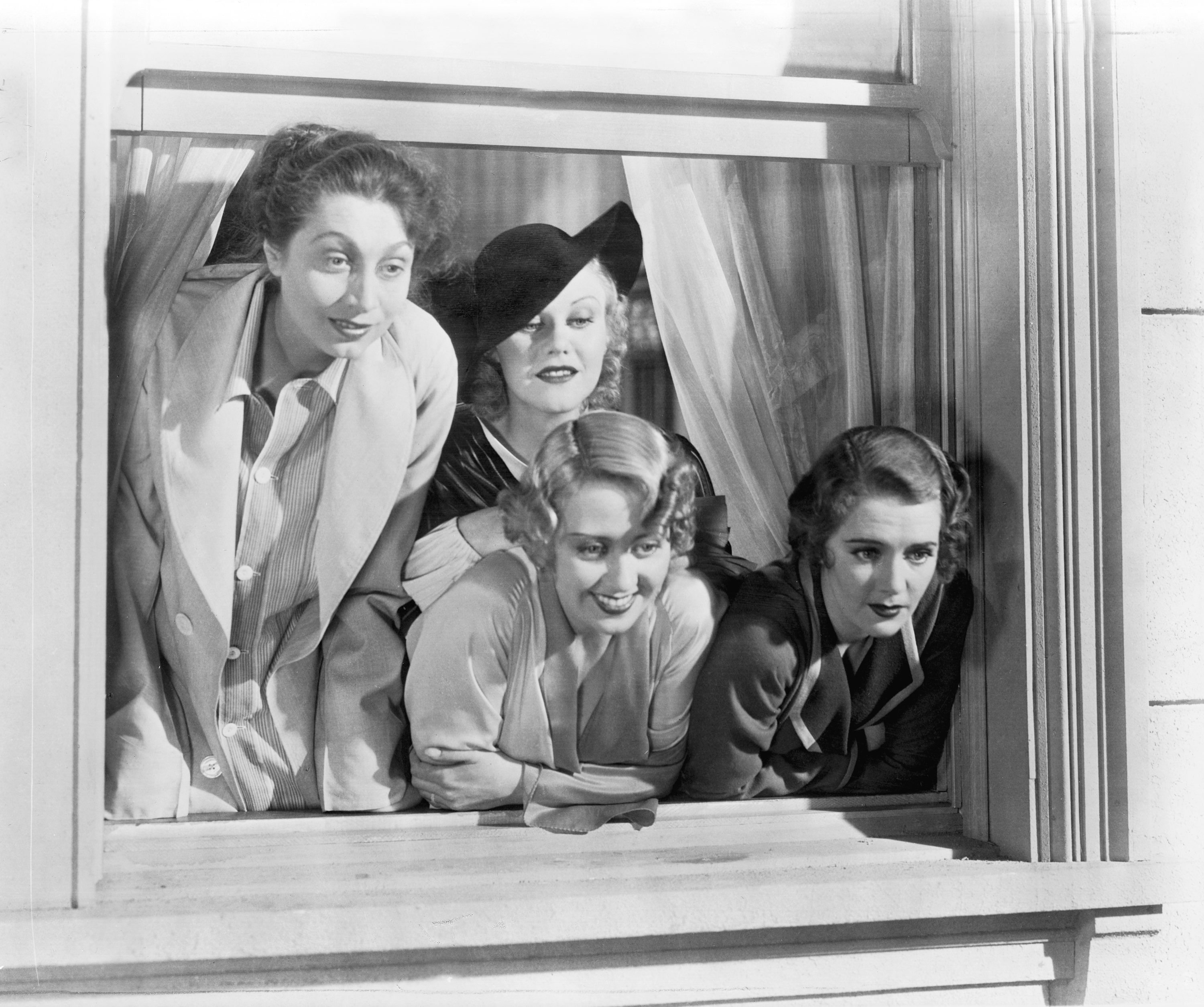
LeRoy’s movie concerns a quartet of struggling actresses – Polly (Ruby Keeler), Carol (Joan Blondell), Trixie (Aline MacMahon) and Fay (Ginger Rogers) – whose hopes are raised when Polly’s boyfriend Brad (Dick Powell) comes up with a plan to fund a musical for despairing producer Barney Hopkins (Ned Sparks). Along the way we get a taste of the backstage zeitgeist of the time period and a plethora of dramatic miniatures mixed with broadly comic punchlines. It’s a breezy time that teeters on something edgier thanks to the very real threat of financial ruin waiting in the wings.
LeRoy handles these micro-dramas with deft aplomb, but he is ultimately outclassed by the emerging cinematic spectacle of Busby Berkeley’s impressively staged musical numbers. While a taster of what he has in store opens proceedings, its not until the end that Gold Diggers of 1933 truly revels in Berkeley’s prowess. Still, in the mid-section there’s the galling pre-code number “Petting in the Park”. If the staging of this ode to outdoor loving initially lacks panache, the out-and-out naughtiness of the content provides plenty of glee. Not that there aren’t notable visuals on offer. How about a cadre of rollerskating policemen (recently referenced openly in Greta Gerwig’s Barbie)? Or the extended instrumental section, in which Berkeley unveils his geometric preoccupations? Dancers circulate giant snowballs before sauntering off for an almost-explicit on-screen costume change rendered in silhouette. As staid as some of the melodrama is, its a snazzy reminder of how sexy some ’30s cinema could be.
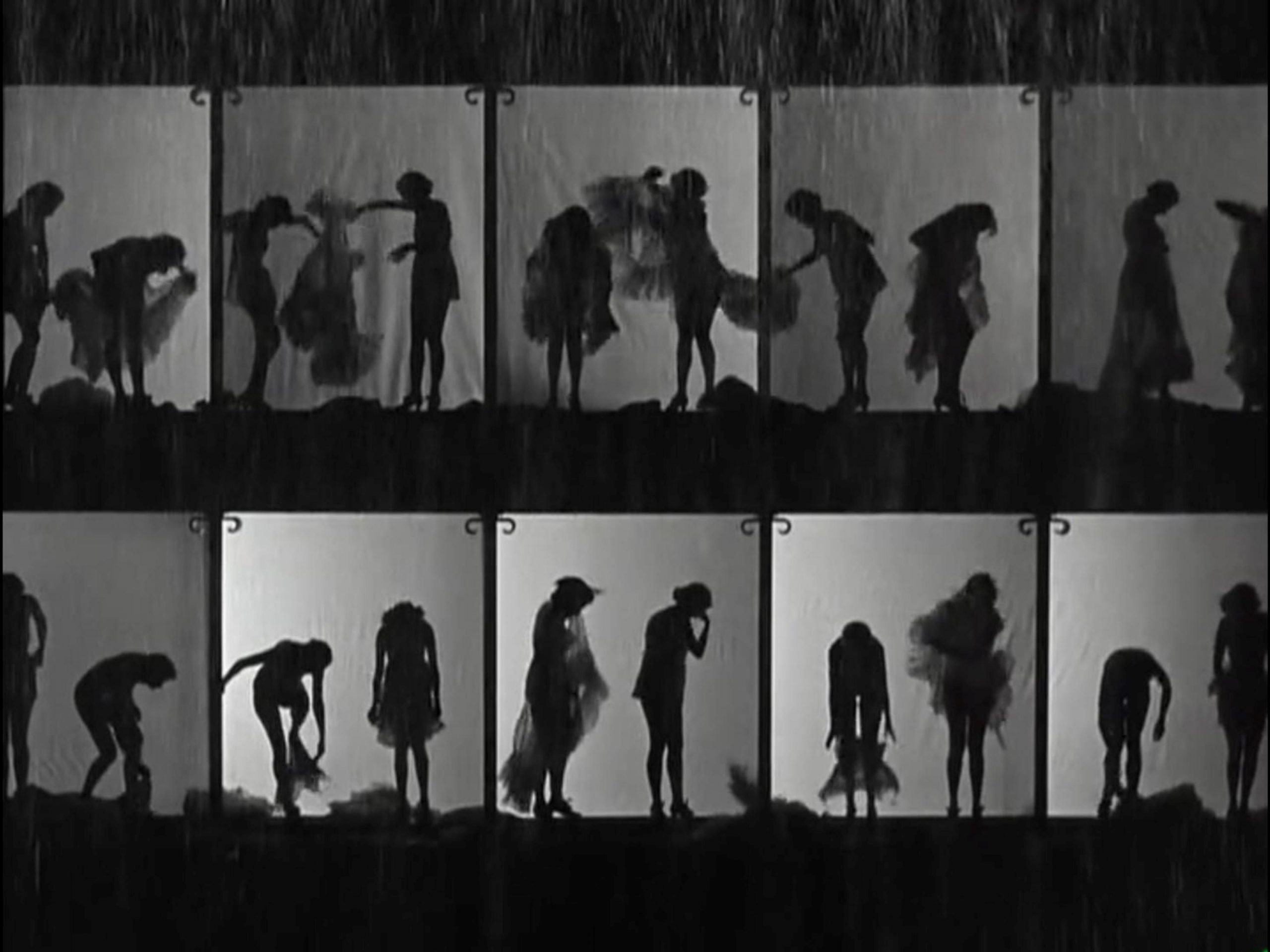
The second act of the film sees the tawdry phenomenon of the “gold digger” laid bare by the prudish and often sexist menfolk, led by Brad’s brother J. Lawrence (Warren William) and his ‘insightful’ hypocritical lawyer Peabody (Guy Kibbee). Even in the 1930s their combined stuffiness is played as foolish, mocked by LeRoy’s irreverent tone.
It gives the distinct impression that the American conservatism we’ve come to know was truly an invention of the post-war era. Gold Diggers of 1933 is just one of many movies of its era that evidences a far more liberal and satirical sense of anarchy, winking to its audience, anticipating their appreciation, and rewarding them by offering flashes of skin up to the very brink of decency. The ’30s were raunchy. These frugal times were preceded by the Roaring Twenties, after all. Even if the money wasn’t there, the desire for excess certainly remained.
And yes, the womenfolk do swindle the men. A misunderstanding allows Trixie to exploit $10,000 out of Peabody. But the prize is held – and framed – as both a trophy and a reminder of the prurient nature of the men that try to buy women. Still, love conquers all, and J. Lawrence and Carol wind up in love, in spite of all the confusions and catfishing. Having encircled us merrily with romance, satire and a little scabrous commentary on gender relations, Gold Diggers has little left to do but make a song and dance of it. But the end is where Gold Diggers of 1933 becomes truly exceptional.
For roughly 15 glorious minutes, Berkeley takes over, at first wrapping us up in the arms of a romantic dalliance before gamely expanding the frame.
Let’s not get confused. Gold Diggers of 1933 retains its 16×9 aspect ratio, but as Berkeley pulls out away from a lone dancer with a violin to reveal an elaborate set populated by dozens of players – lit in neon by their instruments, no less – the whole movie feels as though it expands outward, grows larger, becomes a kind of ocean where we’re joyfully lost at sea. It’s edges boundless.
A brief wrap-up of the movie’s dramas comes to feel like a minor intrusion (“What’s holding up the show?” someone catcalls, and we’re right there with them), but we’re carried through it by the gumption of the players. Still, it’s not long before we’re back to Berkeley’s surprising grand finale; an operatic portrayal of the tragedies of poverty, of the spirit of unions, of the dark underbelly of American capitalism where the working class are exploited. “Remember My Forgotten Man” begins as an earnest ballad before transforming into a drunken bluesy crooner. Suddenly we’re taking on the broken promises of Great War glory. Soldiers march in place on treadmills in the rain as their wounded counterparts return, bloodied and crestfallen. Breadlines, shared cigarettes… Gold Diggers of 1933 becomes a scathing litany of proletariat woes. It feels suddenly indignant and, more than that, angry.
The boldness of this sudden tonal swerve is hard to understate, and its on this aggrieved note that the movie storms away from us, smashing to an almost brutal finish card. It almost feels like a “fuck you”.
But not to us, the audience. To the government. To Wall Street. Hell, even to Warner Bros. (who financed and distributed the picture, and whose recent legacy blu ray release is well worth your investment). Gold Diggers of 1933 is remarkable for this brave backhand to the institutions surrounding it. Did it feel like such a bold gesture on release, one wonders? It’s thrilling to see now, all these years removed. One can only imagine what a dizzying southpaw this was as the time.
The romantic comedy aspect of this variety piece is one thing, but the film’s exiting about-turn is quite another. It – along with Berkeley’s visual prowess – pivot Gold Diggers of 1933 into something else entirely. Into the classic, and the genuinely memorable. Cinema’s wildest middle finger.
 The Lost Highway Hotel