
Director: James Mangold
Stars: Phoebe Waller-Bridge, Harrison Ford, John Rhys-Davies
You can’t go home again. The filmmaking that made the Indiana Jones films so beloved throughout the 1980s is gone. It’s been replaced, retooled, remodelled with computers. That’s the way of things, I guess. Evolution. Progress (apply sarcastic quotation marks if you like). We’re living now at a particular point in time where the ramifications of AI is starting to daunt us. Where the software could run on its own and make us obsolete in the making of movies. But what if it also makes us obsolete as audience members? Trained through snowballing repetition not to care anymore? To expect less and less every time?
Indiana Jones and the Dial of Destiny credits multiple writers, suggesting through the careful placement of “and”s and “&”s a succession of collaborations and rewrites. Messy, yes, but the human touch. And yet it really feels like an action blockbuster generated via ChatGPT. Designed out of the bones of its forbearers. This + this + this = THIS. All that’s missing is anything resembling the heart.
We begin, of course, in the past. Distractingly de-aged Indy (Harrison Ford) and token Nazi Dr Jurgen Voller (Mads Mikkelsen) are fighting it out in war-torn Germany for half of an archaic doohickey; Archimedes’ Antikythera, rumoured to possess the power of time travel. Nobody wins (and the signature Indiana Jones fanfare is absolutely thrown away by Mangold, twice). Then cut to 1969, for a story of two old men struggling to get back what once was lost. Dr. Jones is still lecturing history, but his students have checked out on him. Thanks to the moon landing, the future’s what’s hip now. Voller, meanwhile, has evaded Nuremberg on the US government payroll, but still remains fixated on reassembling Archimedes’ contraption so he can steal victory from the past.
Interceding in the mix is Phoebe Waller-Bridge as Indy’s conniving goddaughter Helena Shaw, who provokes our favourite archaeologist into travelling half way around the world in further pursuit of the missing MacGuffin. Fleshing things out – or further forestalling the film’s climax – is a side-quest to find the thing’s blasted decoder ring (here we’ll briefly meet an inconsequential Antonio Banderas). It’s a solid if unspectacular facsimile of standard Indiana Jones hijinks, albeit paced to match it’s sidelined senior citizen. Dial of Destiny trundles along or wades through quagmires of exposition. At this dawdle it’s all too easy to become preoccupied with the dross of modern blockbuster filmmaking.
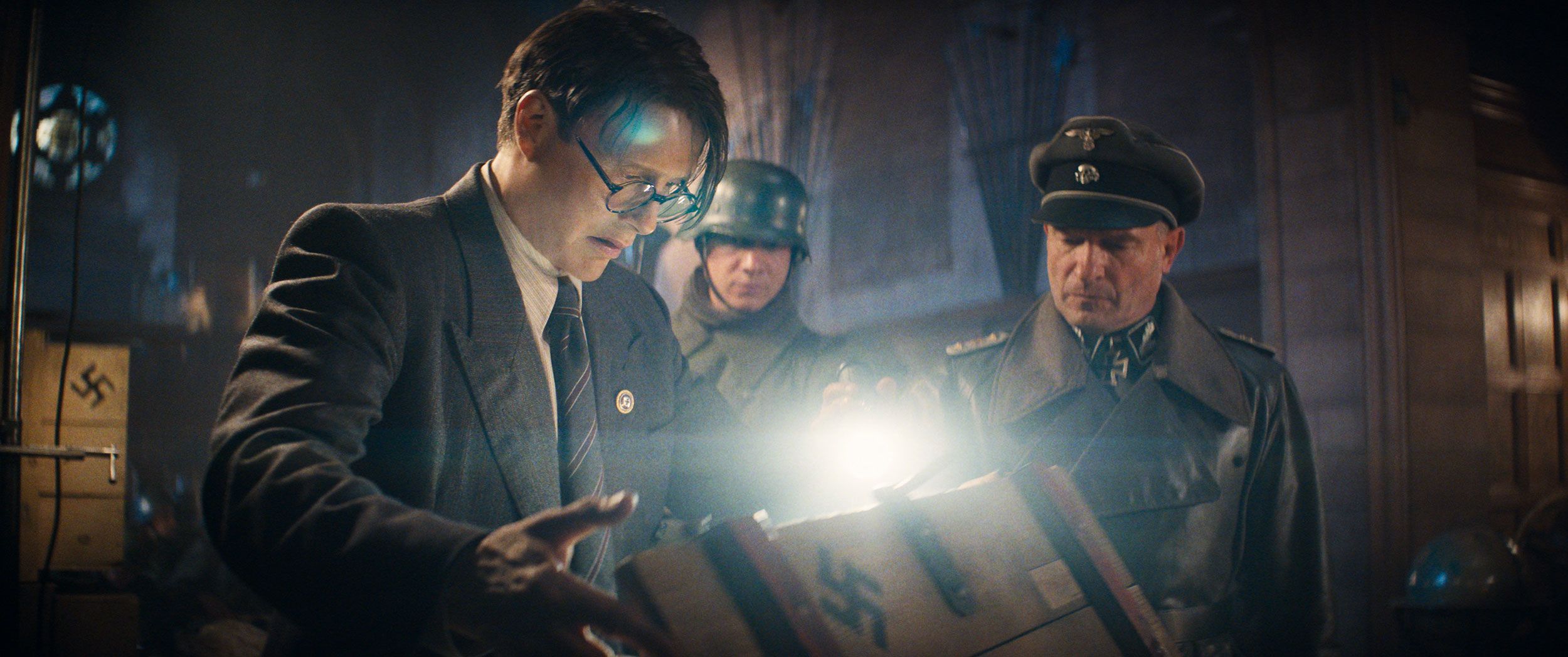
To wit, the sheen of unnecessary CG everywhere, from faces to places. Dial of Destiny looks and moves in step with the current Disney production line. Just like the Marvels, just like Star Wars. Fine enough if you’re not scrutinising it, but always with the nagging sense of the unreal, the rushed and the uncanny. Not to live in the past, but Spielberg went places and shot things when he did it (at least, those first three times). Dial of Destiny too often looks digitised, assembled, picked from the conveyer belt. It’s weird. The more these studios spend to stay at home, the fewer rewards they reap.
Take de-aging technology as an example. You could argue that it is impressive. That it looks better than ever. Except we – you and I, sat in the dark – still know it’s a trick. That can’t be removed, regardless of the resolution, the man hours, the painstaking overtime. Ultimately, we’re looking for the trick and not the performance, so its a foregone failure. It’s a shortcut that isn’t worth the assumed ease.
And so many digital effects are employed for assumed ease now. Why travel anywhere? Build Tangier coastal backdrops in the machine! Why risk the safety of stunt performers? Create digital people! These are valid practical considerations, sure. But the end result continues to show itself, continues to read as artificial, and continues to remove us from emotional connection to the grit of tactile human craft.
And when it comes to emotional connection, Dial of Destiny is almost totally inert. Indy largely seems like a passenger throughout, rebuking the suggestion that they’re even on an adventure. Ford seems as resigned as he has on the press tour. Waller-Bridge is incredibly game to fill in for him, but her Helena – while brimming with agency – is too mercenary to bond with. Mikkelsen’s Nazi is almost pitiable but, y’know, a Nazi, so fuck him. In cut’n’paste tradition there’s a crafty kid in the mix, too. Sure. Fine.
Dogged journeyman James Mangold has walked some of this path before with Logan, but this retread feels bloated and sloppy. Standing in the shadow of Spielberg can only be daunting, but few of the set-piece sequences here raise the heart rate and moments of lift or ingenuity fail to appear. Instead what we get is workmanlike. Something akin to Louis Leterrier’s recent job on Fast X. A bit rough; fine at best.
But who wants to settle for fine at best with Indiana Jones?

You really can’t go home again. Indy’s rallying cries that things belong in museums feel labored and lost in time, to say nothing of the spurious decision to bring back John Rhys-Davies as Egyptian pal Sallah. Still, at least living in the past is on-theme for this particular adventure.
The third act pushes things into territory both farcical and inevitable from the outset. Now, a lot of people dislike Kingdom of the Crystal Skull because its perceived as too silly or goofy, with its aliens and flying fridges. That stuff never really bothered me. It’s part and parcel of the adventure serial paraphernalia from which Indiana Jones was plundered. Those first three movies weren’t short on silly, either. So I didn’t have a problem with Dial of Destiny taking a dive into full-on fantasy. But what’s offered at the end of this movie manages to feel like both a step too far and not far enough. The sojourn into the spectacular is almost too comically brief and random. There’s a missed opportunity there that could have shaped a genuinely original entry in this series, instead of this wildly uneven string of different disappointments.
This is the way it is now, I guess. Green screens and fan service. Perhaps it’s for the best for those living in the past to simply retire.
That’s a deflated note to end on.

 The Lost Highway Hotel
2 thoughts on “Review: Indiana Jones and the Dial of Destiny”